At a glance
- Mounjaro titrates 2.5 to 5 to 7.5 to 10 to 12.5 to 15mg weekly, at least 4 weeks per step.
- The 2.5mg starting dose is for initiation, not blood-sugar control.
- Maintenance doses are 5, 10, or 15mg. The maximum is 15mg once weekly.
- Mounjaro and Zepbound are the identical molecule (tirzepatide) with the same ladder.
- SURPASS-6 and the wider program back tirzepatide's glycemic and weight effects in type 2 diabetes.
Mounjaro starts at 2.5mg, and that dose is not meant to do anything for your blood sugar. It exists so your gut can adjust before the drug reaches a working level. That single fact explains the whole titration schedule, and why rushing it backfires.
Mounjaro is the type 2 diabetes brand of tirzepatide. Zepbound is the same molecule approved for weight loss. For the research-compound version, see the tirzepatide guide and tirzepatide dosage chart. This page covers the FDA-approved brand schedule.
The Mounjaro titration schedule
Tirzepatide climbs a fixed ladder with at least 4 weeks between steps.
| Dose (once weekly) | Timing | Role |
|---|---|---|
| 2.5 mg | Weeks 1 to 4 | Initiation only. Not for glycemic control. |
| 5 mg | Week 5 onward | First maintenance option |
| 7.5 mg | After 4+ weeks | Transitional step |
| 10 mg | After 4+ weeks | Maintenance option |
| 12.5 mg | After 4+ weeks | Transitional step |
| 15 mg | After 4+ weeks | Maximum dose |
The recognized maintenance doses are 5, 10, and 15mg. The 2.5mg, 7.5mg, and 12.5mg rungs are stepping stones, not long-term targets. The right dose is the lowest one that controls blood sugar at a side-effect burden you can live with.
Why the 2.5mg start is not a treatment dose
Tirzepatide is a dual GIP and GLP-1 agonist. Both pathways slow gastric emptying and blunt appetite, and the gut needs time to adapt or nausea spikes. Starting at 2.5mg for a full month before moving to 5mg is the tolerability buffer. Skipping it does not improve results, it just front-loads the side effects.
Warning: Increase only after at least 4 weeks on the current dose. Faster escalation raises the rate of nausea, vomiting, and diarrhea without improving the endpoint.
Mounjaro versus Zepbound
They are the same drug. Same active ingredient, same 2.5-to-15mg ladder, same 4-week step rule. The difference is the label: Mounjaro is approved for type 2 diabetes, Zepbound for chronic weight management. Insurance coverage and the indication on the box differ, the molecule does not. If your goal is weight loss specifically, the Zepbound dosage chart frames the same schedule around that endpoint.
Evidence and side effects
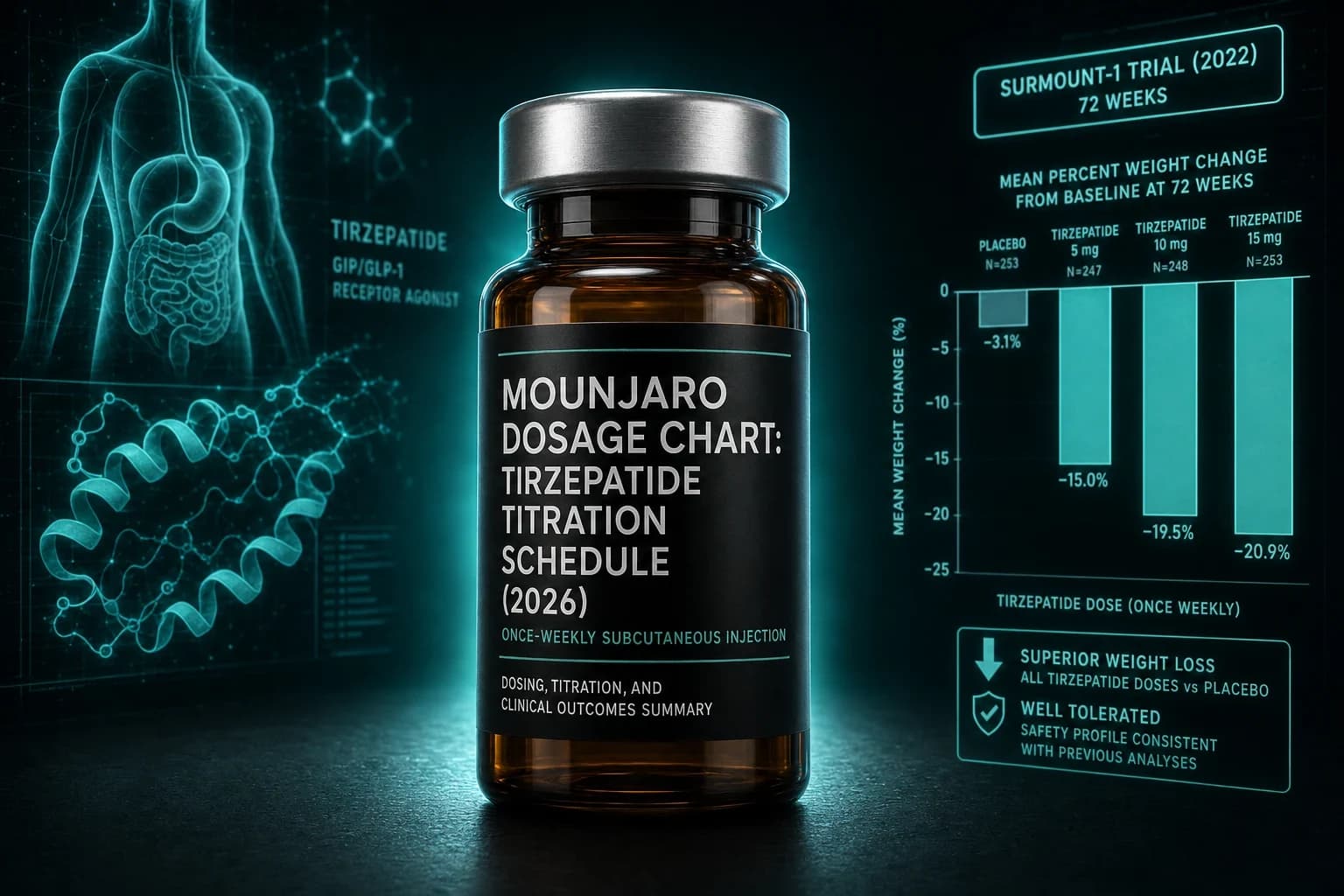
Across the SURPASS program in type 2 diabetes, tirzepatide delivered strong A1C and weight reductions, including as an add-on to basal insulin in SURPASS-6 (Rosenstock et al. 2023). Its weight effect is large enough that the obesity trial reached 16% to 22.5% (Jastreboff et al. 2022). Gastrointestinal effects are the dominant, dose-dependent side effects, which is exactly why the slow ladder exists.
Bottom line: Mounjaro runs 2.5mg to a maximum of 15mg, at least 4 weeks per step, with 5, 10, and 15mg as the maintenance doses. The 2.5mg start is a tolerance buffer, not a treatment dose. A clinician sets and adjusts it. To access tirzepatide through a telehealth program, compare our compounded tirzepatide and cheapest GLP-1 options.
This article is for educational purposes only and is not medical advice. Mounjaro is an FDA-approved prescription medication. The schedule above is the published label titration for reference; your clinician determines your dose. Consult a licensed provider before starting or changing any GLP-1 medication.