At a glance
- FDA-approved (Vyleesi) for female HSDD; works on desire, not blood flow
- Activates MC3R/MC4R in the hypothalamus, triggering dopamine release
- Dose: 1.75 mg subcutaneous, at least 45 minutes before activity
- 40% nausea rate is the primary side effect; decreases with repeated use
- Max 8 doses per month to limit hyperpigmentation risk
Viagra fixes plumbing. This peptide fixes want.
Every PDE5 inhibitor on the market (sildenafil, tadalafil, vardenafil) does the same thing: relax smooth muscle in penile blood vessels so more blood flows in during arousal. They work. But they assume arousal is already present. If the signal from the brain never fires, more blood flow is irrelevant.
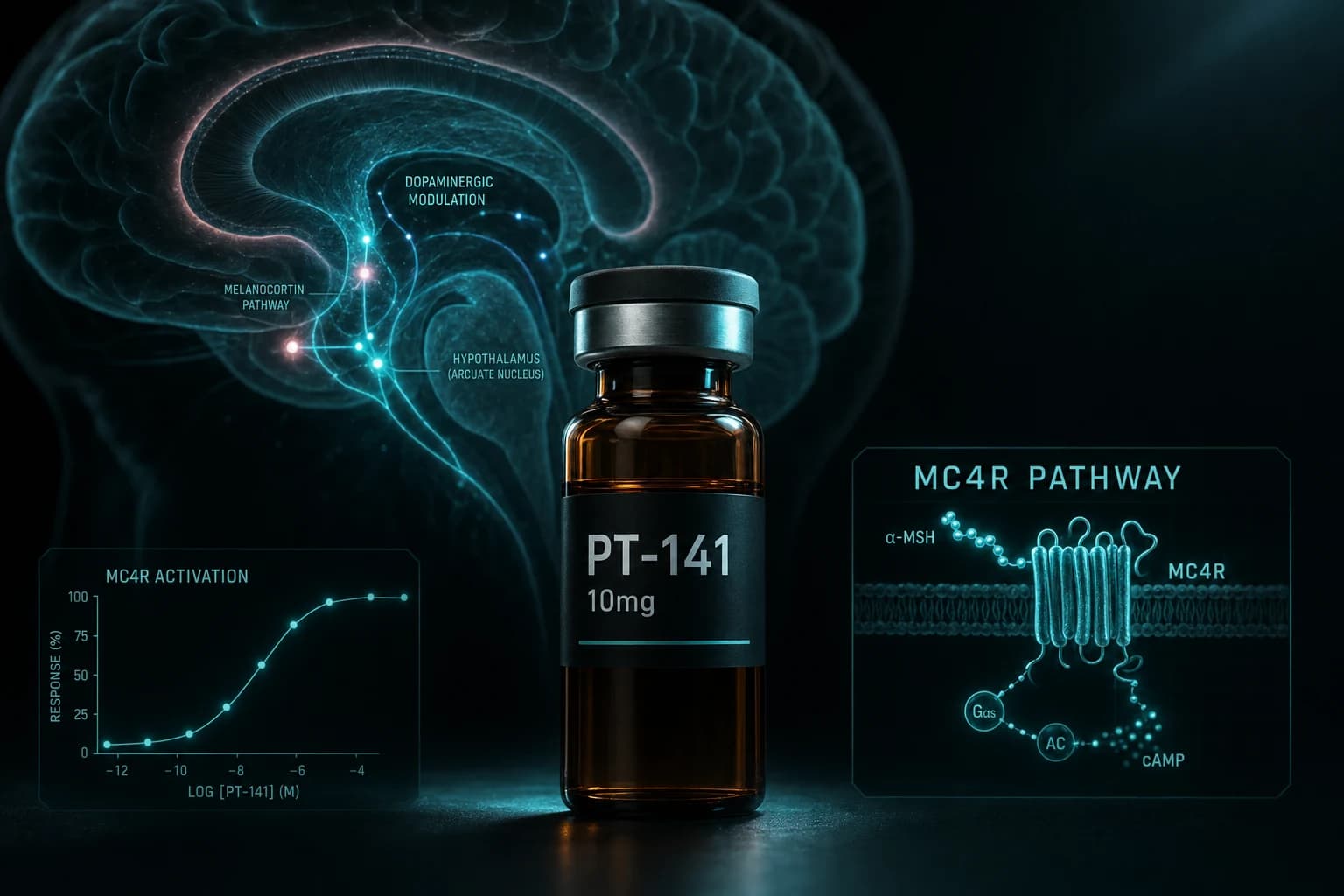
PT-141 (bremelanotide) operates on a completely different axis. It activates melanocortin receptors in the hypothalamus, the brain region that governs sexual motivation, and triggers downstream dopamine release in circuits that control desire. Not blood flow. Desire.
In June 2019, the FDA approved bremelanotide as Vyleesi for hypoactive sexual desire disorder (HSDD) in premenopausal women (Dhillon, 2019). It remains the only FDA-approved peptide for sexual function and one of only two drugs ever approved for female desire disorders. The approval followed two large Phase 3 trials (RECONNECT), a 52-week safety extension, and more than a decade of clinical development.
This guide covers the mechanism, the trial data with real numbers, the pharmacokinetics, the honest side effect profile (40% nausea is not a footnote), and how bremelanotide differs from everything else on the market.
The Melanotan origin story
PT-141 did not start as a sexual health compound. It started as a tanning peptide.
In the late 1980s, researchers at the University of Arizona, led by Victor Hruby and Mac Hadley, synthesized a series of alpha-melanocyte-stimulating hormone (alpha-MSH) analogs aimed at stimulating melanin production for photoprotection. The goal was a compound that could darken skin without UV exposure, potentially lowering skin cancer risk (Hadley & Hruby, 2006).
The first analog, Melanotan I (afamelanotide), was a linear 13-amino-acid peptide. The second, Melanotan II, was a cyclic, truncated version with improved stability and potency. MT-II worked brilliantly for tanning. It also produced an unexpected side effect: spontaneous penile erections in male test subjects.
That observation redirected an entire research program. Palatin Technologies isolated the active metabolite of MT-II responsible for the sexual effects, removed the norleucine substitution that drove melanogenic activity, and produced a cleaner compound: bremelanotide, originally designated PT-141. The tanning was reduced. The central nervous system effects on sexual function were preserved.
How it works: melanocortin receptors and the hypothalamus
Bremelanotide is a cyclic heptapeptide that acts as a nonselective melanocortin receptor agonist. Its sexual effects are mediated primarily through two receptor subtypes: MC3R and MC4R.
Both receptors are densely expressed in the hypothalamus, particularly in the paraventricular nucleus (PVN) and the medial preoptic area (mPOA). These regions are integration centers for sexual behavior, appetite regulation, and autonomic function. When bremelanotide binds MC4R in the mPOA, it triggers increased dopamine release, the neurotransmitter most directly linked to sexual motivation and reward.
Animal studies using MC4R knockout models have confirmed the receptor's essential role: when MC4R is absent, the erectogenic response to melanocortin agonists disappears entirely. MC3R contributes through modulation of reward circuitry and energy balance pathways in the arcuate and ventromedial hypothalamus.
Here is why this matters clinically: PDE5 inhibitors (Viagra, Cialis) are peripheral vasodilators. They work downstream of arousal, at the level of penile blood vessels. Bremelanotide works upstream, at the level of the brain, where desire originates. This is not a subtle pharmacological distinction. It is an entirely different therapeutic category.
| Feature | PT-141 (Bremelanotide) | Viagra/Cialis (PDE5 Inhibitors) |
|---|---|---|
| Target | MC3R/MC4R in hypothalamus | PDE5 enzyme in vascular smooth muscle |
| Mechanism | Central: increases dopamine, modulates desire | Peripheral: increases blood flow via NO/cGMP |
| Addresses desire? | Yes | No |
| Addresses erectile function? | Indirectly (via central arousal) | Yes (vascular mechanism) |
| Approved for women? | Yes (Vyleesi for HSDD) | No |
| Route | Subcutaneous injection | Oral tablet |
| Onset | ~45-60 minutes | ~30-60 minutes |
The RECONNECT trials: what the Phase 3 data actually showed
The FDA approval rested on two identical Phase 3, randomized, double-blind, placebo-controlled trials collectively called RECONNECT. Both enrolled premenopausal women diagnosed with acquired, generalized HSDD (Kingsberg et al., 2019).
Design: Over 1,200 women were randomized to self-administer bremelanotide 1.75 mg or placebo subcutaneously as needed, at least 45 minutes before anticipated sexual activity, for 24 weeks.
Co-primary endpoints:
- Change from baseline in FSFI desire domain score (scale: 1.2 to 6.0)
- Change from baseline in FSDS-DAO Item 13 ("How often do you feel bothered by low sexual desire?" scored 0-4)
Results:
- FSFI desire domain: bremelanotide improved desire scores by approximately 0.5 points more than placebo (statistically significant, p < 0.05 in both studies)
- FSDS-DAO Item 13: distress related to low desire decreased significantly more with bremelanotide than placebo
- Satisfying sexual events per month increased by +0.7 in the bremelanotide group versus +0.2 for placebo in the Phase 2b dose-ranging study (Clayton et al., 2016)
A 52-week open-label extension demonstrated sustained efficacy with a favorable safety profile, with no new safety signals emerging over the longer treatment period (Simon et al., 2019).
These are modest effect sizes. The desire score improvement is real but not dramatic. A critical review in the Journal of Sex Research noted the effect sizes as "small." But for women who have tried everything else, a consistent, statistically significant improvement in both desire and distress is clinically meaningful, particularly because HSDD had essentially one other pharmaceutical option (flibanserin, a daily pill with alcohol restrictions).
Male research data: erectile function and beyond
Bremelanotide is only FDA-approved for women. But the male data is substantial and still accruing.
The earliest pharmacokinetic and pharmacodynamic study in males was published in 2004 (Rosen et al., 2004). Healthy male subjects and men with erectile dysfunction (ED) who did not respond adequately to Viagra received subcutaneous PT-141. The compound was well tolerated and produced clinically meaningful erectile responses in both populations, including in the Viagra non-responders.
A larger trial of 342 men with ED who had failed sildenafil tested bremelanotide (10 mg intranasal spray) against placebo. Positive clinical results were seen in 33.5% of the bremelanotide group versus 8.5% of the placebo group. Patients reported significantly greater intercourse satisfaction.
Real-world clinical data presented at the 2024 AUA annual meeting tracked men using bremelanotide at a sexual medicine clinic. Among responders, improvements were reported in HSDD (39%), erectile function (52%), orgasm (17%), and performance anxiety (39%).
Palatin Technologies initiated a Phase 2 trial of bremelanotide co-administered with a PDE5 inhibitor for ED, testing the combination approach (central plus peripheral) in PDE5i non-responders. The logic is sound: if the brain-level desire signal is restored by bremelanotide while the vascular mechanism is supported by tadalafil or sildenafil, both halves of the arousal pathway are covered.
Pharmacokinetics: absorption, half-life, and timing
Understanding the PK profile is essential for timing doses correctly.
| Parameter | Value |
|---|---|
| Route | Subcutaneous (abdomen or thigh) |
| Bioavailability | ~100% (subcutaneous) |
| Tmax (time to peak) | ~1 hour (range 0.5-1.0 hr) |
| Half-life (t1/2) | 2.7 hours (range 1.9-4.0 hr) |
| Mean clearance | 6.5 L/h |
| Duration of effect | 6-8 hours (clinical experience) |
| Recommended pre-dose timing | At least 45 minutes before activity |
The near-complete subcutaneous bioavailability is notable. Unlike many peptides that lose significant fractions to local proteolysis or lymphatic drainage, bremelanotide reaches systemic circulation almost entirely intact after SC injection.
The relatively short half-life (2.7 hours) means the compound clears quickly, which limits cumulative exposure and is part of why the FDA set a maximum dosing frequency rather than a daily dosing schedule.
Dosing: the FDA-approved protocol
The FDA-approved dose is straightforward:
- Dose: 1.75 mg subcutaneous injection
- Timing: At least 45 minutes before anticipated sexual activity
- Frequency cap: No more than 1 dose per 24 hours
- Monthly cap: No more than 8 doses per month
- Injection site: Abdomen or thigh
The 8-dose monthly limit exists primarily because of the hyperpigmentation risk. When bremelanotide was tested at daily dosing for 8 consecutive days, 38% of participants developed focal hyperpigmentation. At the approved as-needed frequency (up to 8 doses/month), that rate dropped to approximately 1%.
For researchers working with lyophilized vials rather than prefilled Vyleesi autoinjectors, reconstitution follows the standard peptide protocol. A typical research vial contains 10 mg of bremelanotide. Adding 2 mL of bacteriostatic water yields a concentration of 5 mg/mL, and each 1.75 mg dose is 0.35 mL (35 units on a standard insulin syringe). For detailed math and a step-by-step walkthrough, use the reconstitution calculator.
Side effects: the honest picture
Bremelanotide's side effect profile is well-characterized from the RECONNECT trials, the open-label extension, and post-marketing data. Some of these are significant enough to be deal-breakers for certain individuals.
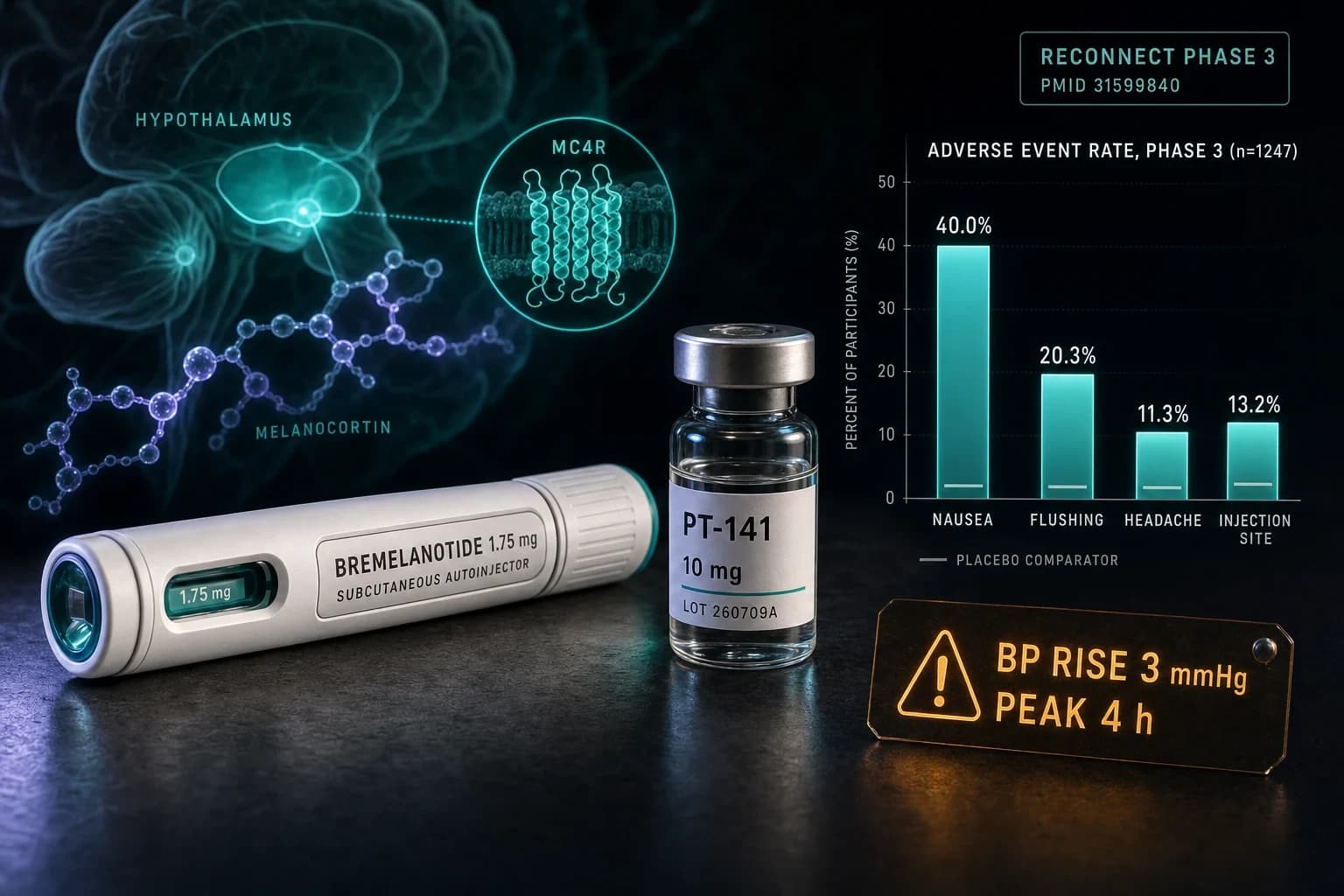
Nausea: the big one. 40% of participants in the RECONNECT trials reported nausea, compared to 1% on placebo. Median onset was 30 minutes post-dose, with a median duration of 2.4 hours. The nausea was worst with the first dose and decreased with subsequent use in most people. Severity was typically mild to moderate. Some clinicians recommend pre-dosing with ondansetron (Zofran) to manage this, though this is off-label guidance.
Flushing: 20.3% of users. Typically mild, resolving within hours.
Headache: 11.3%. Similar profile to PDE5 inhibitor headaches.
Injection site reactions: 13.2%. Standard for subcutaneous peptide injections.
Blood pressure: Transient increases were observed. Mean daytime systolic BP rose 1.9 mmHg and diastolic 1.7 mmHg after 8 days of dosing, with peak increases of 2.8 mmHg (systolic) and 2.7 mmHg (diastolic) in the 0-8 hour post-dose window. BP returned to baseline by 12-24 hours. This is why bremelanotide carries a warning for individuals with uncontrolled hypertension or cardiovascular disease.
Hyperpigmentation: At the approved dosing frequency (up to 8/month), focal darkening of the face, gums, or breasts occurred in about 1% of patients. At daily dosing, the rate climbs to 38%. This effect is related to melanocortin receptor activation of melanocytes and is typically reversible after discontinuation, though resolution can take months.
| Side Effect | Incidence (Bremelanotide) | Incidence (Placebo) |
|---|---|---|
| Nausea | 40.0% | 1.0% |
| Flushing | 20.3% | 0.8% |
| Injection site reaction | 13.2% | 8.6% |
| Headache | 11.3% | 1.9% |
| Transient BP increase | ~2-3 mmHg | Minimal |
| Focal hyperpigmentation | ~1% (as-needed dosing) | Rare |
Who this is for (and who it is not for)
Good candidates for bremelanotide research:
- Premenopausal women with diagnosed HSDD who have not responded to behavioral interventions
- Men with ED who have failed PDE5 inhibitor monotherapy (off-label, supported by clinical data)
- Individuals where the primary issue is desire or arousal rather than mechanical erectile function
- Researchers studying melanocortin receptor pathways and central sexual function
Not appropriate for:
- Anyone with uncontrolled hypertension or known cardiovascular disease
- Individuals taking medications that significantly affect blood pressure
- Anyone who cannot tolerate significant nausea (40% incidence is high)
- People seeking a daily-use compound (the dosing cap exists for safety reasons)
- Anyone expecting Viagra-like speed and vascular effects; this is a different mechanism entirely
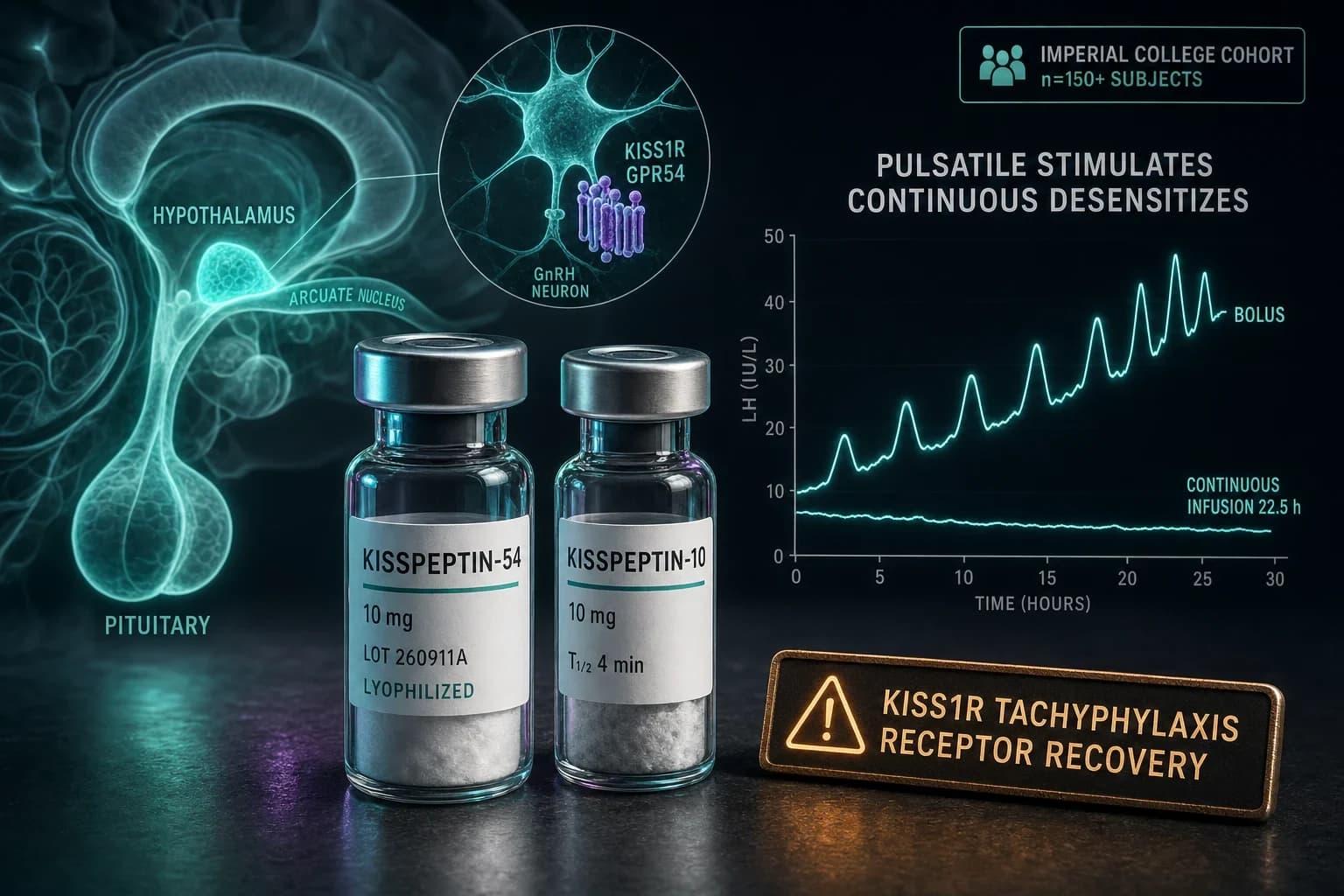
Bremelanotide also interacts with the melanocortin system broadly, which means it can affect appetite, energy balance, and pigmentation. If you are also researching Kisspeptin for reproductive axis modulation or Melanotan II for tanning, understand that these compounds share overlapping receptor targets and should not be combined without careful consideration.
Where to source research-grade bremelanotide
PT-141 is available as a lyophilized powder from research peptide suppliers. Typical vial sizes are 10 mg. Reconstitute with bacteriostatic water, store refrigerated (2-8 C), and use within 30 days of reconstitution.
Available from Ascension Peptides with 50% off using code ENHANCED. They stock PT-141 alongside other sexual health peptides and offer third-party purity testing.
For nasal spray formulations (used in some of the earlier clinical research), check the nasal spray guide for available options and proper administration technique.
The bottom line
PT-141 is not Viagra in peptide form. It is a fundamentally different tool that addresses a fundamentally different problem. Where PDE5 inhibitors improve the hydraulics of erection, bremelanotide modulates the neural circuitry of desire. The RECONNECT trials proved this works in a controlled setting, the FDA agreed, and the 52-week extension showed it holds up over time.
The trade-off is real: 40% nausea, a monthly dose cap, subcutaneous injection, and modest (though statistically significant) effect sizes. For some people, that trade-off is unacceptable. For others, particularly those who have tried everything that targets blood flow and found it insufficient, bremelanotide addresses the piece that was missing all along.
Related reading:
- PT-141 Compound Guide
- Kisspeptin Compound Guide
- Melanotan II Compound Guide
- Reconstitution Calculator
- Nasal Spray Peptides
This article is for educational and informational purposes only. Bremelanotide (Vyleesi) is FDA-approved for HSDD in premenopausal women. All other uses discussed are off-label or investigational. Dosing information is derived from published research and FDA prescribing information. Consult a qualified healthcare professional before making any decisions about peptide use or research.