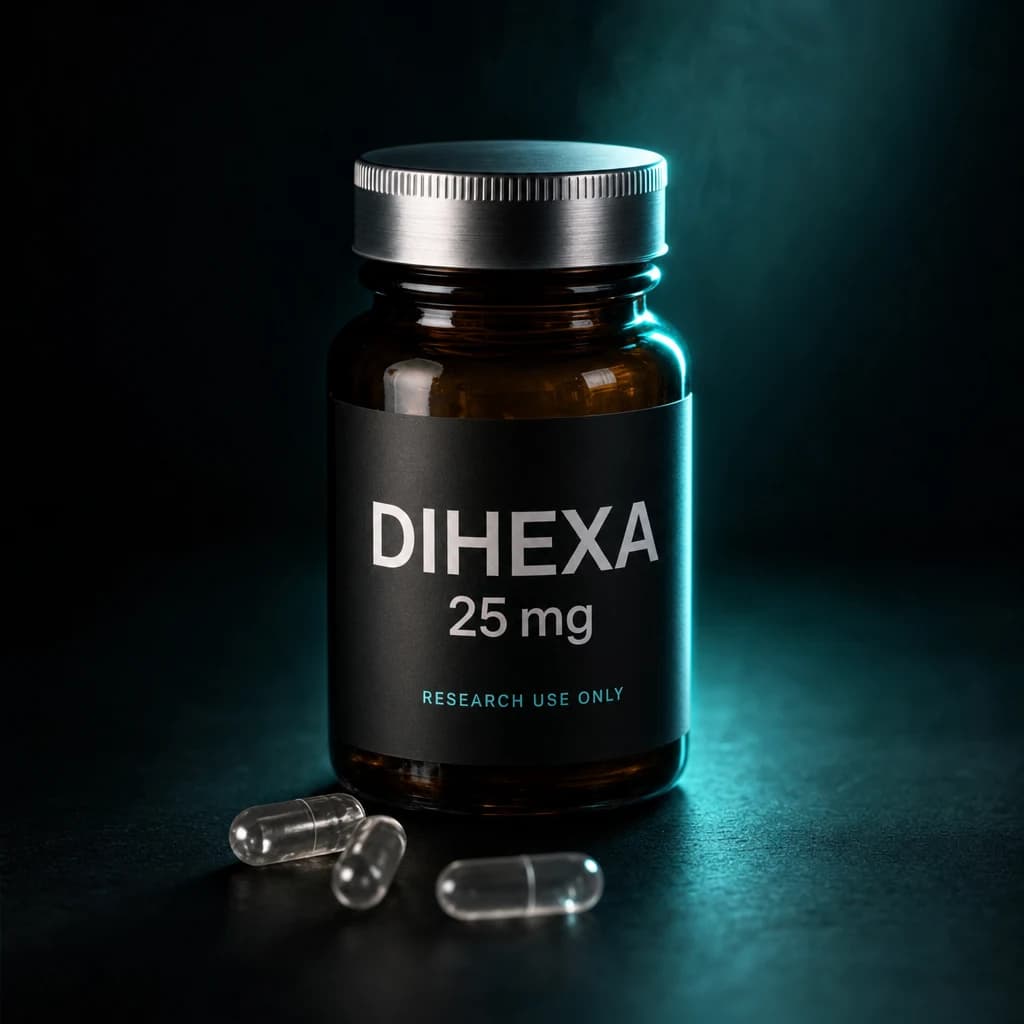
DihexaResearch guide
HGF-mimetic peptide studied for synaptogenesis and cognitive enhancement
Half-life
~10 hours
Typical Dose
8-45mg daily
Format
Oral
Purity
≥98%
Overview
Dihexa is a small molecule derived from angiotensin IV that mimics hepatocyte growth factor. Studied for its potent effects on synaptogenesis and cognitive function in neurodegenerative research.
Mechanism
HGF-mimetic that activates the c-Met receptor, promoting synapse formation and neural plasticity. Crosses the blood-brain barrier.
Researched benefits
- Synaptogenesis promotion
- Memory enhancement in studies
- Neuroprotection
- Oral bioavailability
- Alzheimer's research
Frequently asked
What is dihexa?
Dihexa is a small-molecule derivative of angiotensin IV developed at Washington State University. It is not a classical peptide therapeutic but an oligopeptide-derived compound designed to cross the blood-brain barrier.
How does dihexa work?
Research points to potentiation of hepatocyte growth factor signaling through its receptor c-Met, which drives synaptogenesis. This is a different mechanism from the nootropic peptides that act on BDNF or neurotransmitter systems.
What is dihexa's research status?
Preclinical. The published work is rodent and cell-culture data from the original academic group. There are no completed human clinical trials, and the long-term safety profile is uncharacterized.
Why is dihexa described as orally active?
Its structure was specifically engineered for metabolic stability and blood-brain barrier penetration, unlike the injectable or intranasal peptides in the cognitive category. This was a design goal of the original research.
Keep researching
Next steps for Dihexa
The compound page is the overview. Charts, certificates, and the vendor audit sit one click away.
Vendor
Ascension Peptides review
The COA audit and the ENHANCED 50% code for injectable research peptides.
Read the reviewArticle
Cerebrolysin Protocol: Neurodegenerative Research and Stroke Recovery
A deeper read that sits next to the Dihexa guide.
Read articleTool
Reconstitution calculator
Convert vial size and bacteriostatic water into syringe units.
Open calculatorReady to start your research
Get Dihexa from Ascension Peptides
COA-verified, US-based, discreet shipping. Use code ENHANCED for 50% off your entire order.
Buy Dihexa now