GHK-CuResearch guide
Copper peptide for collagen synthesis, skin regeneration, and wound healing
Half-life
~2-3 hours
Typical Dose
1-3mg topical or injectable
Format
Topical
Purity
≥98%
Overview
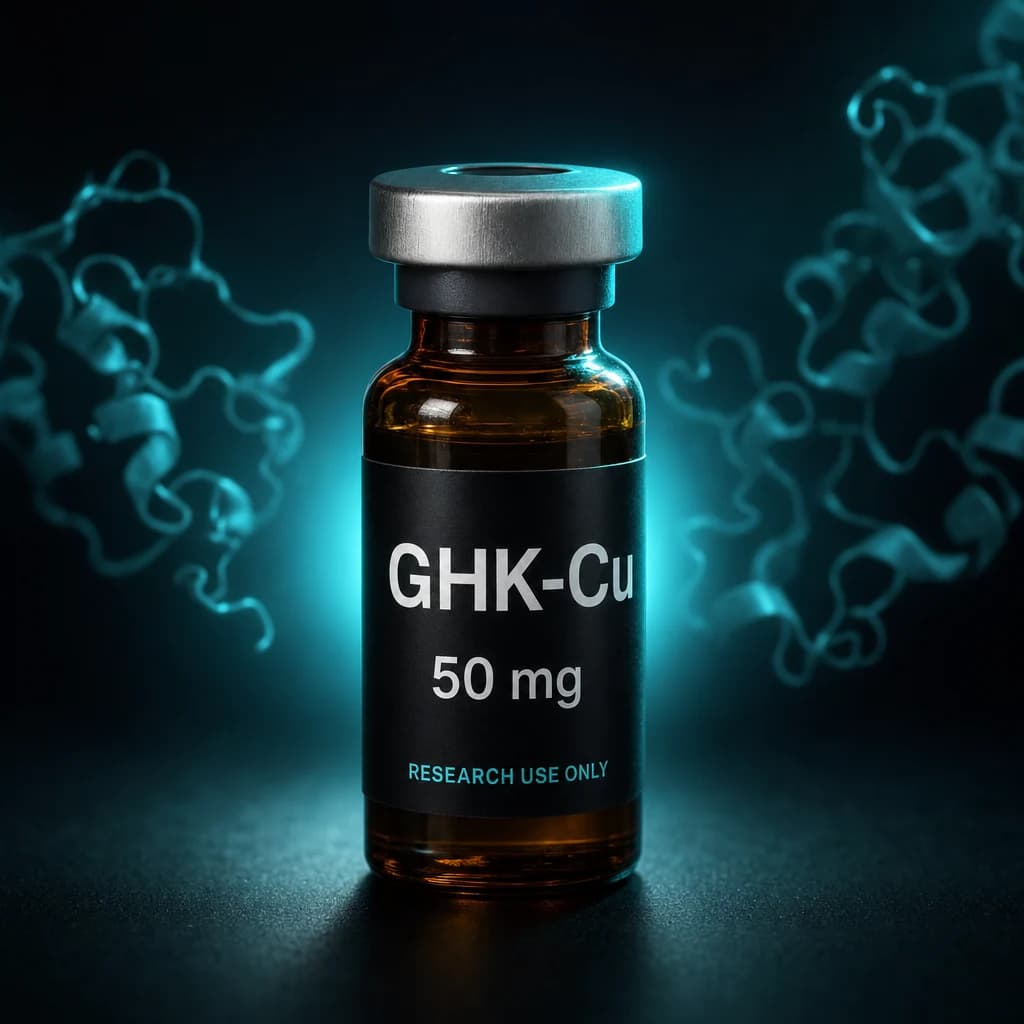
GHK-Cu (Glycyl-L-Histidyl-L-Lysine Copper) is a naturally occurring copper-binding peptide. The most-studied skin peptide, with extensive research on collagen synthesis, wound healing, and anti-aging effects.
Mechanism
Modulates gene expression related to extracellular matrix remodeling. Activates wound-healing genes, promotes collagen production, and acts as a copper carrier for enzymatic processes.
Researched benefits
- Collagen and elastin synthesis
- Wound healing acceleration
- Skin firmness and elasticity
- Hair growth research
- Anti-inflammatory and antioxidant
GLOW Blend
GHK-Cu + BPC-157 + TB-500 — the complete recovery + skin stack
Partner price
$160
- Three proven compounds in one vial
- Covers skin, tissue repair, and systemic healing
- Premium formulation
Code ENHANCED applies at checkout
Frequently asked
GHK-Cu topical vs injectable?
Topical GHK-Cu (typically 1-3% in serums or creams) is the most common form for skin and hair applications. Injectable subcutaneous forms are researched for systemic effects including wound healing, tissue repair, and scalp injection for hair density. Both routes have published preclinical support.
What's the half-life of GHK-Cu?
Approximately 2-3 hours in plasma after parenteral administration. Topically, the molecule is cleared as the skin barrier metabolizes and turns over the upper epidermal layers, with effects on gene expression measurable for days after application.
What's the typical research dose?
Topical: 1-3% in formulation, applied 1-2x daily. Injectable: 1-3mg subcutaneous daily or every other day, often near area of interest. Scalp microneedling/injection protocols use 2-3mg diluted across the treatment area weekly.
Can GHK-Cu be combined with other peptides?
Yes — topically, GHK-Cu is often layered with Matrixyl (palmitoyl pentapeptide-4) for complementary collagen stimulation. Systemically it pairs well with BPC-157 and TB-500 for tissue repair research. Avoid combining with strong vitamin C in the same topical layer (can disrupt copper coordination).
How is GHK-Cu reconstituted for injection?
Bacteriostatic water is the standard diluent for injectable forms. For a 50mg vial, 5mL of BAC water yields 10mg/mL. Swirl gently — the solution should appear blue from the copper ion. Refrigerate and protect from prolonged light. Reconstituted product is typically stable for 30+ days.
Are there contraindications in research use?
Generally well-tolerated topically and via SC injection. Caution in subjects with copper sensitivity or Wilson's disease. Localized irritation or transient blue-green discoloration at application site is possible at higher concentrations. No systemic toxicity reported at research doses.
Scientific Literature
References
- [1]
Pickart L, Vasquez-Soltero JM, Margolina A. (2015). GHK Peptide as a Natural Modulator of Multiple Cellular Pathways in Skin Regeneration.
BioMed Research International · PubMed: 26236730
- [2]
Pickart L, Margolina A. (2018). Regenerative and Protective Actions of the GHK-Cu Peptide in the Light of the New Gene Data.
International Journal of Molecular Sciences · PubMed: 30060511
- [3]
Pickart L, Vasquez-Soltero JM, Margolina A. (2012). The human tripeptide GHK-Cu in prevention of oxidative stress and degenerative conditions of aging.
Oxidative Medicine and Cellular Longevity · PubMed: 22701753
- [4]
Maquart FX, Pickart L, Laurent M, et al. (1988). Stimulation of collagen synthesis in fibroblast cultures by the tripeptide-copper complex glycyl-L-histidyl-L-lysine-Cu2+.
FEBS Letters · PubMed: 3416809
- [5]
Hong Y, Downey T, Eu KW, Koh PK, Cheah PY. (2012). A 'metastasis-prone' signature for early-stage mismatch-repair proficient sporadic colorectal cancer patients and its implications for possible therapeutics.
Clinical & Experimental Metastasis · PubMed: 22231392
Citations are provided for educational purposes. Always verify primary sources before drawing research conclusions.
Keep researching
Next steps for GHK-Cu
The compound page is the overview. Charts, certificates, and the vendor audit sit one click away.
Protocol
GHK-Cu dosage chart
Research dosing ranges, reconstitution math, and stacks for GHK-Cu.
Open dosage chartVendor
Ascension Peptides review
The COA audit and the ENHANCED 50% code for injectable research peptides.
Read the reviewReady to start your research
Get GHK-Cu from Ascension Peptides
COA-verified, US-based, discreet shipping. Use code ENHANCED for 50% off your entire order.
Buy GHK-Cu now