GlutathioneResearch guide
The body's master antioxidant tripeptide (gamma-Glu-Cys-Gly), researched by injection and IV for redox support, detoxification, and skin brightening
Half-life
~10 minutes (plasma)
Typical Dose
600-1200mg IV/IM, 1-2x weekly
Format
Injectable
Purity
≥98%
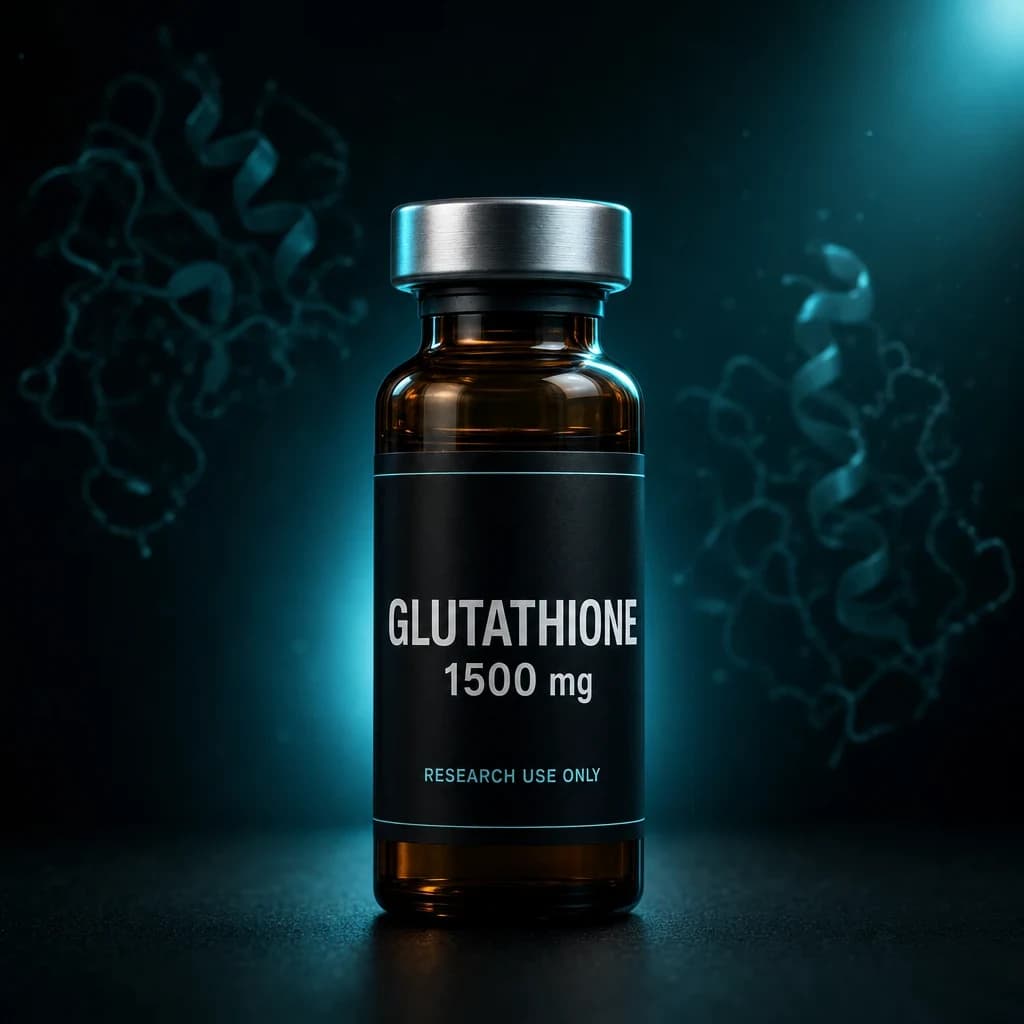
Overview
Glutathione (GSH) is a tripeptide of glutamate, cysteine, and glycine (gamma-Glu-Cys-Gly) and the most abundant antioxidant inside human cells, present at millimolar concentrations in nearly every tissue [1]. It is the body's primary redox buffer: it neutralizes reactive oxygen species, regenerates vitamins C and E, and drives Phase II detoxification by conjugating drugs, heavy metals, and other electrophiles for excretion [1]. Cellular synthesis is rate-limited by cysteine availability, and levels fall with age, oxidative stress, and disease [1]. Injectable and IV glutathione are used in antioxidant and skin-brightening research because oral GSH is largely hydrolyzed in the gut and absorbed inefficiently, though controlled trials show oral dosing can still raise body stores over months [2,3]. It sits in the same longevity and redox conversation as NAD+: NAD+-derived NADPH supplies the reducing power that regenerates oxidized glutathione (GSSG) back to its active form, so the two systems are biochemically linked.
Mechanism
Glutathione works through its cysteine thiol (-SH) group, cycling between reduced (GSH) and oxidized disulfide (GSSG) states. Glutathione peroxidases use GSH to reduce hydrogen peroxide and lipid peroxides to water, while glutathione reductase regenerates GSH from GSSG using NADPH as the electron donor [1]. Separately, glutathione S-transferases conjugate GSH to xenobiotics and reactive metabolites, tagging them for excretion [1]. The proposed skin-brightening mechanism is a shift of melanogenesis away from darker eumelanin toward lighter pheomelanin, plus direct inhibition of tyrosinase [3,4]. The clinical evidence for skin lightening is mixed and mostly short-term, and IV administration lacks standardized dosing and carries documented safety concerns [4,5].
Researched benefits
- Master intracellular antioxidant and redox buffer
- Phase II detoxification via glutathione conjugation
- Regenerates vitamins C and E to their active forms
- Antimelanogenic and skin-brightening research
- Supports mitochondrial and immune function
- Delivers cysteine for cellular redox balance
Frequently asked
Injectable/IV glutathione vs oral capsules?
Oral glutathione is a peptide, so much of it is broken down by digestive enzymes before absorption, which is why bioavailability is low. That said, a 6-month randomized trial (Richie et al., 2015) found daily oral dosing did raise body glutathione stores over time. Injectable and IV routes deliver GSH directly into circulation and are the standard approach in skin-brightening research, but they bypass the gut's protective filtering and carry more risk.
Does glutathione actually brighten skin?
The evidence is genuinely mixed. Small randomized trials of oral GSH (250-500mg/day) have shown modest reductions in melanin index over 4-12 weeks (Weschawalit et al., 2017), and the proposed mechanism (shifting pigment toward lighter pheomelanin and inhibiting tyrosinase) is plausible. But reviews conclude the data are limited, short-term, and often industry-linked, and there are no rigorous trials establishing IV glutathione's efficacy or long-term safety for lightening (Sonthalia et al., 2016). Treat brightening claims with skepticism.
What's the typical research dose and protocol?
Protocols vary widely. Oral trials used 250-1000mg/day. IV/IM skin-brightening protocols commonly used 600-1200mg one to two times weekly, often paired with vitamin C, though no dose has been standardized or validated in controlled trials. Because GSH oxidizes and clears from plasma within minutes, injectable protocols rely on repeated dosing rather than a single load.
Is IV glutathione safe?
Oral glutathione is well tolerated in trials. Injectable and IV glutathione are a different matter: the peer-reviewed literature flags inadequate safety data, with reports of anaphylaxis, severe skin reactions, and concerns about hepatotoxicity and renal strain, compounded by unregulated compounding and no standardized protocol (Davids et al., 2016). Regulators have warned about injectable skin-lightening products. The honest picture: the antioxidant biology is solid, but IV use for cosmetic lightening is not well supported.
How is glutathione reconstituted and stored?
Glutathione for injection is supplied lyophilized or as a solution. Reconstitute with sterile or bacteriostatic water (for a 1500mg vial, 10mL yields 150mg/mL). GSH is highly light- and air-sensitive and oxidizes to inactive GSSG on exposure, so add diluent gently, keep the vial in its original packaging or wrapped, refrigerate at 2-8°C, and use promptly after reconstitution.
How does glutathione relate to NAD+?
They are two halves of the same redox system. Glutathione is regenerated from its oxidized form using NADPH, which cells derive from NAD+ pathways, so adequate NAD+ helps keep glutathione in its active reduced state. Longevity researchers often discuss them together because both decline with age and both sit at the center of cellular redox and mitochondrial health. Some protocols pair NAD+ with glutathione for this reason, though direct human trials of the combination are lacking.
Scientific Literature
References
- [1]
Forman HJ, Zhang H, Rinna A. (2009). Glutathione: overview of its protective roles, measurement, and biosynthesis.
Molecular Aspects of Medicine · PubMed: 18796312
- [2]
Richie JP Jr, Nichenametla S, Neidig W, et al. (2015). Randomized controlled trial of oral glutathione supplementation on body stores of glutathione.
European Journal of Nutrition · PubMed: 24791752
- [3]
Weschawalit S, Thongthip S, Phutrakool P, Asawanonda P. (2017). Glutathione and its antiaging and antimelanogenic effects.
Clinical, Cosmetic and Investigational Dermatology · PubMed: 28490897
- [4]
Sonthalia S, Daulatabad D, Sarkar R. (2016). Glutathione as a skin whitening agent: Facts, myths, evidence and controversies.
Indian Journal of Dermatology, Venereology and Leprology · PubMed: 27088927
- [5]
Davids LM, Van Wyk JC, Khumalo NP. (2016). Intravenous glutathione for skin lightening: Inadequate safety data.
South African Medical Journal · PubMed: 27499402
Citations are provided for educational purposes. Always verify primary sources before drawing research conclusions.
Keep researching
Next steps for Glutathione
The compound page is the overview. Charts, certificates, and the vendor audit sit one click away.
Vendor
Ascension Peptides review
The COA audit and the ENHANCED 50% code for injectable research peptides.
Read the reviewArticle
Glutathione Injection Benefits: What the Human Trials Actually Show
A deeper read that sits next to the Glutathione guide.
Read articleTool
Reconstitution calculator
Convert vial size and bacteriostatic water into syringe units.
Open calculatorReady to start your research
Get Glutathione from Bodybuilding Health+
US-licensed clinicians. Glutathione prescribed and shipped to your door from $129/mo.
Buy Glutathione now