NAD+Research guide
Nicotinamide adenine dinucleotide — essential coenzyme for mitochondrial function, DNA repair, and sirtuin-mediated longevity pathways
Half-life
Variable (intracellular)
Typical Dose
100-300mg SC, 1-3x weekly
Format
Injectable
Purity
≥98%
Overview
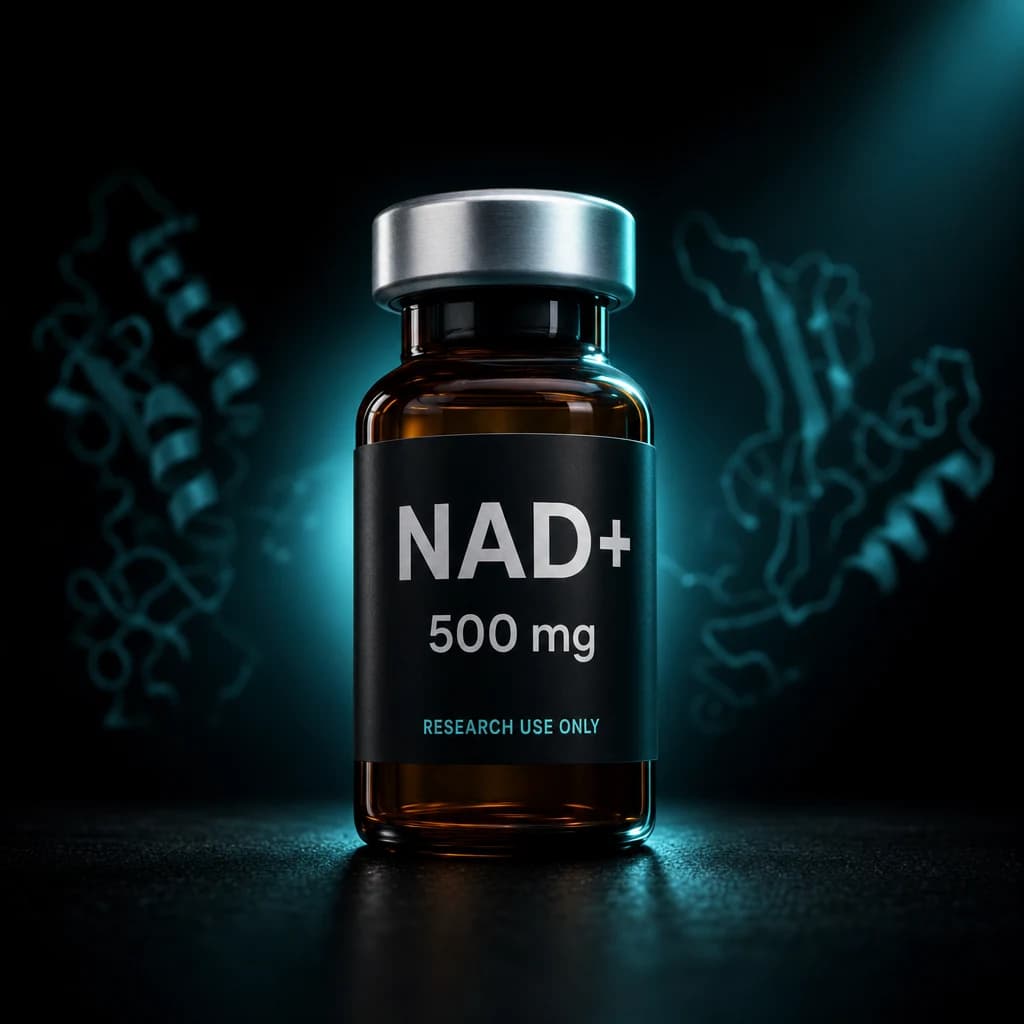
NAD+ (nicotinamide adenine dinucleotide) is a critical coenzyme found in every living cell, essential for cellular energy production, DNA repair, and sirtuin activation. Cellular NAD+ levels decline significantly with age, and restoration has become a central focus in the longevity community — David Sinclair, Peter Attia, and Andrew Huberman have all discussed it extensively. Direct subcutaneous or IV administration bypasses the oral bioavailability limitations of precursors such as NMN and NR, delivering the coenzyme itself.
Mechanism
NAD+ serves as substrate for three major enzyme families: sirtuins (SIRT1-7) which regulate longevity and metabolism, PARPs which repair DNA damage, and CD38 which modulates immune signaling. It is also indispensable to the electron transport chain via the NADH/NAD+ redox cycle. Direct repletion via injection bypasses the methylation cost of precursors and restores levels that decline with age.
Researched benefits
- Mitochondrial function support
- Cellular energy metabolism (ATP generation)
- Sirtuin (SIRT1-7) activation
- DNA repair via PARP pathway
- Cognitive and neurological research
- Age-related metabolic marker support
Frequently asked
NAD+ injection vs NMN or NR oral supplements?
Oral precursors (NMN, NR) must be absorbed, enter cells, and be converted to NAD+ through the salvage pathway — with significant losses at each step. Direct NAD+ injection delivers the active coenzyme into circulation, bypassing conversion steps, though the molecule's large size and charge mean it still relies on cellular uptake mechanisms. Many researchers find injection produces more pronounced effects than oral precursors.
What's the typical research protocol?
Common research protocols use 100-300mg subcutaneous 1-3x weekly. IV infusion protocols range from 250mg to 1000mg per session. Subjects often report a 'flushing' or chest-tightness sensation during SC or IV administration, which is dose- and rate-dependent and resolves quickly.
How is NAD+ reconstituted and stored?
NAD+ is supplied lyophilized. Reconstitute with bacteriostatic water (typical: 10mL of BAC into a 1000mg vial = 100mg/mL). The molecule is light-sensitive — store the reconstituted vial in its original packaging or wrapped, refrigerated at 2-8°C, and protect from prolonged light exposure.
Why do SC injections sometimes cause chest tightness?
The 'flush' sensation is well-documented with NAD+ administration and is thought to be related to rapid intracellular metabolism and possibly histamine-related vasomotor effects. Slowing the injection rate and splitting the dose across two sites mitigates it in most reports.
What is the best NAD+ supplement or format?
It depends on the goal. Oral NMN and NR are the most convenient and carry the best-controlled human data (a 2021 randomized trial found oral NMN raised muscle insulin sensitivity). Injectable and IV NAD+ raise levels fastest but have little controlled evidence behind the energy and mental-clarity claims attached to them. There is no single best product. Match the format to an outcome you can actually measure, and verify any research-grade material with a COA.
Keep researching
Next steps for NAD+
The compound page is the overview. Charts, certificates, and the vendor audit sit one click away.
Protocol
NAD+ dosage chart
Research dosing ranges, reconstitution math, and stacks for NAD+.
Open dosage chartVendor
Ascension Peptides review
The COA audit and the ENHANCED 50% code for injectable research peptides.
Read the reviewReady to start your research
Get NAD+ from Ascension Peptides
COA-verified, US-based, discreet shipping. Use code ENHANCED for 50% off your entire order.
Buy NAD+ now