PinealonResearch guide
Khavinson tripeptide bioregulator (Glu-Asp-Arg) researched for neuroprotection, memory, and sleep
Half-life
Short (tripeptide, rapid turnover)
Typical Dose
100-300 mcg daily
Format
Injectable
Purity
≥98%
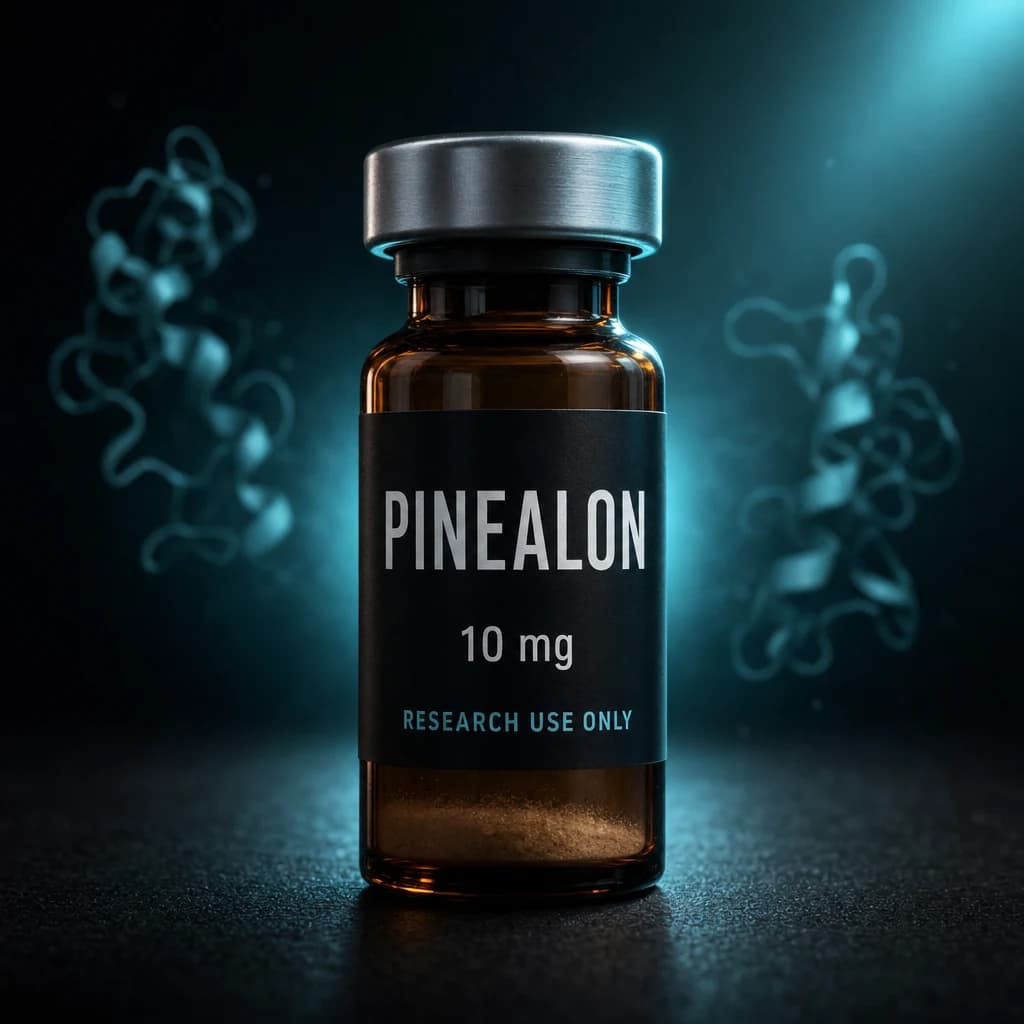
Overview
Pinealon is a short synthetic tripeptide (Glu-Asp-Arg) developed by Professor Vladimir Khavinson and colleagues at the St. Petersburg Institute of Bioregulation and Gerontology. It is part of a family of Khavinson 'peptide bioregulators' — short peptides designed to exert organ-specific regulatory effects by directly interacting with DNA and regulating gene expression. Russian research has studied Pinealon extensively for neuroprotection, memory, and cognitive function in aging and stress models.
Sequence & properties
Sequence, colored by side chain
Length
3 aa
Avg mass
418.4 Da
Theoretical pI
4.18
Net charge (pH 7)
-1.0
Mechanism
Khavinson's work proposes that short peptide bioregulators can enter the cell nucleus, bind directly to double-stranded DNA in promoter regions, and regulate gene expression. Pinealon has been shown in Russian studies to influence genes related to neuroprotection, antioxidant defense, and longevity. Its small tripeptide size allows it to cross the blood-brain barrier and reach CNS targets.
Researched benefits
- Neuroprotection in aging models
- Memory and cognitive support
- Sleep quality modulation
- Stress resilience research
- Age-related neurological studies
- Small size enables blood-brain barrier crossing
Frequently asked
What is a Khavinson peptide bioregulator?
Khavinson bioregulators are a family of short synthetic peptides (typically 2-4 amino acids) developed by Prof. Vladimir Khavinson's group in St. Petersburg. Each is targeted at a specific organ or tissue (pineal, thymus, liver, brain, etc). The proposed mechanism involves direct DNA interaction and gene expression modulation. Epithalon, Pinealon, and Vilon are among the best-known.
How does Pinealon differ from Epithalon?
Both originate from Khavinson's pineal research, but the sequences and targets differ. Epithalon (Ala-Glu-Asp-Gly) is a tetrapeptide primarily studied for telomerase activation and lifespan effects. Pinealon (Glu-Asp-Arg) is a tripeptide more focused on direct neuroprotective and cognitive effects in brain tissue.
What's the typical research dose?
Russian literature and research protocols typically use 100-300 mcg daily, often in 10-20 day cycles separated by rest periods. The short half-life necessitates daily administration during active cycles. Bacteriostatic water is the standard diluent.
Keep researching
Next steps for Pinealon
The compound page is the overview. Charts, certificates, and the vendor audit sit one click away.
Protocol
Pinealon dosage chart
Research dosing ranges, reconstitution math, and stacks for Pinealon.
Open dosage chartVendor
Ascension Peptides review
The COA audit and the ENHANCED 50% code for injectable research peptides.
Read the reviewArticle
Best Peptides for Longevity: Mechanism First, Hype Last
A deeper read that sits next to the Pinealon guide.
Read articleReady to start your research
Get Pinealon from Ascension Peptides
COA-verified, US-based, discreet shipping. Use code ENHANCED for 50% off your entire order.
Buy Pinealon now