At a glance
- Standard research dose: 250 mcg subcutaneous, once daily, for 4 weeks
- Plasma half-life is ~15 minutes, but biological effects persist for weeks
- 5 mg vial + 2 mL BAC water = 250 mcg per 10 units on a U-100 syringe
- Stable in gastric juice 24+ hours; oral route works for GI targets only
- Wide therapeutic window: nanogram doses showed efficacy in tendon studies
The short answer
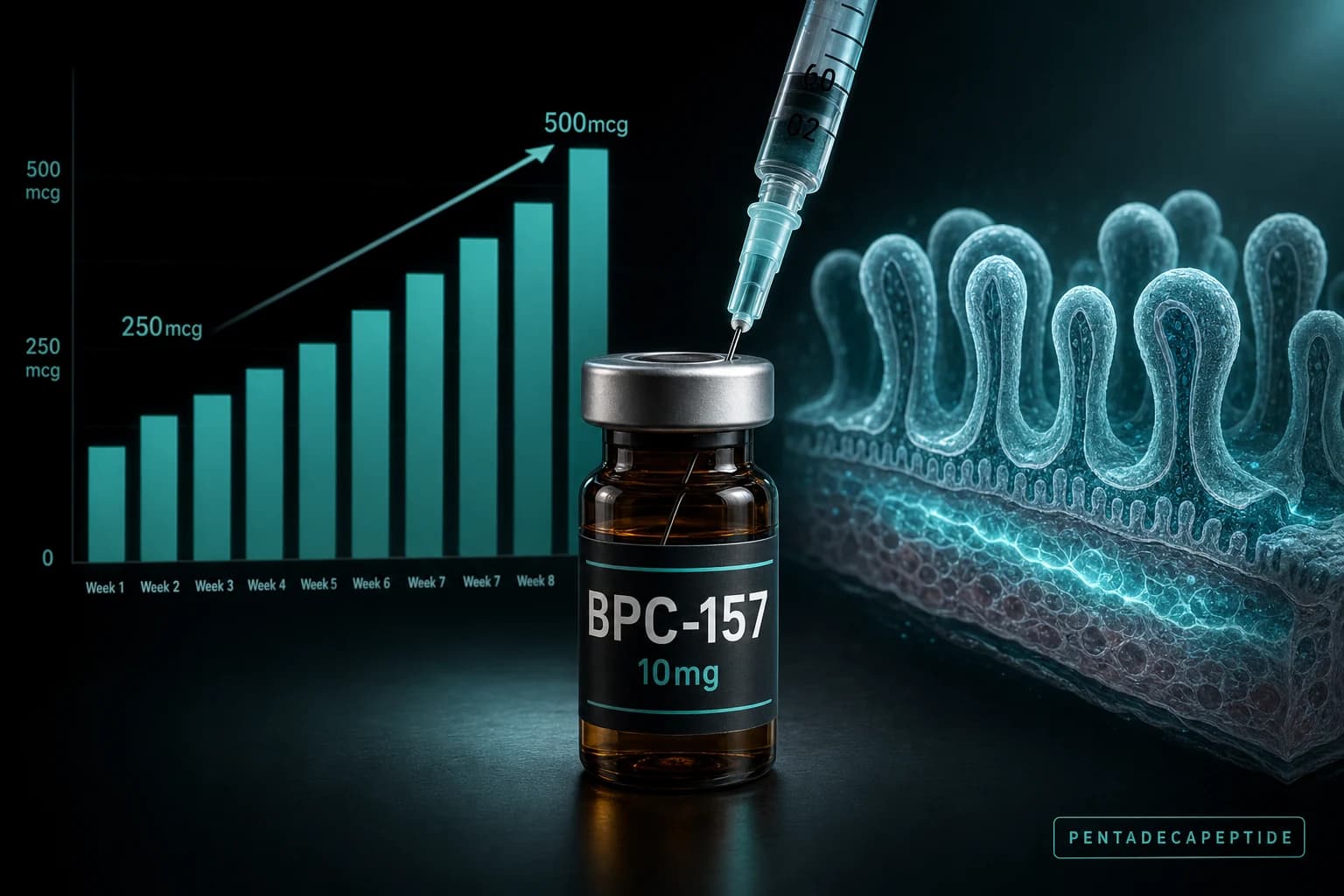
Typical research doses for BPC-157 in the published literature fall in the range of 250-500 mcg per day, administered subcutaneously, for 4-6 week cycles. Most protocols use 250 mcg once daily or 250 mcg twice daily (morning + evening).
If you're trying to pick a starting point for research: 250 mcg subcutaneous, once daily, for 4 weeks.
Why that range?
BPC-157 dosing research is derived from rodent studies converted using allometric scaling. Professor Predrag Sikiric and colleagues at the University of Zagreb have published the majority of BPC-157 research since the early 1990s. Their work established the standard dose at 10 mcg/kg in rats, administered intraperitoneally (IP) or in drinking water, showing consistent effects across gut, tendon, muscle, nerve, and vascular tissue models.
The effective range across the broader literature (mice, rats, and rabbits) spans 6-50 mcg/kg. In the landmark Staresinic et al. (2003) Achilles tendon transection study, BPC-157 was tested at three doses: 10 mcg, 10 ng, and 10 pg per kg body weight. Even the lowest nanogram-range dose produced significant biomechanical improvement, suggesting a wide therapeutic window. For gastrointestinal endpoints specifically, doses as low as 2 mcg/kg have shown efficacy comparable to 10 mcg/kg, indicating gut tissue may be especially responsive.
Allometric scaling from the 10 mcg/kg rat dose yields approximately 1.6 mcg/kg for humans, or roughly 115 mcg for a 70 kg adult. The upper end of the animal range (40 mcg/kg in rats) scales to about 6.5 mcg/kg, or 455 mcg. The 250 mcg daily dose sits in the middle of this calculated range and has become the de facto standard in research protocols.
A 2022 pharmacokinetic study (Frontiers in Pharmacology) tested single IV administration at 20 mcg/kg and IM injections at 20, 100, and 500 mcg/kg in rats and beagle dogs, confirming linear PK characteristics across all doses.
Timing and injection site
Timing: Most protocols administer BPC-157 once or twice daily. Formal PK data (Frontiers in Pharmacology, 2022) measured the plasma elimination half-life at approximately 15 minutes after IV dosing in rats, with rapid clearance from circulation. After intramuscular injection, peak plasma concentration (Tmax) was reached within 3 minutes at all doses tested. Despite this very short plasma half-life, the biological effects of BPC-157 (angiogenesis, anti-inflammatory signaling, tissue remodeling) persist far beyond its pharmacokinetic presence, lasting weeks to months in animal models. Mean absolute bioavailability following IM injection was 14-19% in rats and 45-51% in beagle dogs. Twice-daily dosing (morning + evening) is commonly used to maintain more frequent signaling stimulation.
Injection site: BPC-157 is commonly administered subcutaneously (SC) into the abdomen or thigh. For research into localized healing, some researchers inject near the affected tissue, though systemic dosing works through the same mechanisms and produces similar results in animal studies.
Rotation: Rotate injection sites every 2-3 days to avoid local irritation.
Cycle length
Standard research protocols run 4-6 weeks. Extended cycles beyond 8 weeks have not been well studied.
A typical cycle structure:
- Weeks 1-4: 250 mcg daily (or 250 mcg BID for more aggressive protocols)
- Off period: 4-8 weeks before repeating
- Reassessment: Document endpoints before and after each cycle
How BPC-157 works: mechanism data
BPC-157's effects are not limited to a single pathway. The published literature identifies several interconnected mechanisms:
VEGFR2 and angiogenesis: A 2017 study in the Journal of Molecular Medicine demonstrated that BPC-157 promotes angiogenesis primarily through upregulation and activation of VEGFR2 (vascular endothelial growth factor receptor 2), not by increasing VEGF-A itself. BPC-157 time-dependently activates the VEGFR2-Akt-eNOS signaling cascade in human vascular endothelial cells, promoting receptor internalization and downstream nitric oxide production. In a rat hind limb ischemia model, BPC-157 accelerated blood flow recovery and increased vessel count. This receptor-level mechanism distinguishes BPC-157 from growth factors that simply flood the tissue with VEGF.
Nitric oxide modulation: BPC-157 modulates the Src-Caveolin-1-eNOS pathway (Scientific Reports, 2020), influencing vasomotor tone. It appears to maintain protective NO signaling while counteracting cytotoxic NO overproduction during inflammation.
Tendon healing: In the Staresinic et al. (2003) rat Achilles tendon transection model, BPC-157 (10 mcg/kg IP, daily) improved every measured outcome by day 14: increased load-to-failure, higher Young's modulus of elasticity, superior fibroblast and collagen formation, reduced inflammatory granulocyte infiltration, and full macroscopic reestablishment of tendon integrity. A follow-up study (Chang et al., 2011) showed BPC-157 promotes tendon fibroblast outgrowth, cell survival under stress, and cell migration via activation of the FAK-paxillin pathway. Growth hormone receptor was also identified as one of the most abundantly upregulated genes in tendon fibroblasts treated with BPC-157.
Gastric cytoprotection: BPC-157 is derived from a protein native to human gastric juice, and it functions as a potent cytoprotective agent. In gastric ulcer models, both intramuscular and intragastric administration reduced ulcer area and accelerated healing. The protective effect reached statistical significance at doses as low as 200 ng/kg and outperformed famotidine (a standard H2 blocker) at 400-800 ng/kg. BPC-157 also increased the survival of cultured enteric neurons and the proliferation of enteric glial cells, suggesting it supports repair of damaged enteric nervous system structures.
Stability in gastric juice: Unlike most peptides, BPC-157 is stable in human gastric juice at pH 2-3 for more than 24 hours and resists degradation by pepsin and other gastric proteases. This unusual acid stability is why it retains biological activity when administered orally for gut-targeted endpoints.
Reconstitution math
For a 5mg vial reconstituted with 2mL bacteriostatic water:
- Concentration: 2.5 mg/mL = 2,500 mcg/mL
- 250 mcg dose: 0.10 mL = 10 units on a U-100 insulin syringe
- Doses per vial: 20 doses
For a 5mg vial with 5mL BAC water:
- Concentration: 1 mg/mL = 1,000 mcg/mL
- 250 mcg dose: 0.25 mL = 25 units
- Doses per vial: 20 doses
Use the reconstitution calculator to compute exact draw volumes for any vial/water combination.
Storage
- Lyophilized vial: -20°C for long-term storage, 2-8°C for short-term (weeks)
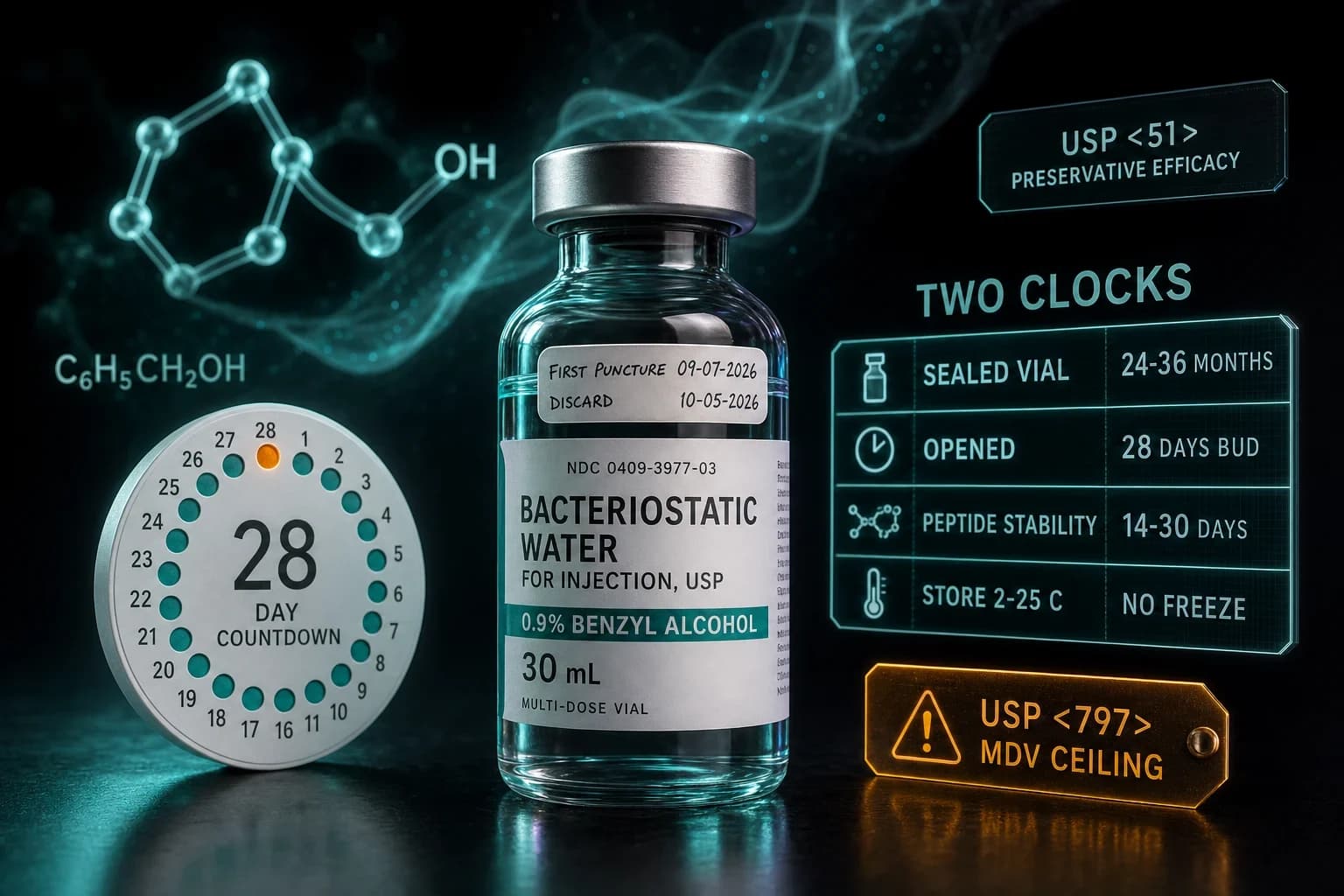
- Reconstituted vial: 2-8°C, use within 14-30 days
- Avoid: direct sunlight, repeated freeze-thaw cycles, vigorous shaking
Stacking with TB-500
BPC-157 and TB-500 (Thymosin Beta-4) are commonly stacked in recovery research because they work through different mechanisms:
- BPC-157: VEGFR2-driven angiogenesis, FAK-paxillin cell migration, eNOS/nitric oxide modulation
- TB-500: Actin regulation, cell migration, cardiovascular support
A typical stack:
- BPC-157: 250 mcg daily
- TB-500: 2-5 mg twice weekly
Both can be drawn into the same syringe for a single SC injection. Cycle length is usually 4-6 weeks matching BPC-157's standard protocol.
What the literature does not support
Some things you'll see claimed about BPC-157 that are not well-supported by the research:
- Oral bioavailability for systemic effects: BPC-157 is remarkably stable in gastric juice (over 24 hours at pH 2-3), and oral doses in published studies typically range from 10-100 mcg/kg. However, oral administration primarily benefits GI-targeted endpoints (ulcers, colitis, gut mucosal integrity). For systemic tissue targets, injectable routes provide substantially higher bioavailability (14-51% IM vs. limited oral absorption). If you're targeting tissue outside the gut, inject.
- Doses above 1000 mcg/day: There's no published evidence that mega-dosing improves outcomes. Higher doses have not been tested.
- Permanent effects: BPC-157's effects appear to be present during administration and persist for some period after discontinuation, but claims of "permanent remodeling" are not supported.
Safety notes
BPC-157 has a strong safety profile in animal studies with no observed toxicity at doses far exceeding typical research use. A systematic review (PMC, 2025) identified 36 studies (35 preclinical, 1 clinical). A small retrospective study of intraarticular BPC-157 for chronic knee pain found 7 of 12 patients reported relief for over 6 months. A pilot study in two healthy adults showed IV BPC-157 infusions up to 20 mg were well tolerated, with plasma levels returning to baseline within 24 hours. That said:
- This compound is not approved for human use in any country
- It is for research purposes only in most jurisdictions
- Consult a healthcare professional before any decision to self-administer
Get started
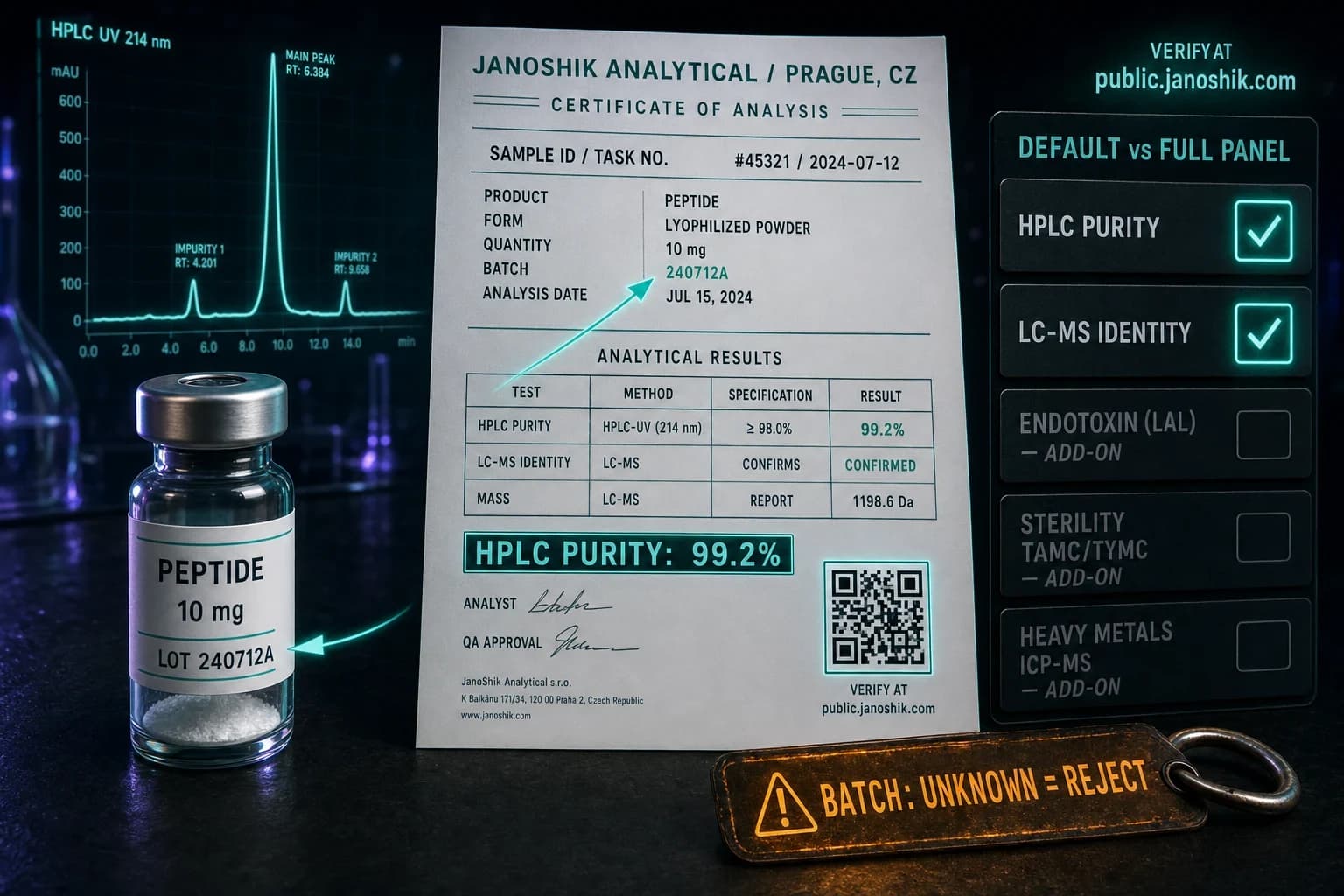
If you're ready to begin BPC-157 research, Ascension Peptides offers 50% off with code ENHANCED. Confirm the lot against the BPC-157 lab tests.