At a glance
- Planet Peptide is a real, established US research-peptide vendor, operating since roughly 2015.
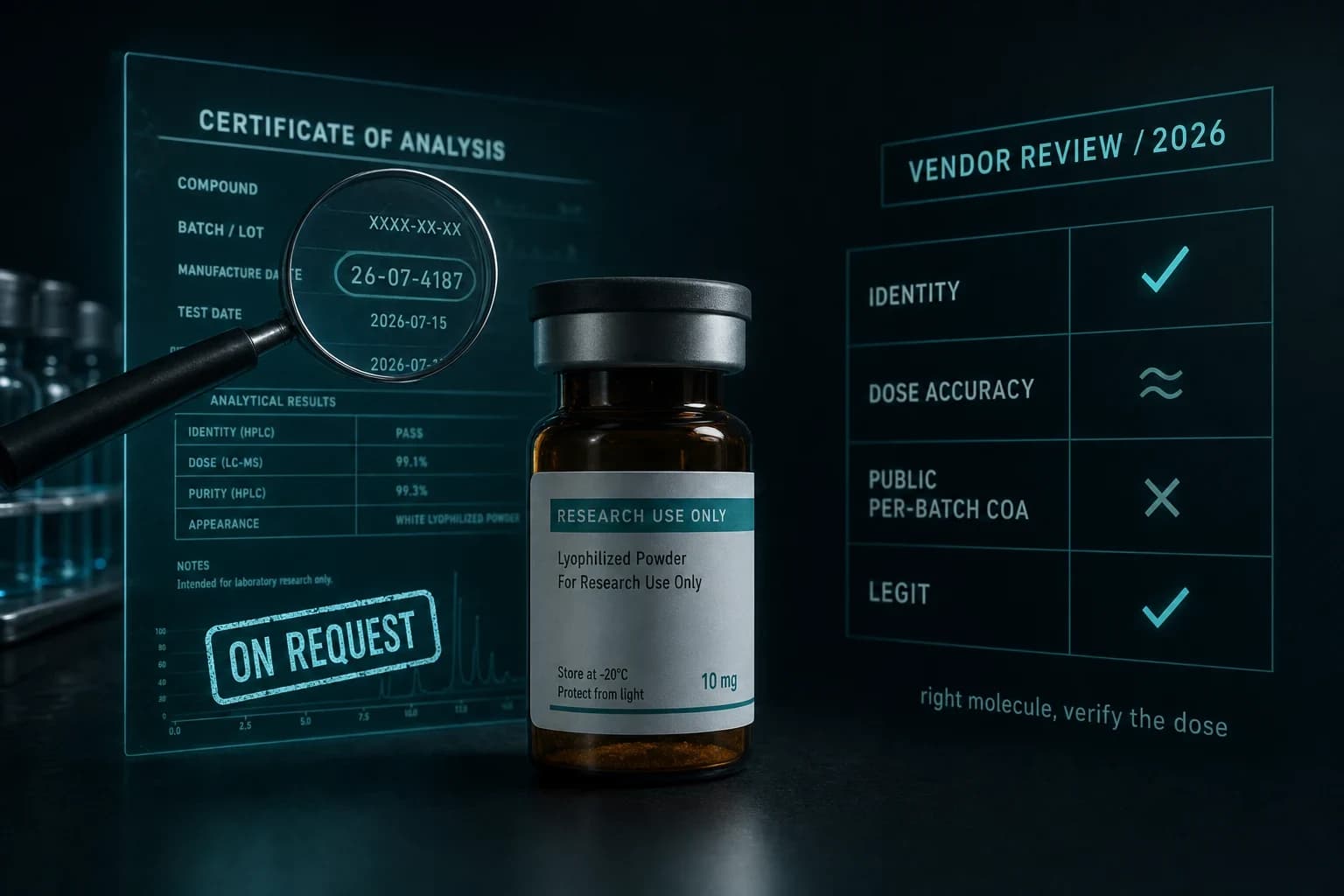
- It does not publish per-batch third-party COAs by default; certificates arrive on request.
- Independent testing shows strong identity accuracy but variable dose accuracy across some batches.
- Reputation is thin: only a handful of public reviews and a small forum footprint.
- For public lot-matched COAs, Ascension Peptides is the safer verified pick.
You searched "is Planet Peptide legit," which means you already did the smart thing: you checked before you spent money. Good. The research-peptide market rewards paranoia. So let us skip the marketing language and answer the question that actually matters, which is not "is this a scam" but "can I verify what is in the vial before it ships."
Here is the short version. Planet Peptide is a real, operating US vendor with a real catalog and a real track record. It is not a fly-by-night storefront. But it also does not do the one thing we treat as non-negotiable: publish a batch-matched, third-party certificate of analysis for every lot, on the product page, before you buy. That single gap is the whole review.
Everything below is current as of publication and drawn from the vendor's own storefront, independent lab-test aggregators, and community reports. Read it, then decide for yourself.
Bottom line: Planet Peptide is legit in the sense that it exists, ships, and sells material that usually tests as the correct molecule. It is not best-in-class on the metric that protects you most: public, per-batch, third-party COAs. On that criterion it loses to vendors that publish certificates by default.
Who is Planet Peptide?
Planet Peptide is a US-based domestic vendor that has been around since roughly 2015 to 2017, which makes it an established mid-tier name rather than a new entrant. Longevity is worth something in this space. A vendor that has taken money and shipped product for the better part of a decade without collapsing has cleared a bar that most gray-market storefronts never reach.
The catalog is broad and reads like the current demand curve. The metabolic compounds are front and center: research-grade semaglutide, tirzepatide, retatrutide, and mazdutide. Around them sits the usual supporting cast: ipamorelin, CJC-1295, PT-141, GHK-Cu, and melanotan II. You can browse the same compound families in our peptide database to see what each is actually studied for before you evaluate any seller's version of it.
One thing to be clear about up front, because it applies to Planet Peptide and every vendor in this category equally: these are research chemicals sold for laboratory use only. They are not approved drugs, not supplements, and not for human consumption. Nothing in this review is medical advice or an endorsement of self-experimentation.
Testing and COAs: the part that matters
This is where a vendor review lives or dies, so read this section twice.
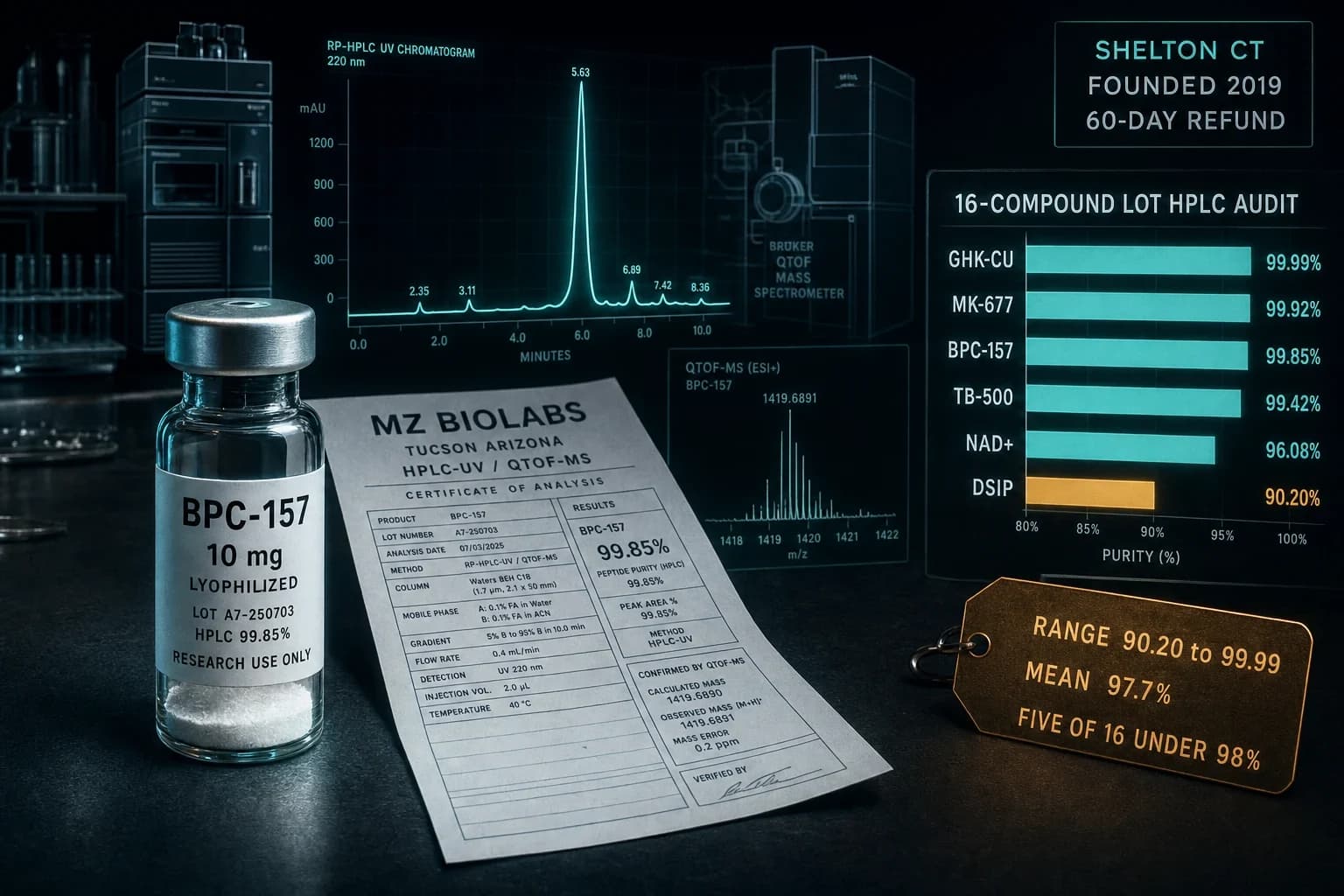
The gold standard is simple. For each product, on the product page, you want a certificate of analysis from an independent lab that lists the exact lot number on the vial you receive, a mass-spec identity confirmation, and an HPLC purity figure above 98 percent. If you do not know why those three lines matter, our explainer on what a peptide COA actually proves walks through them.
Planet Peptide does not meet that standard by default. COAs are not published cleanly for every lot on the storefront. Where certificates do appear, several community reports describe them as older than six months, which is a problem: a COA that does not match the lot you were shipped tells you nothing about the vial in your hand.
The redeeming detail, and it is a real one, is customer service. Multiple users report that when they emailed and asked for a current, batch-matched certificate, Planet Peptide responded quickly, sometimes same-day, and supplied a COA they could independently verify through a third-party diagnostics portal. That is meaningfully better than a vendor that ghosts you or invents a certificate. But it puts the burden on you, every order, and a certificate you have to chase is not the same as one published before checkout.
Independent testing rounds out the picture and it is genuinely mixed. Third-party aggregator data covering 62 samples across 9 Planet Peptide products found a median purity of about 99.7 percent and a 100 percent identity pass rate, meaning every sample was the molecule it claimed to be. That is a strong identity result. The weakness is dose accuracy: measured content ranged from roughly 21 percent under label to 20 percent over label across batches, and product grades spanned A to D. Some compounds tested consistently well; CJC-1295 scored poorly in that dataset, and tirzepatide and retatrutide showed high batch-to-batch variability. Translation: the vial usually contains the right peptide, but how much peptide is less predictable than you would want for careful dosing work.
You can see how this compares against sellers that publish certificates openly in our self-hosted lab-test and COA library, which is deliberately built so certificates cannot be quietly swapped out later.
Pricing, shipping, and returns
Pricing sits in the mid-tier band, higher than the cheapest overseas sources and below premium domestic labels. Community notes over the past year mention that prices have crept up and some popular items have gone out of stock more often, which tracks with the broader GLP-1 supply squeeze rather than anything specific to this vendor.
Shipping reports are inconsistent. Some buyers describe fast domestic delivery inside two days; others report waits of up to three weeks. That spread usually reflects inventory and order volume, but "usually fast, occasionally slow" is the honest summary. There is a 30-day money-back guarantee on unopened products, with the initial shipping charge deducted from refunds, which is a fair and normal policy.
The assessment table
| Criterion | Planet Peptide | Our take |
|---|---|---|
| COA / testing | COAs not published per-lot by default; some on-site certs reported outdated; current batch COAs supplied on request | The single biggest gap. On-request beats nothing, but public per-batch COAs are the standard |
| Product range | Broad: GLP-1 metabolic compounds plus common research peptides | Genuinely good selection, competitive with larger vendors |
| Independent test data | 99.7% median purity, 100% identity pass, but dose accuracy ranged roughly -21% to +20%; grades A to D | Right molecule, inconsistent dose. Fine for some work, risky for precise protocols |
| Pricing | Mid-tier; prices trending up, some stockouts | Reasonable, not a standout on value |
| Shipping | Domestic; often 2 days, occasionally up to 3 weeks | Inconsistent but within normal range |
| Reputation | Small footprint; roughly a handful of public reviews, around 3.8/5; responsive support | Thin evidence base makes long-term consistency hard to judge |
| Legit? | Yes, a real and established operating vendor | Legit is a low bar. Verifiable is the bar that matters |
Reputation: the thin part
Here is the honest limitation on judging Planet Peptide: there is not much to go on. The public review footprint is small, on the order of a few reviews averaging around 3.8 out of 5, with limited discussion on the larger community forums. That is not a red flag by itself. Plenty of competent vendors keep a low profile. But it does mean the sample size for spotting a bad batch trend is small, and the responsible move when data is thin is to lower your confidence, not raise it.
If you want the wider context on why sourcing in this market is hard and why "the vendor seems fine" is not the same as verification, our breakdown of the peptide gray-market sourcing truth covers the structural reasons certificates matter more than reviews.
Our recommendation
We are not going to pretend Planet Peptide is a scam. It is not. It is a real, established vendor that mostly ships the right molecule and answers its email. If you buy from it, the practical protective step is to email and demand a current, lot-matched, third-party COA before you use anything, and to independently verify that certificate rather than trusting the storefront copy.
But when the whole review comes down to one criterion, we point people to the vendor that already does the thing you would otherwise have to chase. Our detailed Ascension Peptides review covers a seller that publishes per-batch, third-party certificates by default, lot-matched to the vial, so verification is not a favor you have to request. For the full set of rules we use to rank sellers, the best legit peptide vendors for 2026 guide lays out the purity floor, COA recency, and batch-matching checks in order.
For research-use injectable reference material with certificates you can actually check, Ascension Peptides is where we send people, and code ENHANCED takes 50% off at checkout. That recommendation is not a knock on Planet Peptide's honesty. It is a preference for the vendor that makes verification the default instead of the exception.
Disclaimer
This article is for informational purposes only and is not medical advice or an endorsement of human use. Research peptides are sold for laboratory research use only and are not for human consumption. We are not affiliated with Planet Peptide, and all facts above are current as of publication and may change; verify pricing, stock, and testing directly with any vendor before buying. Do your own due diligence, and always confirm a current, batch-matched third-party COA before using any research compound. Our Ascension Peptides link is an affiliate relationship, which does not change our sourcing standards.