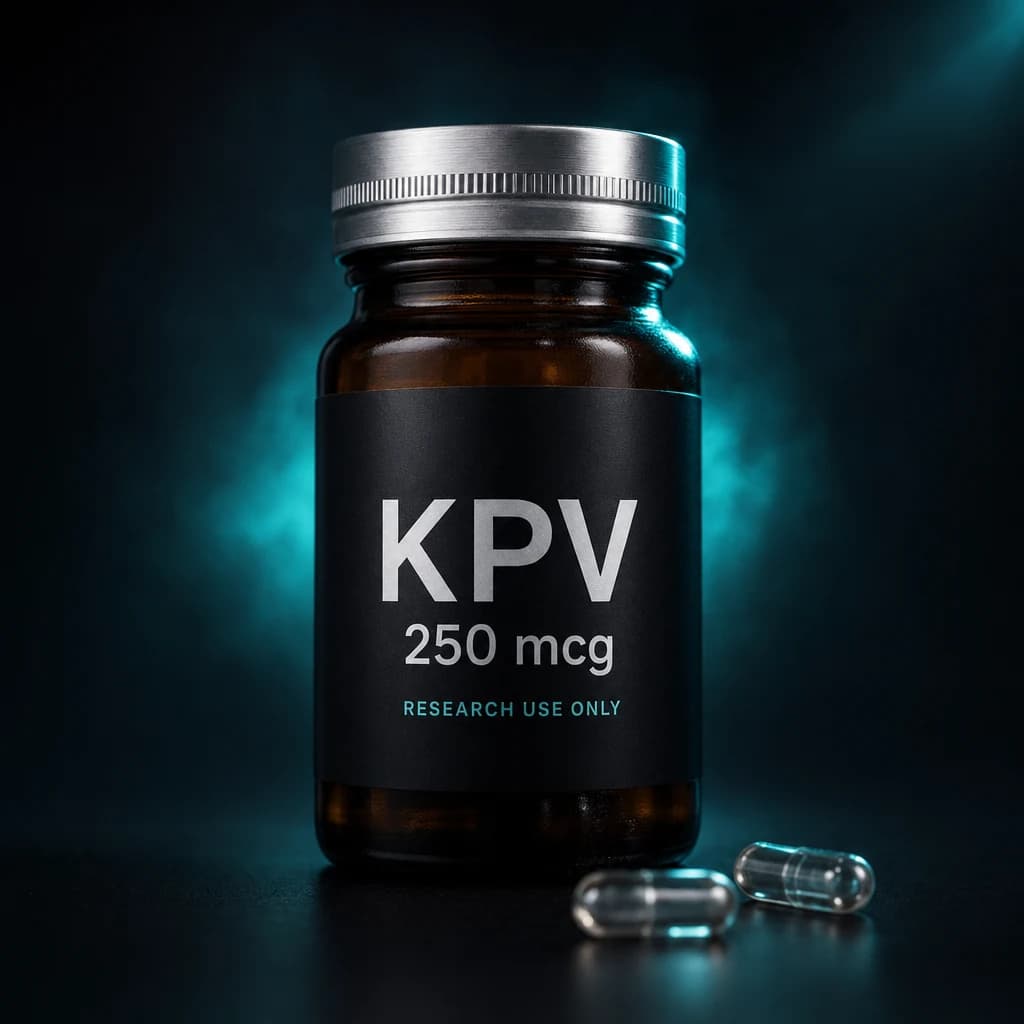
KPVResearch guide
Tripeptide derived from alpha-MSH for anti-inflammatory research
Half-life
~1 hour
Typical Dose
200-500mcg
Format
Oral
Purity
≥98%
Overview
KPV (Lysine-Proline-Valine) is a tripeptide derived from the C-terminal of alpha-MSH. Studied for potent anti-inflammatory effects in gut and inflammatory disease research.
Sequence & properties
Sequence, colored by side chain
Length
3 aa
Avg mass
342.4 Da
Theoretical pI
9.70
Net charge (pH 7)
+1.0
Mechanism
Anti-inflammatory tripeptide that acts intracellularly to reduce NF-kB activation and pro-inflammatory cytokine production.
Researched benefits
- Anti-inflammatory
- Gut health research (IBD)
- Mast cell stabilization
- Oral bioavailability
Frequently asked
What is KPV?
KPV is the tripeptide Lys-Pro-Val, the C-terminal fragment of alpha-melanocyte-stimulating hormone. It retains the anti-inflammatory activity of the parent hormone without the pigmentation effects driven by the full sequence.
How does KPV reduce inflammation?
Research indicates KPV interferes with NF-kB signaling and reduces production of pro-inflammatory cytokines. Its small size allows it to enter cells directly, so activity does not depend entirely on surface melanocortin receptors.
Why is KPV used orally for gut research?
Unlike most peptides, the tripeptide is small and stable enough to reach intestinal tissue intact. Research on colitis models uses oral administration specifically to achieve local action in the gut lining.
KPV vs BPC-157 for gut research?
Different mechanisms with overlapping interest. KPV is primarily anti-inflammatory through cytokine suppression; BPC-157 acts on angiogenesis and mucosal repair. They are studied both separately and in combination.
Keep researching
Next steps for KPV
The compound page is the overview. Charts, certificates, and the vendor audit sit one click away.
Protocol
KPV dosage chart
Research dosing ranges, reconstitution math, and stacks for KPV.
Open dosage chartVendor
Ascension Peptides review
The COA audit and the ENHANCED 50% code for injectable research peptides.
Read the reviewReady to start your research
Get KPV from Ascension Peptides
COA-verified, US-based, discreet shipping. Use code ENHANCED for 50% off your entire order.
Buy KPV now