At a glance
- Snaith 2026 (PMID 41264593): tirzepatide 5 mg weekly produced 10.3 kg weight loss vs 0.7 kg on placebo over 12 weeks in 24 adults with T1D and obesity; insulin dose dropped 35.1%.
- Mathieu 2024 Mayo Clinic (PMID 39601745): 51 T1D adults on tirzepatide lost 12.2% body weight at 12 months with HbA1c -0.9% and insulin -31.6%; no excess hypoglycemia.
- ADJUST-T1D (Shah 2025, PMID 40550013): once-weekly semaglutide 1 mg vs placebo in 72 T1D adults on automated insulin delivery; 36% vs 0% hit the TIR+TBR+5%-weight composite at 26 weeks.
- Pasqua 2025 crossover (PMID 39794615): semaglutide added to a closed-loop system raised time in range 4.8 points but produced two recurrent euglycemic ketosis episodes.
- ADJUNCT ONE (Mathieu 2016, PMID 27506222): liraglutide 1.8 mg in 1,398 T1D adults cut HbA1c by 0.30%, weight by 5.0 kg, and insulin by 12%, but raised symptomatic hypoglycemia and hyperglycemia with ketosis.
The trials nobody expected when liraglutide was shelved for T1D in 2017
Type 1 diabetes adults are not on the GLP-1 receptor agonist label. The FDA, EMA, and Health Canada all stopped at type 2 diabetes and chronic weight management, and Novo Nordisk withdrew the supplemental approval application for liraglutide in T1D after the ADJUNCT ONE and TWO trials read out in 2016. The reason: liraglutide increased symptomatic hypoglycemia and hyperglycemia with ketosis enough that the regulator's risk-benefit math did not pencil.
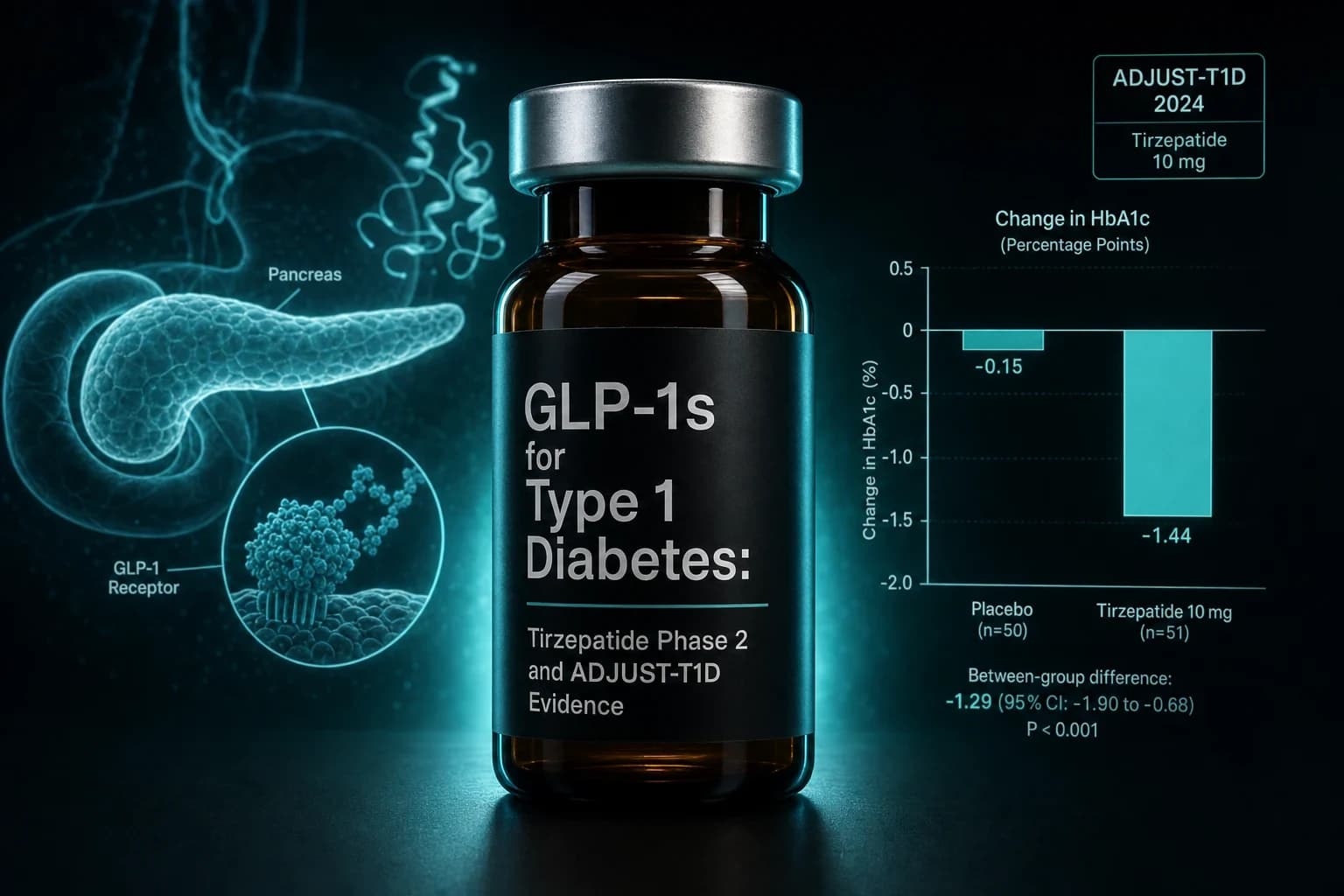
Nine years later, the question is back. A Phase 2 randomized placebo-controlled trial of tirzepatide in T1D was published in Diabetes Care in January 2026 (Snaith et al., PMID 41264593). A Phase 2 randomized trial of once-weekly semaglutide layered on top of automated insulin delivery in T1D adults was published in NEJM Evidence in mid-2025 (Shah et al., ADJUST-T1D, PMID 40550013). A separate semaglutide crossover trial inside a closed-loop system landed in Nature Medicine the same year (Pasqua et al., PMID 39794615). Two Phase 3 trials, SURPASS-T1D-1 and SURPASS-T1D-2, are now recruiting at the moment of this writing.
The data are smaller than the prescribing trend suggests. Real-world cohorts have already been running for two years on off-label tirzepatide in T1D, including a 51-patient Mayo Clinic series with twelve-month follow-up (Mathieu et al., PMID 39601745). What follows is what those trials actually found, where they disagree with the 2016 liraglutide signal, and what the open safety questions still are.
Why T1D adults end up looking at a T2D drug
Roughly a third of adults with T1D in the United States now meet criteria for obesity, and another third for overweight. The reasons are unflattering: intensive insulin therapy is anabolic, fear of hypoglycemia drives defensive snacking, and the cardiometabolic risk that used to live in T2D shows up in T1D when the BMI climbs. The standard tools, metformin and SGLT2 inhibitors, are limited. Metformin lowers HbA1c marginally in T1D and has weight-neutral effects on most cohorts. SGLT2 inhibitors carry a tripled euglycemic DKA rate and were withdrawn from the T1D label in 2022 in most jurisdictions.
That leaves an obvious empty slot for an agent that addresses both weight and postprandial glucose without driving insulin requirements upward. GLP-1 receptor agonists are mechanistically a fit. They slow gastric emptying, suppress appetite via central pathways, and at least in T2D, lower postprandial glucose excursions through delayed nutrient delivery. The pharmacology never depended on a functioning beta cell for its weight-loss effect, which is why obesity-without-diabetes trials work at all.
The clinical question for T1D adults is more specific. Does adding a GLP-1 receptor agonist on top of basal-bolus or pump-delivered insulin produce a clean weight and A1c benefit, or does the slowed gastric emptying mismatch the prandial insulin curve enough to drive hypoglycemia, ketosis, and DKA? That mismatch is exactly what shut down ADJUNCT ONE in 2017, so the modern trials had to design around it.
The Snaith Phase 2: first RCT of tirzepatide in T1D
The Snaith trial enrolled 24 adults with T1D and BMI above 30 kg/m² at a single Australian center (PMID 41264593). Participants were randomized 1:1 to once-weekly subcutaneous tirzepatide (2.5 mg for four weeks, then 5 mg for eight weeks) or matched placebo for a total of 12 weeks. All patients stayed on their pre-trial insulin regimen, which was a mix of multiple daily injections and pump therapy. Twenty-two of 24 completed.
Headline numbers were larger than any prior T1D adjunct trial:
- Mean body weight change: −10.3 kg in the tirzepatide arm vs −0.7 kg on placebo at 12 weeks, an 8.8% mean body weight reduction.
- Total daily insulin dose: −24.2 U/day on tirzepatide (about a 35.1% reduction from baseline) vs essentially no change on placebo.
- HbA1c: significantly improved on tirzepatide, though the absolute change is modest given the short duration and that all participants were already on intensive insulin regimens.
- 100% of tirzepatide participants achieved at least 5% body weight loss; 45% achieved at least 10%.
- No DKA in either arm. No severe hypoglycemia events. Gastrointestinal adverse events were the dominant tolerability signal, in line with the broader tirzepatide vs semaglutide SURMOUNT-5 data.
Bottom line: The Snaith trial is the first randomized signal that tirzepatide produces meaningful weight and insulin-dose benefit in T1D adults at a maximum dose of 5 mg, with no DKA or severe hypoglycemia at 12 weeks. The trial is small (n=24) and short (12 weeks), so it does not settle DKA risk, but it does establish that the obvious failure mode is not inevitable at sub-maximal doses.
The dose deserves a note. 5 mg is the lowest effective tirzepatide dose for T2D and obesity. The full Phase 3 tirzepatide weight-loss program (SURMOUNT-1) used 10 and 15 mg as the active arms because higher doses produce more weight loss. The Snaith team did not titrate above 5 mg, partly to limit hypoglycemia risk, and partly because the program is exploratory. Phase 3 SURPASS-T1D may push higher.
The Mayo Clinic retrospective: 12-month real-world tirzepatide in T1D
The largest real-world tirzepatide-in-T1D dataset is a 51-patient retrospective from the Mayo Clinic (Mathieu et al., Mayo Clinic Proceedings November 2024, PMID 39601745). Patients had T1D and overweight or obesity, were started on off-label tirzepatide between June 2022 and October 2023, and were titrated per the standard T2D/obesity schedule. Median follow-up was eight months, with a 12-month subset.
Results at 8 months and 12 months:
| Endpoint | 8 months | 12 months |
|---|---|---|
| Total body weight loss | 8.5% | 12.2% |
| HbA1c change | −0.9% | −0.9% |
| Daily insulin requirement | −31.6% | −31.6% |
| Nausea (any grade) | 13.7% | 13.7% |
| Severe hypoglycemia | none reported | none reported |
| DKA | none reported | none reported |
The 12-month weight loss of 12.2% lands between the Phase 2 short-term Snaith signal and the full SURMOUNT-1 mean of about 15% at 72 weeks in obesity-without-diabetes adults. Insulin dose dropped about a third, which is the figure clinicians anchor on when they consider real-world adjunct use. Hypoglycemia did not increase, which is the rebuttal to the 2016 ADJUNCT ONE worry.
A few caveats are honest to flag. The Mayo cohort is selected: every patient was tolerating tirzepatide well enough to stay on it for at least eight months, so this is a per-protocol picture rather than an intent-to-treat one. The trial is single-center. And the patients had hybrid closed-loop or pump therapy in most cases, which is not the dominant T1D therapy globally. Even with those caveats, the safety signal is consistent with Snaith.
ADJUST-T1D: semaglutide on top of automated insulin delivery
ADJUST-T1D is the most cleanly designed semaglutide-in-T1D randomized trial to date (Shah et al., NEJM Evidence 2025, PMID 40550013). It enrolled 72 adults with T1D, BMI of at least 30, and stable use of an FDA-cleared hybrid closed-loop insulin pump. Participants were randomized 1:1 to once-weekly subcutaneous semaglutide titrated up to 1 mg or placebo for 26 weeks. The primary endpoint was a composite that required three things at week 26: CGM time-in-range above 70%, time-below-range under 4%, and at least 5% body weight reduction.
The composite result: 36% of semaglutide patients hit all three vs 0% on placebo. Between-arm difference 36 percentage points. The components broke down as follows:
- Body weight: difference of −8.8 kg vs placebo (95% CI −10.6 to −7.0).
- Time-in-range: significantly improved vs placebo, with no increase in time-below-range.
- HbA1c: improved on semaglutide; the absolute number is modest because every participant was already on a closed-loop pump targeting tight ranges.
- Cardiometabolic markers: significant reductions in total, LDL, and non-HDL cholesterol; systolic BP down 6.1 mmHg; urinary albumin-to-creatinine ratio decreased.
- Severe hypoglycemia: 2 events in each arm. No DKA reported.
Closed-loop pumps are the design feature that matters. Hybrid systems adjust basal insulin minute-by-minute against CGM glucose. When the GLP-1 agonist slows gastric emptying, the pump compensates by reducing basal delivery automatically, which softens the prandial mismatch that drove ADJUNCT ONE hypoglycemia. This is why the modern semaglutide-in-T1D literature is increasingly tied to automated insulin delivery and not to multiple daily injections.
Dose ceiling matters here too. The ADJUST-T1D investigators capped at 1 mg, not the 2.4 mg used in obesity programs. SURMOUNT and STEP for obesity use 2.4 mg weekly. The Shah team capped at 1 mg to manage hypoglycemia and ketosis risk in a T1D population. The achievable weight loss with 1 mg semaglutide in T2D and obesity is closer to 6 to 8%, so the 8.8 kg difference in T1D is consistent with what 1 mg produces elsewhere.
The Pasqua crossover trial: closed-loop adaptation and the euglycemic ketosis signal
A separate semaglutide crossover trial from the McGill group landed in Nature Medicine in January 2025 (Pasqua et al., PMID 39794615). The design was different: participants with T1D were titrated up to 1 mg semaglutide or matched placebo over 11 weeks, then used a hybrid closed-loop system for the final 4 weeks under each condition. The crossover layout meant every participant served as their own control, which is statistically more efficient at smaller sample sizes but creates carryover concerns for a long-acting drug.
Headline numbers:
- Time-in-range increased by 4.8 percentage points on semaglutide vs placebo (P = 0.006).
- Time below 3.9 mmol/L and below 3.0 mmol/L did not increase, which is the clinically important safety endpoint for hypoglycemia.
- No DKA. No severe hypoglycemia.
- Two episodes of recurrent euglycemic ketosis without acidosis occurred during semaglutide use.
The euglycemic ketosis signal is the part to read carefully. Both episodes were sub-threshold for DKA and resolved with adjustment, but the mechanism (slowed gastric emptying paired with reduced insulin delivery from the pump) is the same mechanism that produces frank DKA when the buffer fails. Two episodes in a small crossover trial is not noise. It is a marker that the closed-loop safety net is not infinite and that more sensitive ketone monitoring may be necessary if GLP-1 receptor agonists become standard adjuncts.
Pasqua and Shah together build the case that semaglutide on top of automated insulin delivery is the cleanest place to start in T1D, because the closed-loop system absorbs most of the prandial mismatch. They also build the case that the safety analysis has to track ketones and not just glucose.
ADJUNCT ONE: the 1,398-patient liraglutide trial that set the regulatory anchor
The earliest and largest randomized T1D adjunct trial is still ADJUNCT ONE (Mathieu et al., Diabetes Care 2016, PMID 27506222). It enrolled 1,398 T1D adults inadequately controlled on insulin, randomized 3:1 to once-daily liraglutide (1.8, 1.2, or 0.6 mg) or placebo, and ran for 52 weeks. The trial used a treat-to-target insulin titration alongside the drug, so insulin doses were adjusted dynamically against glucose.
At the maximum 1.8 mg dose, placebo-adjusted changes at 52 weeks were:
- HbA1c: −0.30%
- Body weight: −5.0 kg
- Daily insulin dose: −12%
Those numbers look weaker than the modern Snaith and Shah trials in part because liraglutide is a less potent agent (the 1.8 mg dose is roughly equivalent to about 0.5 mg semaglutide on weight loss), and in part because the 52-week timeframe runs into compensatory eating and insulin re-titration.
The reason ADJUNCT ONE blocked the regulatory path was on the safety side, not the efficacy side. Symptomatic hypoglycemia rates rose with liraglutide, and the rate of hyperglycemia with ketosis increased dose-dependently. Hyperglycemia with ketosis is the precursor state to DKA. In a population whose ketone reserve is already shallow, that increment was enough that the FDA never granted T1D approval.
Two things have changed since 2016. The modern trials enrich for hybrid closed-loop pump users, which absorbs much of the prandial mismatch. And the modern drugs (semaglutide and tirzepatide) produce more weight loss per unit of gastric-emptying delay, which shifts the efficacy-vs-DKA tradeoff.
Four randomized signals, one comparison table
| Trial | Drug | n | Duration | Insulin delivery | Weight change | Insulin dose change | DKA | Severe hypoglycemia |
|---|---|---|---|---|---|---|---|---|
| ADJUNCT ONE (2016) | Liraglutide 1.8 mg daily | 1,398 | 52 wk | MDI or pump | −5.0 kg vs placebo | −12% | Not increased | Increased symptomatic |
| Pasqua (2025) | Semaglutide 1 mg weekly | small crossover | 15 wk per period | Closed-loop pump | TIR +4.8 pp | Pump-driven reduction | None | None (2 euglycemic ketosis) |
| ADJUST-T1D (2025) | Semaglutide 1 mg weekly | 72 | 26 wk | Closed-loop pump | −8.8 kg vs placebo | Not the primary | None | 2 per arm |
| Mathieu Mayo (2024) | Tirzepatide titrated | 51 | 12 mo | MDI or pump | 12.2% at 12 mo | −31.6% | None | None |
| Snaith (2026) | Tirzepatide 5 mg weekly | 24 | 12 wk | MDI or pump | −10.3 kg vs placebo | −24.2 U/day (≈35%) | None | None |
A few patterns hold across the trials:
- Weight loss is the most reliable benefit. Every randomized arm produced a meaningful loss vs placebo. Tirzepatide outperforms semaglutide which outperforms liraglutide on weight, consistent with the dose-response curve outside T1D.
- Insulin dose drops by 12% (liraglutide) to 35% (tirzepatide). The bigger the weight loss, the bigger the insulin reduction.
- DKA was not observed in any modern trial. The ADJUNCT ONE hyperglycemia-with-ketosis signal has not repeated in the closed-loop era, but the Pasqua euglycemic ketosis episodes suggest the underlying mechanism is still alive.
- HbA1c improvements are modest in absolute terms because every modern trial starts from already-tight glucose control via pump or aggressive MDI.
Warning: None of these trials are large enough to estimate DKA risk reliably. The largest randomized arm (ADJUNCT ONE) had 1,048 patients on liraglutide and did detect a dose-dependent ketosis signal. The modern trials are 24 to 72 patients per arm, which is statistically blind to a DKA rate increase of less than several percentage points. SURPASS-T1D-1 and SURPASS-T1D-2 are the trials that will actually answer this question.
DKA, hypoglycemia, and the safety frame that has to hold
Three safety questions sit on top of any T1D GLP-1 conversation:
Diabetic ketoacidosis. In T1D, DKA requires an insulin deficit and a counter-regulatory surge. Slowed gastric emptying does not directly cause DKA, but it changes the timing of glucose appearance, which changes when the pump or MDI delivers insulin. If the insulin runs short while gut emptying is paused, ketogenesis is briefly unopposed. The Pasqua trial detected this exactly: two euglycemic ketosis events in a small crossover, on a closed-loop pump, at 1 mg semaglutide. None progressed to DKA, but the mechanism is real.
Severe hypoglycemia. ADJUNCT ONE saw a dose-dependent increase in symptomatic hypoglycemia. The modern trials with closed-loop pumps have not seen severe hypoglycemia increase. This is partly the pump compensating in real time, and partly the lower dose ceilings (1 mg semaglutide, 5 mg tirzepatide) used to date. At maximum-dose semaglutide (2.4 mg) or tirzepatide (15 mg), the hypoglycemia signal could re-emerge.
Gastrointestinal tolerability. The dominant adverse event in every trial is nausea, with smaller frequencies of vomiting, diarrhea, and constipation. Nausea matters in T1D in a way it does not in T2D, because it interferes with carbohydrate intake during hypoglycemia recovery. A T1D patient who cannot keep down a 15 g carbohydrate rescue is at higher risk of severe hypoglycemia from any cause.
The practical clinical pattern that has emerged in the centers running off-label tirzepatide in T1D is:
- Cap the dose at 5 to 7.5 mg tirzepatide or 1 mg semaglutide initially, not the obesity-program maximum.
- Use a hybrid closed-loop pump if possible. MDI users get less of the automatic insulin reduction and more of the prandial mismatch.
- Educate patients on continuous ketone monitoring or scheduled blood ketone checks during titration.
- Plan for a 25 to 35% reduction in total daily insulin and pre-empt it by lowering basal rates by about 15% at initiation, then titrating.
- Hold the drug during any acute illness or surgical preparation. The same pre-surgery GLP-1 hold rules apply, and more aggressively in T1D.
This is off-label clinical practice, not endorsed by the FDA, and none of the manufacturers will advise on it. Most of the published protocols come from endocrinology fellowship centers running their own protocols. The Mayo, Indiana, and McGill groups have been the most active publishers.
What Phase 3 will actually answer
Two Phase 3 tirzepatide trials are now enrolling for T1D, listed at ClinicalTrials.gov as NCT06914895 and NCT06962280. The first is a placebo-controlled efficacy trial in T1D + obesity, with both 10 mg and 15 mg arms titrated against placebo. The second is a long-term extension. A third trial, NCT07284511, is testing tirzepatide as an automatic-blood-sugar-control adjunct to a closed-loop algorithm.
The endpoints worth watching:
- Confirmed DKA at 52 and 72 weeks as the primary safety event. The Snaith and Mayo trials are too small to detect a 1 to 2% DKA increase. Phase 3 with 800 to 1,200 patients will.
- Maximum tolerated dose in T1D specifically. If 15 mg tirzepatide is tolerable in T1D adults with appropriate insulin titration, the program goes one way. If hypoglycemia or ketosis forces a 10 mg cap, the labeling and clinical use look different.
- Closed-loop vs MDI subgroup analysis. The dominant question is whether the safety profile depends on automated insulin delivery or holds up under standard pump and MDI use. Most patients globally are not on hybrid closed-loop systems.
- Cardiovascular and renal outcomes. Adults with T1D carry higher cardiovascular and renal risk than age-matched controls. A SURPASS-CVOT-style extension in T1D would extend the tirzepatide SURPASS-CVOT cardiovascular data into a population where SGLT2 inhibitors were taken off the label and ACE/ARB therapy is the dominant intervention.
A Novo Nordisk semaglutide T1D Phase 3 program has not been announced as of June 2026. The current commercial logic favors the closed-loop combination path, where semaglutide is layered onto an Insulet, Tandem, or Medtronic pump algorithm rather than positioned as a monotherapy adjunct.
Off-label use, supply, and the practical question
Tirzepatide for T1D is off-label in every jurisdiction. So is semaglutide. So was liraglutide. None of the manufacturers will support T1D-specific dosing, and prescribing requires a clinician comfortable with the off-label evidence base and willing to monitor.
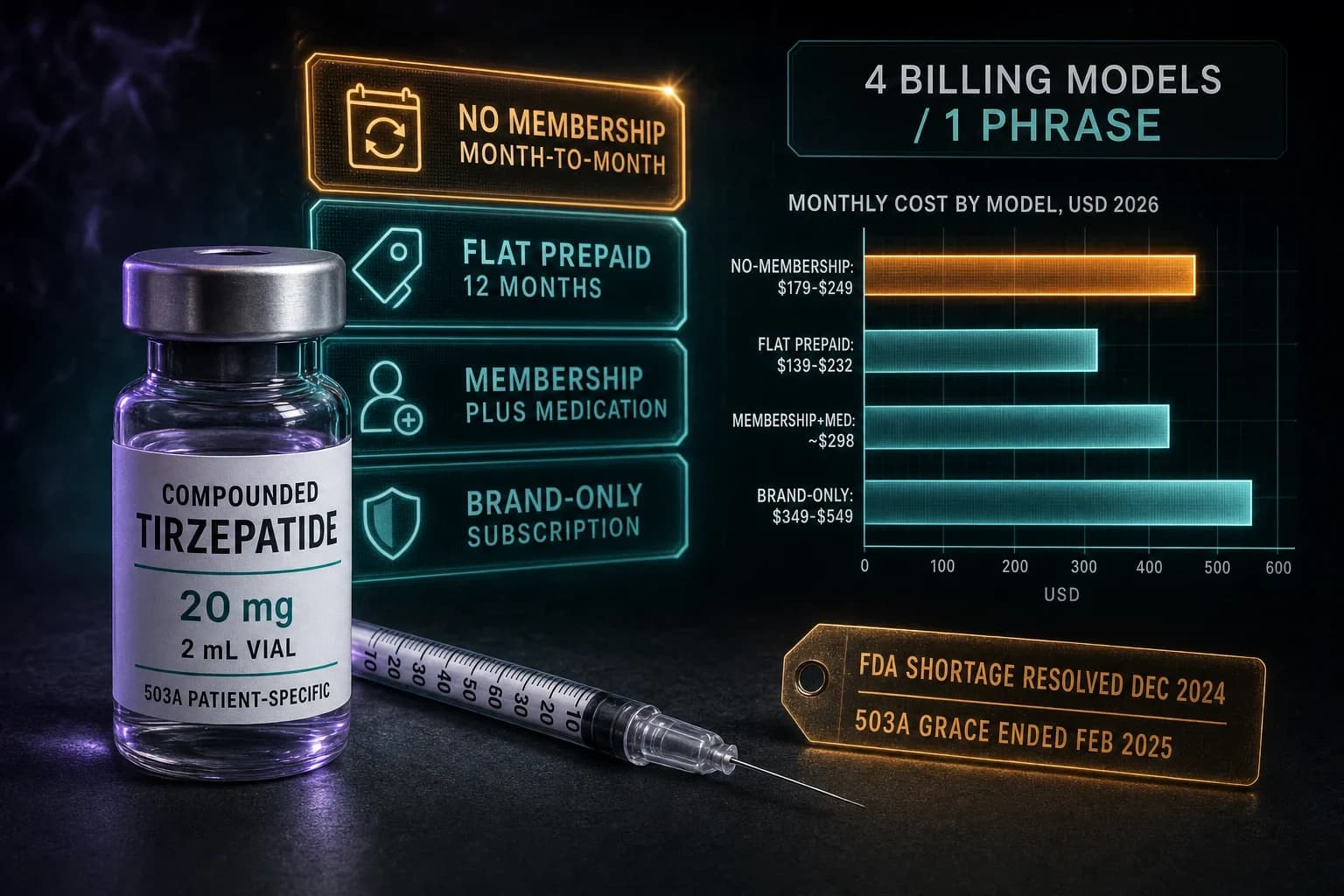
The supply question matters because some T1D patients have moved to compounded tirzepatide or semaglutide for cost reasons during the 503B compounding window. As of the June 2026 FDA reclassification status, the legal compounding lane is narrow, and the updated compounded tirzepatide access guide covers what is and is not currently available. Off-label T1D research-grade use of tirzepatide or semaglutide is also tracked in our tirzepatide reconstitution chart and the broader reconstitution calculator.
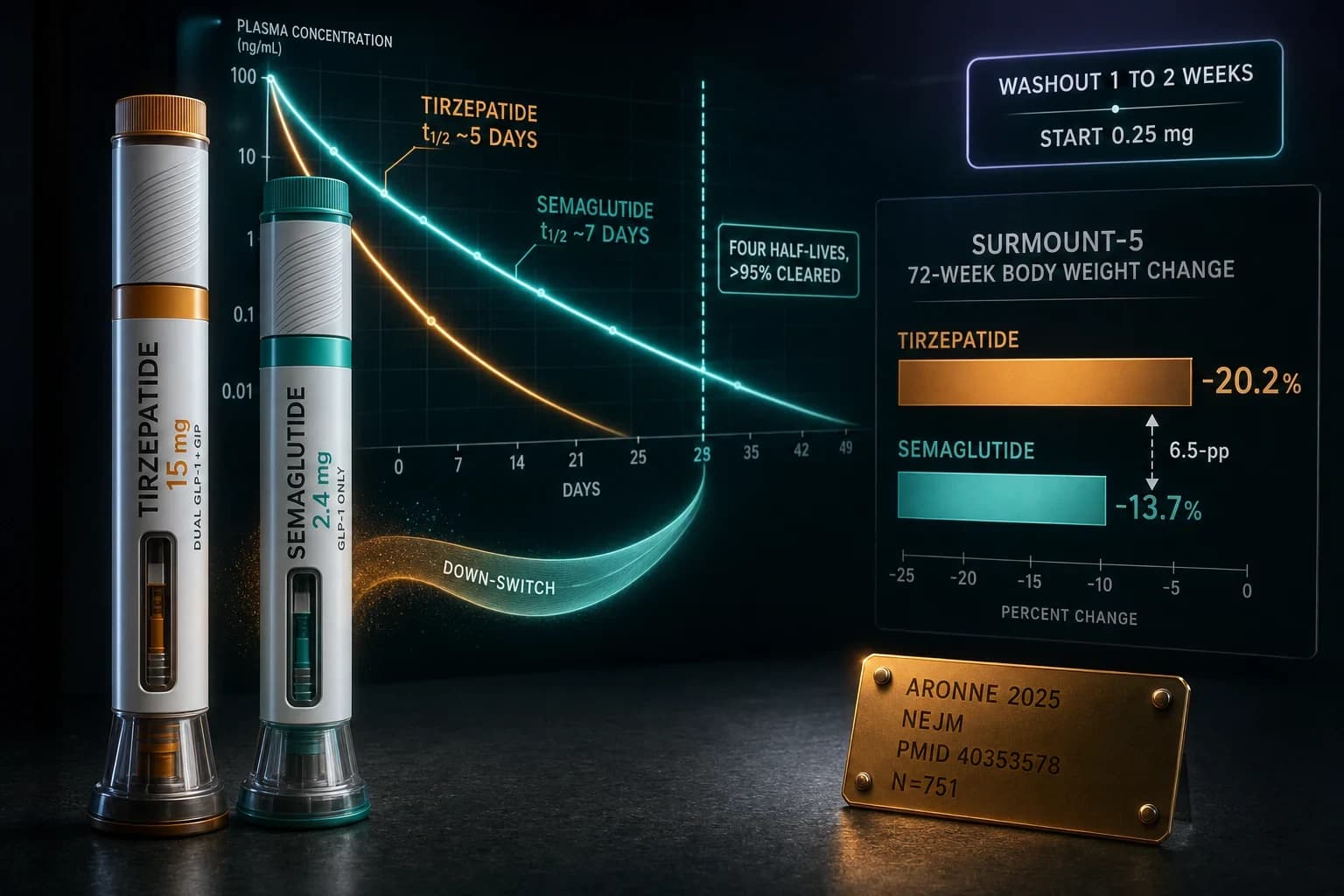
For comparison shopping between semaglutide and tirzepatide on weight loss and tolerability outside T1D specifically, the SURMOUNT-5 head-to-head data is the strongest randomized signal. For dose-form context, the GLP-1 dosing comparison lays out maintenance doses across the class.
Anyone using these compounds for research purposes can source from Ascension Peptides with 50% off using code ENHANCED, but the T1D use case in particular should run through a clinician comfortable with adjunct GLP-1 protocols. Self-managed dose adjustment in T1D is the clinical scenario where the published safety margin is thinnest.
Bottom line
The 2025 to 2026 randomized data establish three things that the 2016 ADJUNCT ONE result obscured:
- Tirzepatide and semaglutide produce a substantial weight loss and insulin-dose reduction signal in T1D adults with obesity, larger than liraglutide ever did. Snaith (10.3 kg, 12 weeks) and the Mayo retrospective (12.2%, 12 months) anchor the tirzepatide signal. ADJUST-T1D (8.8 kg vs placebo, 26 weeks) anchors the semaglutide signal.
- Closed-loop hybrid insulin pumps absorb most of the prandial-mismatch risk that drove ADJUNCT ONE hypoglycemia. The modern trials on automated insulin delivery do not show severe hypoglycemia increases.
- The euglycemic ketosis signal from Pasqua is small but mechanistically real. DKA is not a closed question. Phase 3 SURPASS-T1D will need to confirm the safety margin in 800-plus patient cohorts before regulatory approval is plausible.
For now, GLP-1 receptor agonists in T1D are an off-label adjunct, run at sub-maximal doses, in patients who are typically on closed-loop pumps, under clinicians who are tracking ketones as well as glucose. The randomized signal is large enough that the off-label use will continue to expand. Whether T1D ends up on the label depends on what SURPASS-T1D-1 and SURPASS-T1D-2 read out in 2027 and 2028.
This article is for educational and research purposes only. It summarizes peer-reviewed randomized controlled trial, retrospective cohort, and crossover trial data on GLP-1 receptor agonist therapy (liraglutide, semaglutide, and tirzepatide) in adults with type 1 diabetes. Nothing in this article is medical advice, diagnostic guidance, or a recommendation to start, stop, modify, or substitute any prescription drug or insulin regimen. Type 1 diabetes is a life-threatening condition requiring continuous insulin therapy and individualized clinical management; adjunct therapy decisions involve hypoglycemia and ketoacidosis risks that require continuous glucose monitoring, ketone monitoring, and active clinician oversight. None of the agents discussed are FDA-approved for type 1 diabetes, and off-label use should occur only under the supervision of an endocrinologist or other qualified clinician familiar with insulin dose adjustment.