At a glance
- Three non-overlapping pathways: GABA (Selank), neuroprotection (Pinealon), TREK-1 (PE 22-28)
- Selank is anxiolytic like diazepam but without sedation, tolerance, or dependence
- PE 22-28 increased hippocampal neurogenesis ~50% within 4 days in mice
- Intranasal delivery reaches CNS within 10-15 minutes via olfactory nerve
- 2-4 week cycles; effect profile is 'relaxed productivity,' not stimulation
The problem with single-target nootropics
Most cognitive compounds pull one lever. Racetams modulate acetylcholine. L-theanine nudges GABA. Modafinil blocks dopamine reuptake. Each one moves a single dial, and when that dial isn't the bottleneck, nothing happens.
The research on cognitive performance is clear on one point: cognition is not a single-pathway problem. Anxiety degrades working memory through excessive amygdala activation (Bishop, 2009, Neuroscience & Biobehavioral Reviews). Oxidative stress kills neurons outright (Uttara et al., 2009, Current Neuropharmacology). Depressed TREK-1 channel function is linked to treatment-resistant mood disorders (Heurteaux et al., 2006, EMBO Journal). Addressing only one of these while the others remain dysfunctional produces, at best, partial results.
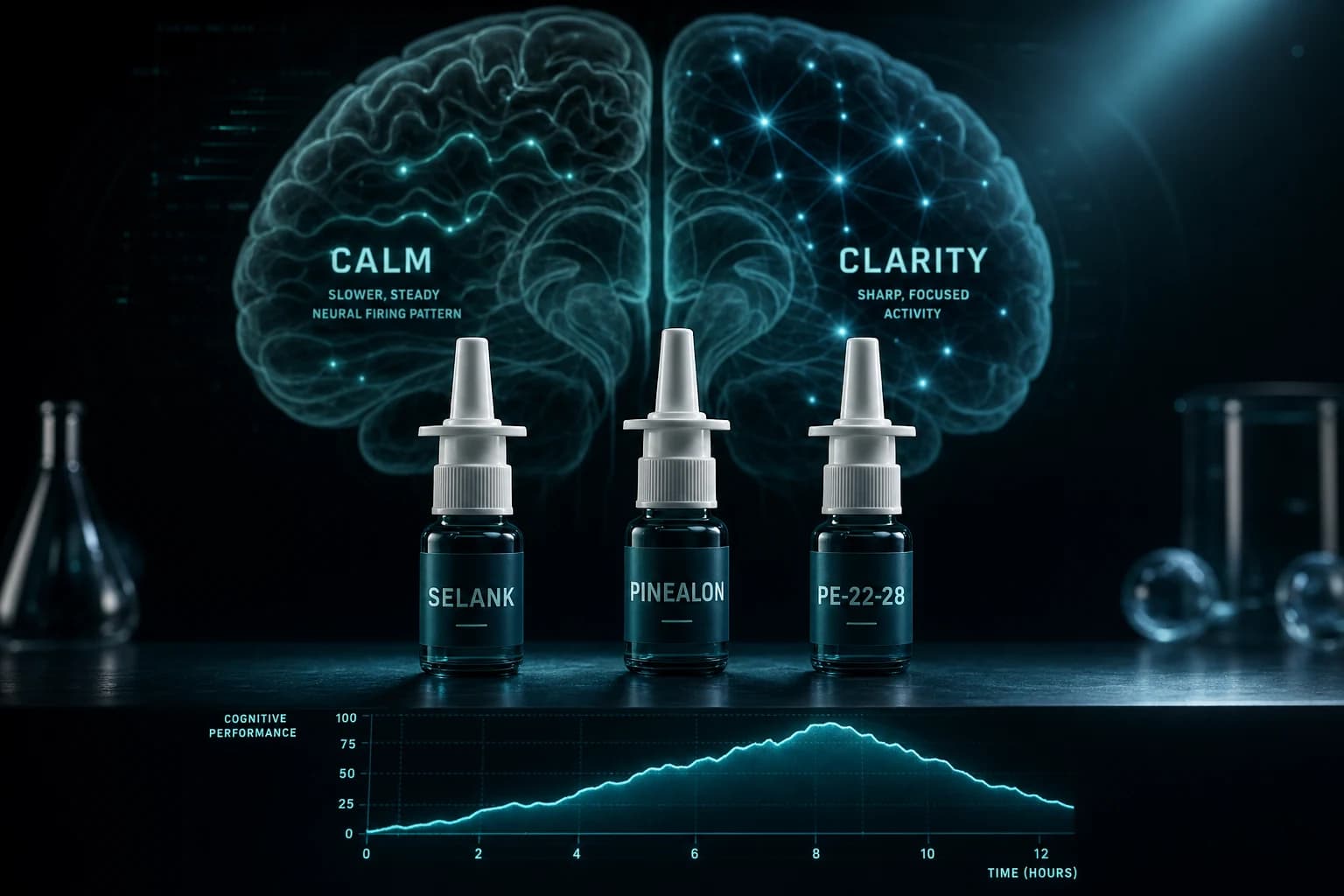
The Calm + Clarity Stack takes a different approach: three peptides, each targeting a distinct CNS pathway, combined in a single 30 mg pre-mixed vial. Selank for GABA-mediated anxiolysis. Pinealon for neuroprotection against oxidative damage. PE 22-28 for TREK-1 potassium channel modulation and mood support. No pathway overlap, no redundancy.
The three pathways
Selank: GABA modulation without the benzodiazepine trap
Selank is a synthetic heptapeptide analog of tuftsin, developed at the Institute of Molecular Genetics of the Russian Academy of Sciences. Its primary mechanism is allosteric modulation of GABA-A receptors, increasing the affinity of GABA for its binding site without directly agonizing the receptor.
This distinction matters enormously. Benzodiazepines (diazepam, alprazolam, lorazepam) are direct positive allosteric modulators that produce rapid, potent anxiolysis. They also produce tolerance within 2-4 weeks, physical dependence, cognitive impairment, and withdrawal syndromes that can be medically dangerous. The Ashton Manual documents withdrawal timelines extending 6-18 months for long-term users.
Selank's modulation is subtler. In a 2008 study by Seredenin and Voronina published in Eksperimental'naya i Klinicheskaya Farmakologiya, Selank demonstrated anxiolytic effects comparable to diazepam in the elevated plus maze and Vogel conflict test, two standard animal models of anxiety. Critically, it did not produce sedation, motor impairment, or tolerance with repeated dosing. A follow-up study (Seredenin et al., 2010) showed no dependence formation or withdrawal behavior after 28 days of continuous administration.
Beyond GABA, Selank influences several secondary systems relevant to cognition:
- BDNF expression: Selank increases brain-derived neurotrophic factor levels in the hippocampus (Inozemtseva et al., 2008), which supports synaptic plasticity and memory consolidation.
- Enkephalin modulation: Selank stabilizes enkephalin levels in the brain, which contributes to its anxiolytic and stress-resilience effects without the euphoria or dependence of opioid agonists.
- Serotonin and dopamine: Animal data shows Selank modulates serotonergic and dopaminergic transmission, though the effect sizes are smaller than its GABAergic action.
The net result in research contexts: reduced anxiety, improved working memory under stress conditions, and maintained cognitive sharpness. The exact opposite profile of benzodiazepines, which reduce anxiety but impair cognition.
Pinealon: neuroprotection at the cellular level
Pinealon (Glu-Asp-Arg) is a tripeptide bioregulator developed by Professor Vladimir Khavinson at the St. Petersburg Institute of Bioregulation and Gerontology. It belongs to the Khavinson family of short synthetic peptides, each designed to interact with specific gene promoter regions and regulate organ-specific gene expression.
The neuroprotective mechanism operates through several documented pathways:
- Antioxidant gene upregulation: Pinealon has been shown to increase expression of superoxide dismutase (SOD) and catalase in neuronal cell cultures exposed to oxidative stress (Khavinson et al., 2012, Bulletin of Experimental Biology and Medicine). In these experiments, neuronal survival improved by 40-60% compared to untreated controls.
- Anti-apoptotic signaling: Under conditions of oxidative damage, Pinealon reduced caspase-3 activation, a key executioner protease in programmed cell death. This suggests it doesn't just scavenge free radicals but actively blocks the death cascade that oxidative stress initiates.
- Blood-brain barrier penetration: As a tripeptide with a molecular weight under 500 Da, Pinealon crosses the BBB readily. This gives it direct access to CNS neurons rather than relying on peripheral effects.
- Gene expression modulation: Khavinson's proposed mechanism involves direct DNA interaction at promoter regions. While this mechanism remains debated in Western literature, the functional neuroprotective outcomes have been replicated across multiple Russian research groups.
For the Calm + Clarity stack specifically, Pinealon addresses a layer that neither Selank nor PE 22-28 touches: neuronal survival under stress conditions. Chronic stress, sleep deprivation, and aging all increase CNS oxidative load. A compound that protects the hardware (neurons) complements compounds that optimize the software (neurotransmitter signaling).
PE 22-28: the TREK-1 channel wildcard
PE 22-28 is a synthetic heptapeptide analog of Spadin, which modulates TREK-1 (TWIK-related potassium channel 1) in the central nervous system. TREK-1 is a two-pore-domain potassium channel expressed widely in the brain, particularly in the hippocampus, prefrontal cortex, and amygdala.
The TREK-1 story started in 2006 when Heurteaux and colleagues at the Institut de Pharmacologie Moleculaire et Cellulaire (CNRS, France) demonstrated that TREK-1 knockout mice exhibited a phenotype remarkably similar to mice treated with antidepressants: reduced immobility in the forced swim test, increased serotonin transmission in the hippocampus, and enhanced neurogenesis in the dentate gyrus (Heurteaux et al., Nature Neuroscience, 2006).
This finding launched a new research direction: could blocking or modulating TREK-1 produce antidepressant and pro-cognitive effects without the baggage of SSRIs (sexual dysfunction, emotional blunting, withdrawal syndromes)?
Spadin, a natural peptide derived from the maturation of the neurotensin receptor 3 (sortilin), was identified as an endogenous TREK-1 blocker. PE 22-28 is a shorter, more stable analog designed for research use. Key findings:
- Antidepressant-like effects: PE 22-28 reduced immobility time in the forced swim test and tail suspension test in mice at doses as low as 100 mcg/kg (Mazella et al., 2010).
- Hippocampal neurogenesis: 4 days of PE 22-28 administration increased neurogenesis in the dentate gyrus by approximately 50% compared to controls.
- Rapid onset: Unlike SSRIs which require 2-4 weeks for clinical effect, TREK-1 modulation produced measurable behavioral changes within 4 days in animal models.
- No serotonergic side effects: PE 22-28 does not directly modulate serotonin receptors or transporters. The serotonergic effects are downstream of TREK-1 channel modulation, resulting in increased serotonin transmission without the receptor desensitization that causes SSRI side effects.
The mechanism is genuinely novel. PE 22-28 operates through a pathway entirely independent of GABA (Selank's territory) and entirely independent of direct antioxidant neuroprotection (Pinealon's territory). This is what makes the three-compound stack non-redundant: three pathways, zero overlap.
Why multi-pathway beats single-target
The case for combining these three compounds rests on a concept from systems pharmacology: network-level intervention outperforms node-level intervention for complex system dysfunction.
Cognition is a network property. It emerges from the interaction of anxiety regulation (limbic system), neuronal health (cellular level), neurotransmitter balance (synaptic level), and channel function (membrane level). Pulling one node leaves the others as rate-limiters.
Consider a researcher experiencing stress-related cognitive decline. Selank alone reduces the anxiety component, but if oxidative neuronal damage is also present, the anxiolysis reveals the underlying processing deficit. Pinealon alone protects neurons but doesn't address the real-time anxiety disrupting working memory. PE 22-28 alone improves baseline mood and cognition but can't resolve an acute stress response or halt ongoing neuronal damage.
The three together cover the full cascade: Selank calms the stress circuits, Pinealon protects the cellular hardware, and PE 22-28 optimizes baseline cognitive and mood tone through a channel-level mechanism. Each compound addresses a distinct bottleneck.
Selank vs benzodiazepines: the full comparison
This comparison comes up frequently enough to warrant a dedicated section. For anyone considering Selank specifically for anxiolytic research, here's how the two classes stack up:
| Parameter | Selank | Benzodiazepines |
|---|---|---|
| Mechanism | GABA-A allosteric modulation (indirect) | GABA-A positive allosteric modulation (direct) |
| Anxiolytic potency | Moderate (comparable to low-dose diazepam) | High (dose-dependent) |
| Onset | 15-30 min (intranasal) | 15-60 min (oral, varies by compound) |
| Sedation | None observed | Dose-dependent, often significant |
| Cognitive impairment | None observed; may improve cognition | Documented impairment of memory and processing |
| Tolerance | Not demonstrated in studies up to 28 days | Develops within 2-4 weeks typically |
| Physical dependence | Not demonstrated | Develops with regular use beyond 2-4 weeks |
| Withdrawal | Not observed | Can be medically serious; seizure risk |
| BDNF effect | Increases BDNF | Decreases BDNF with chronic use |
| Duration of effect | ~2-4 hours per dose | 4-24 hours depending on compound |
The tradeoff is straightforward: benzodiazepines are more potent anxiolytics but carry cognitive and dependence costs that are fundamentally incompatible with a "clarity" objective. Selank is less potent per dose but adds to rather than subtracts from cognitive function.
For the Calm + Clarity stack, this profile is precisely what's needed. The stack isn't trying to eliminate anxiety entirely. It's trying to lower anxiety below the threshold where it impairs cognition, while simultaneously supporting the neural substrate and baseline mood that produce clear thinking.
Intranasal vs subcutaneous: which route for cognitive peptides?
The Calm + Clarity Stack is compatible with both intranasal and subcutaneous administration, but for cognitive peptides specifically, the intranasal route has distinct advantages.
Intranasal delivery bypasses the blood-brain barrier partially via the olfactory nerve pathway. The olfactory bulb sits behind the nasal epithelium and connects directly to the CNS. Small peptides delivered intranasally can reach cerebrospinal fluid concentrations within 10-15 minutes (Dhuria et al., 2010, Journal of Pharmaceutical Sciences). This is faster than subcutaneous injection, which relies on systemic absorption, first-pass processing, and then BBB crossing.
For Selank specifically, the intranasal half-life is approximately 30 minutes, and the anxiolytic effect window extends 2-4 hours post-dose. Russian clinical studies used intranasal Selank exclusively, delivered via nasal spray at 250-500 mcg per dose.
Pinealon, as a tripeptide, crosses the BBB regardless of route due to its small size (molecular weight ~390 Da). Intranasal delivery simply accelerates the timeline.
PE 22-28 has been studied primarily via injection in animal models, but its small size makes it a candidate for intranasal delivery as well.
Practical intranasal setup: Reconstitute the 30 mg Calm + Clarity vial with bacteriostatic water or sterile saline, then transfer to a metered nasal spray bottle delivering ~100 mcL per spray. This allows precise dosing and convenient administration without syringes.
Subcutaneous delivery remains valid if you prefer injectable protocols or are combining the cognitive stack with other injectable peptides in the same session. Draw the reconstituted solution with a standard U-100 insulin syringe, 200-400 mcg per dose, administered to the abdomen or thigh.
Practical protocol
Dosing
Based on the component research and the pre-mixed stack formulation:
- Intranasal: 200-400 mcg total peptide per dose, 1-2 times daily. The first dose in the morning (30 minutes before cognitively demanding work) and an optional second dose in the early afternoon for sustained coverage.
- Subcutaneous: 200-400 mcg total peptide per dose, once daily, morning.
- Cycle length: 2-4 weeks active, followed by a 2-week break before repeating.
Timing
For cognitive research, morning dosing is standard. The goal is coverage during peak cognitive demand hours. Selank's effect window of 2-4 hours means a morning dose covers the first half of the working day. A second dose after lunch extends coverage through the afternoon.
Evening dosing is less common for this stack. Unlike GH secretagogues that align with nocturnal physiology, cognitive peptides are most relevant during waking hours. That said, Pinealon's neuroprotective effects are time-independent, and some researchers include an evening dose for 24-hour neuronal protection.
Reconstitution
For intranasal use with the 30 mg pre-mixed vial:
- Add 3 mL of bacteriostatic water or sterile saline (concentration: 10 mg/mL total peptide).
- Swirl gently. Do not shake.
- Transfer to a metered nasal spray bottle (available from laboratory suppliers).
- Each spray (~100 mcL) delivers approximately 1 mg of total peptide. For a 200-400 mcg dose, use partial sprays or dilute further.
- Store at 2-8 degrees C. Use within 21 days.
For subcutaneous use:
- Add 2 mL of bacteriostatic water (concentration: 15 mg/mL).
- A 300 mcg dose = 0.02 mL = 2 units on a U-100 insulin syringe.
- Standard SC injection to abdomen or thigh.
Use the reconstitution calculator to verify draw volumes for any vial/water combination.
What "calm + clarity" feels like in research contexts
Subjective reporting from research contexts (not clinical trials, which haven't been conducted for this specific combination) describes the following pattern:
Week 1: The most commonly reported first effect is reduced background anxiety, specifically the low-grade mental noise that makes sustained focus difficult. This is consistent with Selank's rapid-onset GABAergic action. No sedation, no "fuzzy" feeling. Researchers describe it as "the volume turned down on the internal chatter."
Weeks 2-3: Improved sustained attention and working memory under stress. This likely reflects both the accumulated neuroprotective effects of Pinealon and the mood-stabilizing effects of PE 22-28's TREK-1 modulation. The combination is described not as stimulation (like caffeine or modafinil) but as the removal of friction. Cognitive output isn't accelerated; it's less impeded.
Weeks 3-4: The full three-pathway effect. Researchers in the nootropic community describe a state of "relaxed productivity," reduced decision fatigue, and better emotional regulation during high-pressure work. The Selank-driven anxiolysis is the most immediately noticeable, but the clarity and mood stability are attributed to the Pinealon and PE 22-28 contributions.
This is not a stimulant stack. There's no dopamine rush, no "limitless" sensation, no wired energy. The subjective profile is closer to "what good sleep and low stress feel like" than to "what Adderall feels like." If you're expecting a noticeable psychoactive kick, this will disappoint. If you're looking for the quiet removal of cognitive obstacles, it fits.
Who this stack is for (and who should look elsewhere)
The Calm + Clarity Stack is well-suited for:
- Stress-related cognitive decline: Researchers whose focus, working memory, or decision-making degrades under sustained pressure. The anxiolytic-neuroprotective-mood combination addresses the full stress-cognition cascade.
- Benzodiazepine alternatives: Anyone researching anxiolytic compounds that don't carry dependence or cognitive impairment risks.
- Nasal peptide preference: Researchers who prefer non-injectable administration. All three components are compatible with intranasal delivery via nasal spray.
- Multi-pathway cognitive optimization: Researchers who have tried single-compound nootropics and found them incomplete.
Consider standalone Selank if:
- Anxiety is the primary research target and cognitive enhancement is secondary. Standalone Selank at 250-500 mcg intranasal gives a higher per-dose Selank exposure without the other components.
- You want to isolate and measure GABA-mediated anxiolytic effects without confounding variables from Pinealon and PE 22-28.
Consider Semax instead if:
- The research goal is primarily memory, learning, and neurotrophic factor upregulation rather than anxiolysis. Semax (an ACTH(4-10) analog) is stronger on the BDNF/NGF axis and has specific research applications in stroke recovery and memory consolidation. It's a different tool for a different cognitive bottleneck.
- Selank is the "calm" nootropic; Semax is the "drive" nootropic. Some researchers run both in sequence: Selank in the morning for focused, calm work; Semax in the afternoon for learning-heavy tasks.
This stack is not designed for:
- Acute, severe anxiety disorders. Selank's anxiolytic potency is moderate. Clinical anxiety requiring rapid intervention needs clinical tools.
- Neurodegenerative disease treatment. Pinealon's neuroprotective effects are studied in aging and oxidative stress models, not as a treatment for Alzheimer's or Parkinson's.
- Depression treatment. PE 22-28's TREK-1 modulation shows antidepressant potential in animal models, but the stack is not a substitute for clinical antidepressant therapy.
Research access
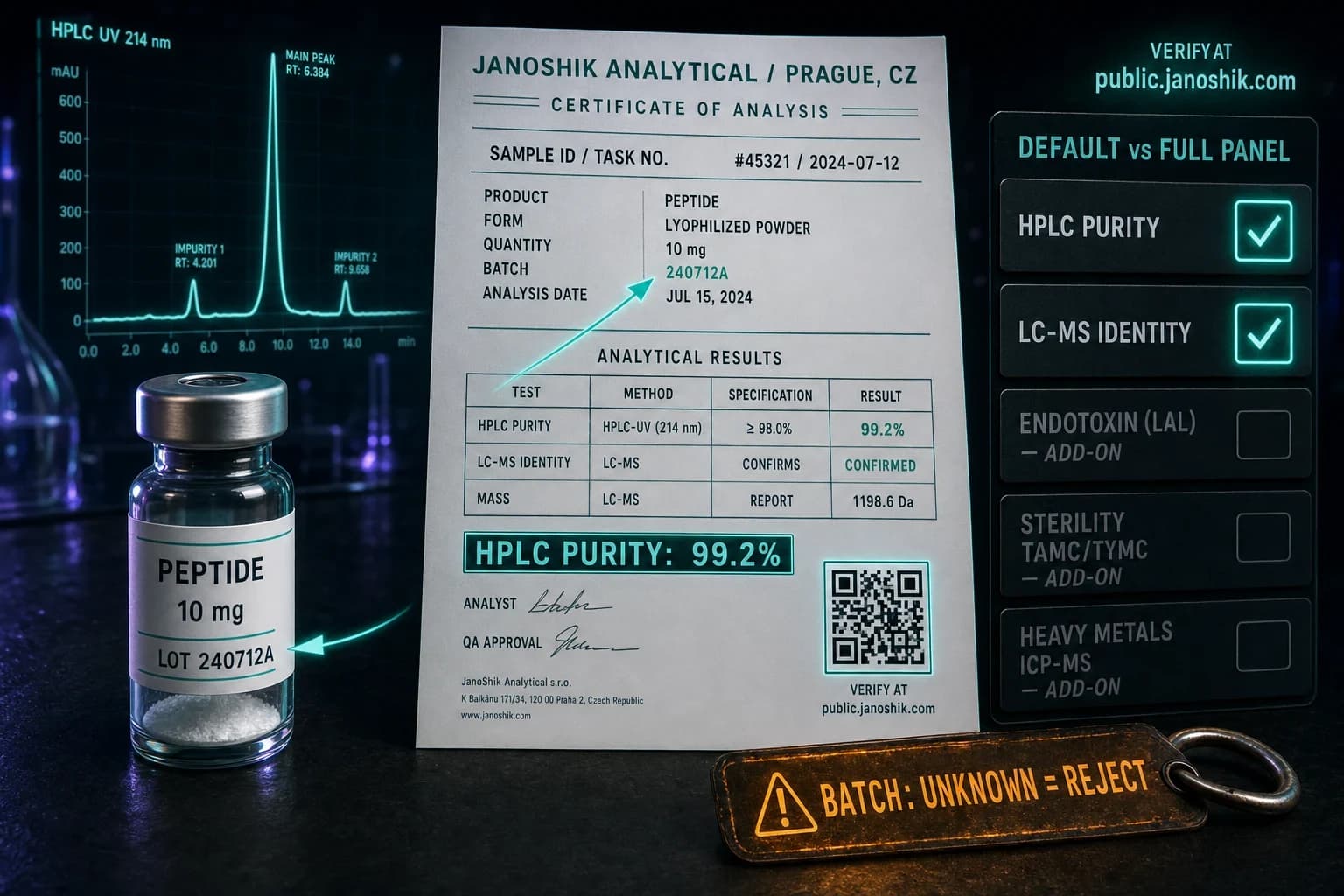
The Calm + Clarity Stack (PE 22-28 + Pinealon + Selank, 30 mg pre-mixed) is available from Ascension Peptides with 50% off using code ENHANCED. Confirm certificates in the lab-tests library.
- Calm + Clarity Stack details
- Selank research guide
- Pinealon research guide
- Semax research guide
- Nasal spray peptides overview
- Reconstitution calculator
Disclaimer
This article is provided for research and educational purposes only. Selank, Pinealon, and PE 22-28 are not approved for general human use in most jurisdictions. Nothing here is medical advice, and any decision to self-administer should involve a qualified healthcare professional.