At a glance
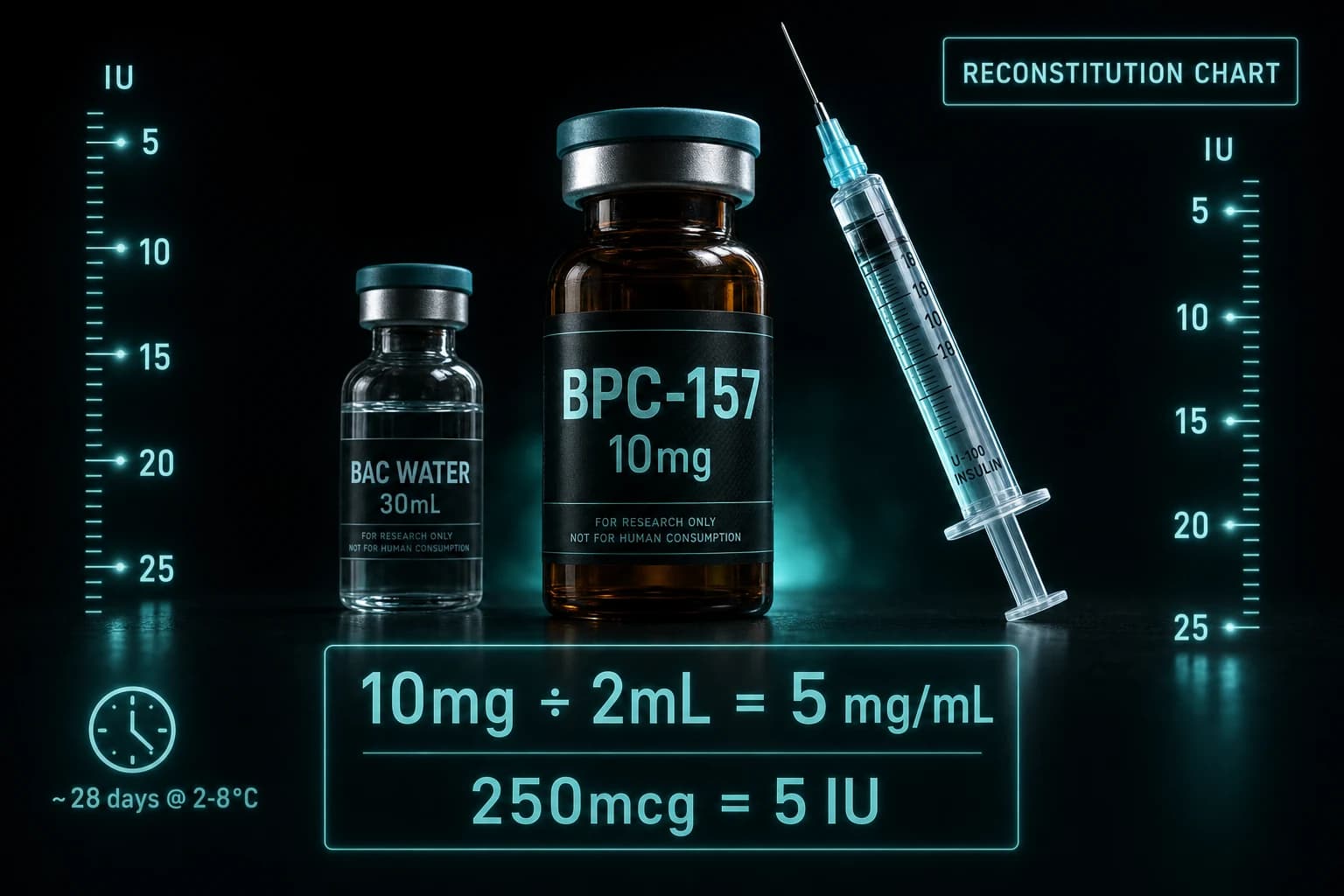
- 2 mL of bacteriostatic water in a 10mg BPC-157 vial yields 5 mg/mL. Each insulin unit (U-100) delivers 50 mcg, so a 250 mcg dose = 5 IU and 500 mcg = 10 IU
- For finer precision at 250 mcg dosing, 1 mL BAC water (10 mg/mL) reads 2.5 IU per dose; not ideal for U-100 syringes with 1-IU graduations
- 3 mL gives 3.33 mg/mL where 250 mcg = 7.5 IU; cleanest math is 2 mL for round numbers across common BPC-157 doses
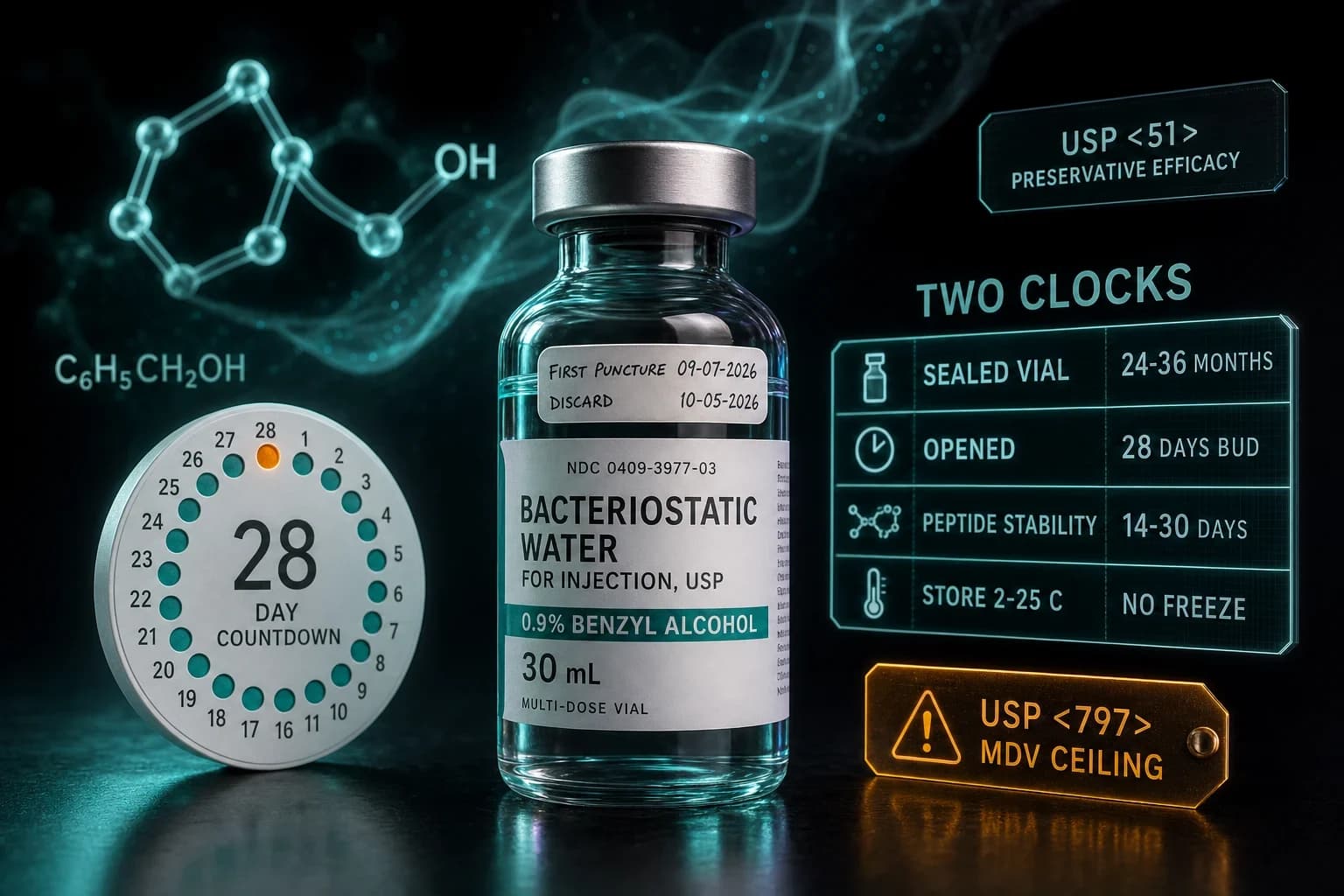
- Reconstituted shelf life is approximately 28 days at 2-8°C with proper bacteriostatic water; sterile water without preservative shortens to ~24 hours
- U-100 insulin syringe is the standard tool. Sub-100 (50-IU or 30-IU) syringes give finer markings for low-dose research
Short answer: for a 10mg BPC-157 vial, 2 mL of bacteriostatic water gives the cleanest dosing math (5 mg/mL, where 250 mcg = 5 insulin units on a U-100 syringe). 1 mL works for compact storage but pushes the dose volume below what most U-100 syringes can resolve cleanly. 3 mL or 5 mL trade slightly more injection volume for better low-dose precision. The full chart is below.
This guide answers the specific question of how much bacteriostatic water to add to a 10mg BPC-157 vial. For the broader reconstitution mechanics that apply to any peptide, see the peptide reconstitution complete guide. For the dose schedule the literature actually used, see the BPC-157 dosing protocol guide.
TL;DR chart
For the 250 mcg twice-daily protocol (the most-cited BPC-157 dose in the published animal work, see Sikiric et al. 2022, PMID 35891408):
| BAC water | Concentration | mL per 250 mcg | IU per 250 mcg | IU per 500 mcg |
|---|---|---|---|---|
| 1 mL | 10 mg/mL | 0.025 mL | 2.5 IU | 5 IU |
| 2 mL | 5 mg/mL | 0.05 mL | 5 IU | 10 IU |
| 3 mL | 3.33 mg/mL | 0.075 mL | 7.5 IU | 15 IU |
| 5 mL | 2 mg/mL | 0.125 mL | 12.5 IU | 25 IU |
The 2 mL row is the cleanest because it produces a 5 mg/mL concentration where 250 mcg lands on exactly 5 IU and 500 mcg on exactly 10 IU. No rounding, no half-unit reads.
The math, step by step
The reconstitution formula has three inputs and one output:
- Vial mass = 10 mg (this is what's printed on the lyophilized BPC-157 vial)
- BAC water volume = your choice (1, 2, 3, or 5 mL are the practical options)
- Target dose = your protocol target (250 mcg, 500 mcg, or 1 mg are the most-cited)
Concentration = vial mass / BAC water volume. Volume per dose = target dose / concentration. Insulin units (U-100) per dose = volume per dose × 100.
Worked example for 2 mL BAC water and a 250 mcg dose:
- Concentration = 10 mg / 2 mL = 5 mg/mL = 5,000 mcg/mL
- Volume per dose = 250 mcg / 5,000 mcg/mL = 0.05 mL
- Insulin units = 0.05 mL × 100 = 5 IU
The same calculator with the same inputs runs at /calculators/reconstitution; use the live tool when your protocol uses non-standard doses.
Concentration cheat sheet for the 10mg vial
| BAC water added | Resulting concentration | Notes |
|---|---|---|
| 1 mL | 10 mg/mL | Compact storage; smallest injection volumes; harder to dose precisely below 1 mg |
| 2 mL | 5 mg/mL | Recommended default. Round numbers on U-100 syringe across 250-1000 mcg doses |
| 3 mL | 3.33 mg/mL | Larger injection volumes; good for low-dose protocols |
| 5 mL | 2 mg/mL | Largest injection volume; best precision at sub-250 mcg doses |
| 10 mL | 1 mg/mL | Rarely used; injection volume becomes large for typical doses |
The 2 mL choice is what most published research-grade BPC-157 protocols reference because the resulting math (5 mg/mL) matches cleanly to U-100 insulin syringe gradations.
IU per dose at common BPC-157 protocols
The two most-cited dose targets in the BPC-157 literature are 250 mcg twice daily and 500 mcg once daily. Some protocols use 1 mg single doses for tendon-specific research (Park et al. 2020, PMID 33291482). Here's how each fits the four BAC water volumes:
| Dose | 1 mL recon | 2 mL recon | 3 mL recon | 5 mL recon |
|---|---|---|---|---|
| 100 mcg | 1 IU | 2 IU | 3 IU | 5 IU |
| 250 mcg | 2.5 IU | 5 IU | 7.5 IU | 12.5 IU |
| 500 mcg | 5 IU | 10 IU | 15 IU | 25 IU |
| 750 mcg | 7.5 IU | 15 IU | 22.5 IU | 37.5 IU |
| 1000 mcg (1 mg) | 10 IU | 20 IU | 30 IU | 50 IU |
For 250 mcg dosing on standard U-100 syringes with 1-IU graduations, the 2 mL choice is the only one that lands on a whole-IU mark without rounding. For 500 mcg, 1 mL and 2 mL both work.
Step-by-step reconstitution
- Materials. 10mg BPC-157 vial, BAC water (0.9% benzyl alcohol in sterile water), one U-100 insulin syringe to draw the BAC water, alcohol prep pads, sharps container.
- Sanitize stoppers. Wipe both rubber stoppers (BAC water and BPC-157 vial) with an alcohol pad.
- Withdraw BAC water. Draw 2 mL (or chosen volume) into the syringe. Tap out air bubbles.
- Inject slowly. Tilt the BPC-157 vial. Insert the needle through the stopper at an angle, let the BAC water run down the inside wall slowly. Do not force a stream onto the lyophilized cake.
- Dissolve gently. Swirl or roll the vial between your palms. Most BPC-157 lots dissolve within 30-60 seconds. Do not shake.
- Confirm clear solution. Reconstituted BPC-157 should be clear and colorless. Yellow tint or visible particulates after several minutes is a quality flag.
- Refrigerate. 2-8°C. Do not freeze.
Storage and stability
- Lyophilized vial (unreconstituted): stable at -20°C for years; 2-8°C for shorter periods
- Reconstituted in BAC water: ~28 days at 2-8°C. The benzyl alcohol is the bacteriostatic preservative
- Reconstituted in plain sterile water: ~24 hours; not recommended unless the vial will be used immediately
- Avoid freeze-thaw cycles on reconstituted solution
For the broader storage and handling reference, the peptide reconstitution complete guide covers the underlying chemistry. For the BPC-157 protocol context, the BPC-157 dosing protocol guide covers the dose schedule the literature uses, and Sikiric et al. Current Pharmaceutical Design 2020 (PMID 33291482) is the canonical mechanism review.
Sourcing the 10mg vial
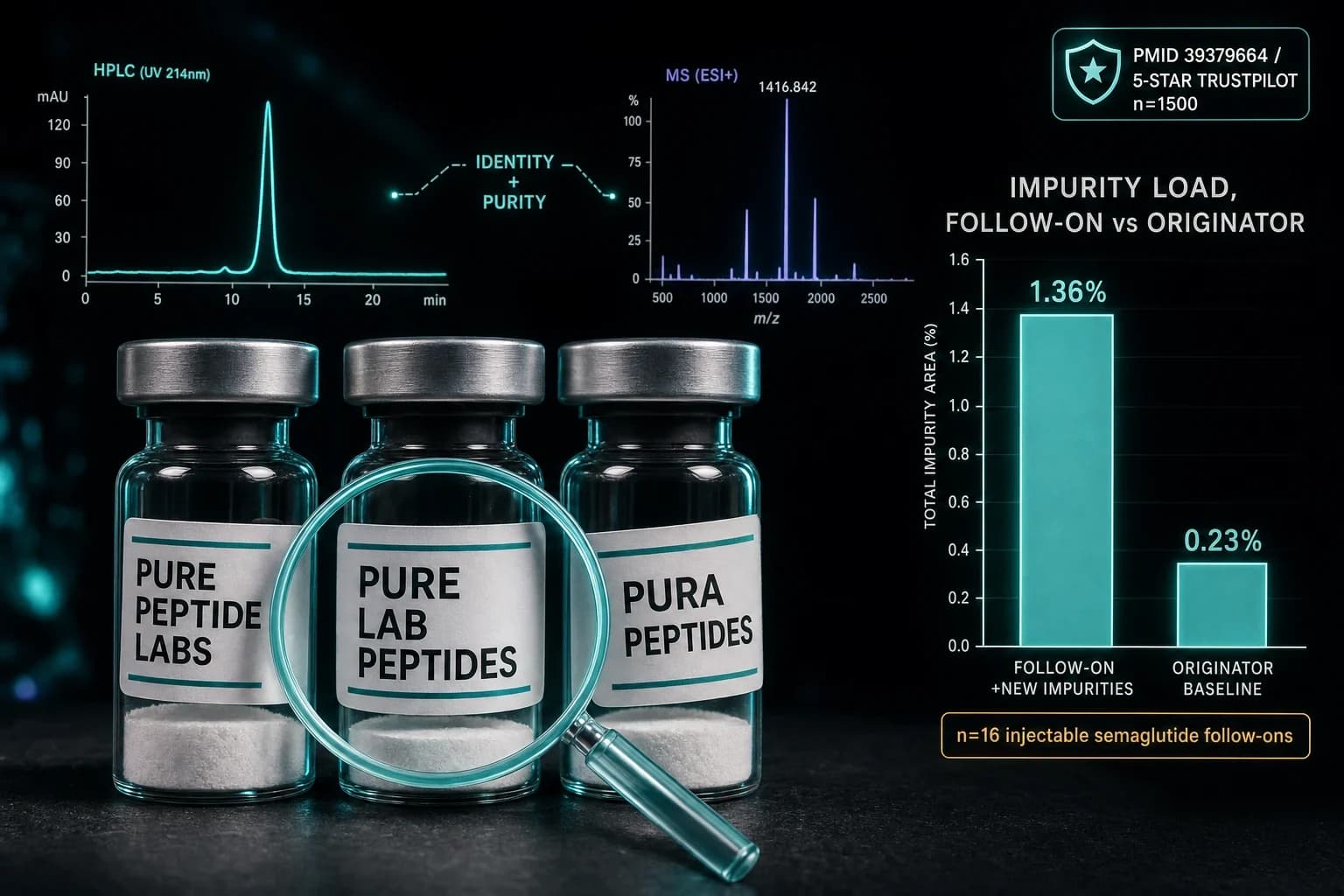
The BPC-157 lab-tests page lists every vendor we track with public COAs. Ascension Peptides publishes per-batch certificates on every BPC-157 10mg lot (recent verified HPLC: 99.79% on lot 12-01260229, Feb 24 2026). Code ENHANCED takes 50% off at checkout. The where-to-buy BPC-157 guide covers the full vendor comparison, and the Ascension Peptides review is the audit behind that pick.
FAQ
How much bacteriostatic water do I add to a 10mg BPC-157 vial?
2 mL is the cleanest default because it produces a 5 mg/mL concentration where 250 mcg equals exactly 5 insulin units (IU) on a U-100 syringe and 500 mcg equals 10 IU. 1 mL, 3 mL, and 5 mL are also valid choices with different precision tradeoffs (see the chart above for IU per dose at each volume).
How many IU is 250 mcg of BPC-157?
Depends on the reconstitution. With 2 mL BAC water (5 mg/mL), 250 mcg = 5 IU. With 1 mL (10 mg/mL), 250 mcg = 2.5 IU. With 3 mL (3.33 mg/mL), 250 mcg = 7.5 IU. With 5 mL (2 mg/mL), 250 mcg = 12.5 IU.
How many IU is 500 mcg of BPC-157?
Depends on the reconstitution. With 2 mL (5 mg/mL), 500 mcg = 10 IU. With 1 mL (10 mg/mL), 500 mcg = 5 IU. With 3 mL (3.33 mg/mL), 500 mcg = 15 IU.
How long does reconstituted BPC-157 last?
Approximately 28 days at 2-8°C (refrigerator) when reconstituted with bacteriostatic water containing 0.9% benzyl alcohol. Sterile water without preservative shortens the shelf life to ~24 hours. Avoid freezing reconstituted solution.
Can I use sterile water instead of bacteriostatic water?
You can, but the shelf life drops to roughly 24 hours because there's no preservative. For BPC-157 dosed twice daily, this is impractical; the vial would need to be reconstituted in tiny batches. BAC water is the standard for any reconstitution that needs to last more than a day.
What syringe size do I use for BPC-157?
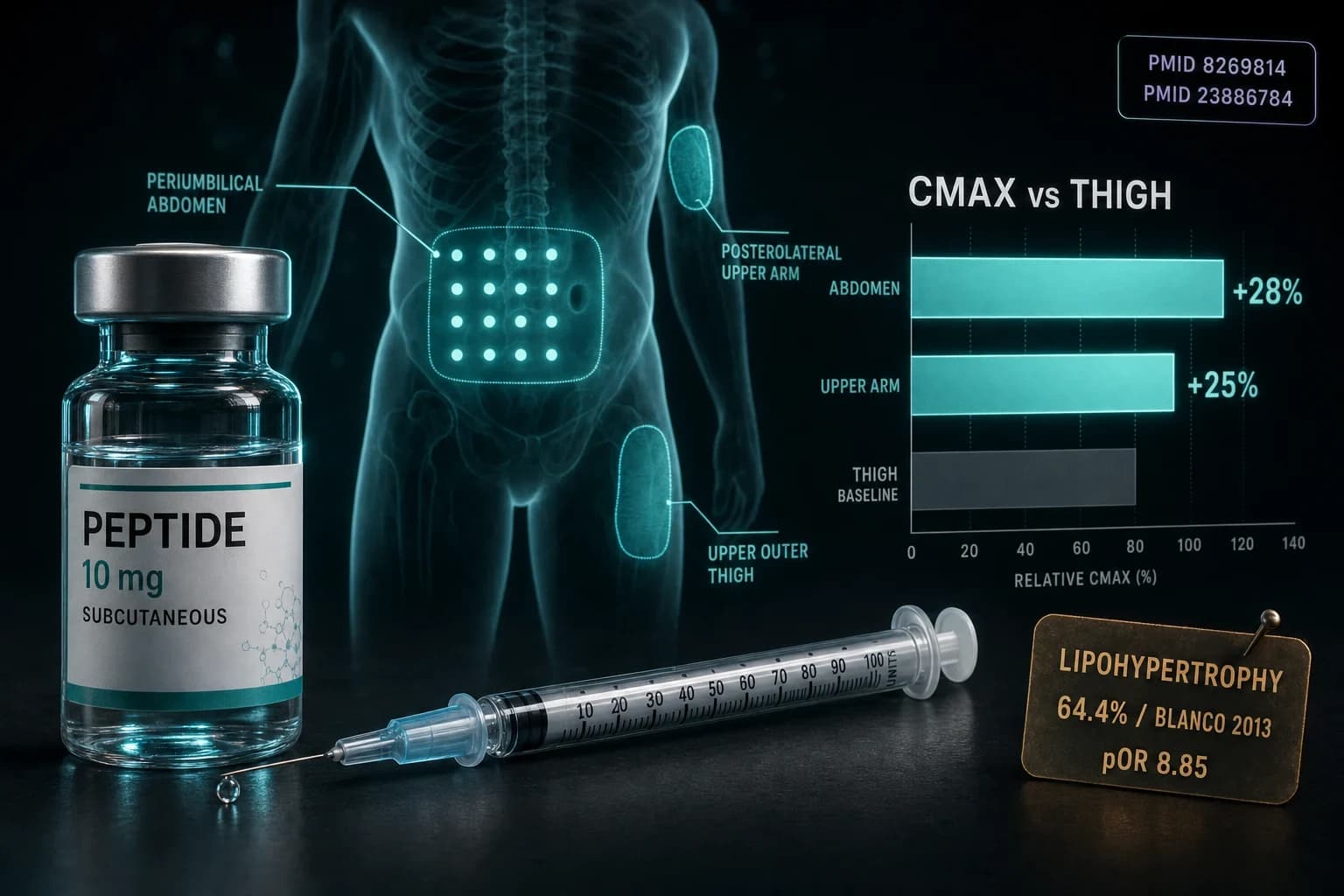
A U-100 insulin syringe is standard. For doses below 30 IU per injection (which covers all common BPC-157 protocols), a 30-IU or 50-IU barrel gives finer markings than a 100-IU barrel. The reconstitution calculator recommends a specific syringe size based on your dose inputs.
What if my dose is between two unit marks?
Round to the nearest 0.5 IU at most. A 50 mcg adjustment (10% of a 500 mcg dose) is below the noise floor of typical insulin syringes. For protocols where precision matters more (sub-250 mcg dosing), choose a larger BAC water volume (5 mL gives 12.5 IU per 250 mcg, which has cleaner sub-unit math).
Continue researching
For the full reconstitution mechanics across any vial size, the peptide reconstitution complete guide is the reference. For the BPC-157 dose schedule, the BPC-157 dosing protocol guide covers what the literature uses. For the underlying compound, the BPC-157 research guide covers mechanism and trial data, and the published review by Sikiric et al. 2022 (PMID 35891408) is the canonical mechanism reference. The live reconstitution calculator handles non-standard dose math. To verify a specific 10mg vial before purchase, the BPC-157 lab-tests page lists every COA on file.
This article is for educational and research purposes only. BPC-157 is not FDA-approved as of May 2026 and is not for human consumption. Reconstitution math and storage guidance reflect standard research-peptide practice; nothing in this article is medical advice. Always work in a sterile environment, document lot numbers, and follow institutional procedures for handling and disposal. Consult a qualified clinician for individual medical questions.