At a glance
- KPV is the most evidence-backed oral peptide for gut inflammation: PepT1-mediated uptake, NF-kB suppression, and roughly 50% MPO reduction in DSS colitis mice (Dalmasso et al. 2008, PMID 18061177)
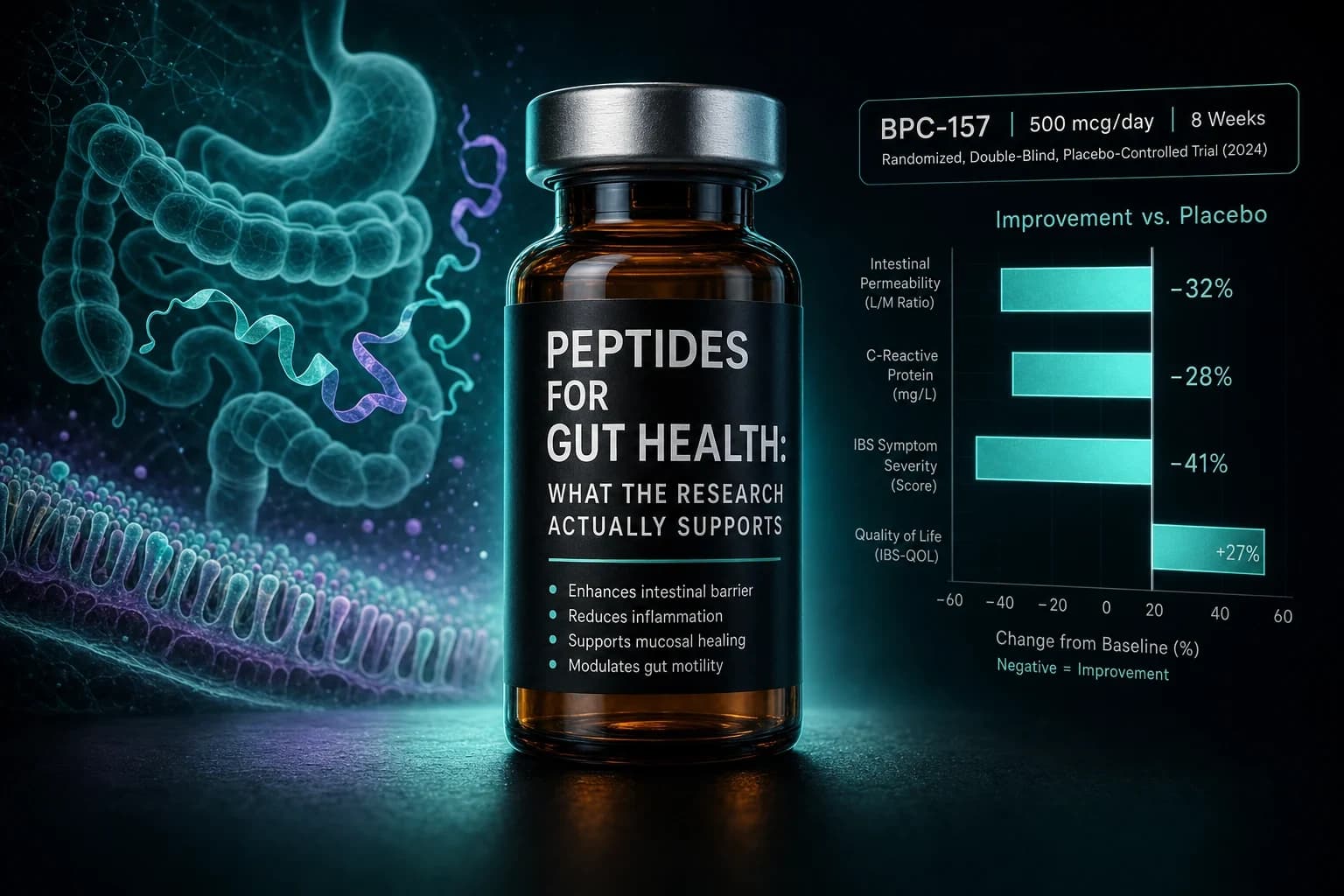
- BPC-157 has 30+ preclinical GI studies (colitis, fistulas, NSAID-injury reversal) but ZERO published human trials as of 2026, per the 2025 AJG systematic review
- Larazotide acetate came closest to clinical validation: the 0.5 mg dose met the primary endpoint in a 342-patient RCT (Leffler et al. 2015, PMID 25683116), then missed statistical significance in the Phase 3 CedLara trial (2022)
- VIP has protective effects on the intestinal barrier in VIP-knockout mice, but VIP receptor signaling in colitis is dose- and receptor-subtype-dependent (Wu et al. 2015, PMID 25932952)
- Practical research stacks combine mucosal repair (BPC-157 or PDA), NF-kB inhibition (KPV), and tight junction support (larazotide), with oral formats preferred for gut-local action
Which peptides actually have gut-specific research behind them
Search "peptides for gut health" and you get a wall of the same five names, mostly presented as if they all sit at the same evidence tier. They do not. One has a signed-off Phase 3 trial that missed its endpoint. One has 30+ animal studies and zero published human trials. One is essentially a new salt form of the second. The tier gap matters, because "supports gut health" is doing a lot of quiet work in most of the copy floating around this space.
This article walks through the peptides most commonly researched for gastrointestinal use, rank-ordered by what the literature actually shows. Every claim traces back to a real PubMed-indexed study. Where the evidence is preclinical or mechanistic only, the article says so, in the same paragraph.
The four mechanisms the gut research is actually built on
Gut-directed peptide research groups into four mechanisms. A peptide can hit more than one, and the strongest research stacks combine peptides that address different mechanisms rather than stacking two peptides that do the same thing.
- Mucosal repair. Angiogenesis and growth factor upregulation at the site of erosion or ulcer. BPC-157 and its arginate analog PDA sit here.
- NF-kB and cytokine suppression. Direct downregulation of the master inflammatory pathway inside enterocytes and immune cells. KPV is the cleanest example; VIP and thymosin alpha-1 touch this too.
- Tight junction and barrier regulation. Zonulin antagonism or direct tight junction stabilization. Larazotide acetate is the only peptide with a Phase 3 program specifically here.
- Immune tone. Broad T-cell and macrophage modulation. Thymosin alpha-1 is the reference compound.
That framing is more useful than a flat list, because it tells you which peptides make sense to combine and which are redundant.
Evidence hierarchy at a glance
| Peptide | Primary GI mechanism | Best-in-class evidence | Route | Partner |
|---|---|---|---|---|
| Larazotide acetate | Tight junction / zonulin antagonist | 342-patient Phase 2b RCT met primary endpoint at 0.5 mg (Leffler 2015); Phase 3 CedLara failed (2022) | Oral (delayed release) | Limitless (as N-Acetyl Larazotide in the Gastro Inflammation Formula) |
| KPV | NF-kB suppression via PepT1 | DSS + TNBS mouse colitis models; ~50% MPO drop; colitis-associated cancer inhibition in AOM/DSS mice (Dalmasso 2008, Viennois 2016) | Oral, subcutaneous, nasal | Ascension (injectable), Limitless (oral capsule) |
| BPC-157 | Mucosal repair, angiogenesis, VEGF | 30+ preclinical GI studies; PL14736 IBD safety trials (Pliva, Croatia); zero published human efficacy trials | Subcutaneous, oral | Ascension (injectable), Limitless (oral) |
| Pentadeca Arginate (PDA) | Arginate salt of BPC-157 (mucosal repair) | Same preclinical base as BPC-157; no dedicated human trials | Oral, subcutaneous | Limitless (oral capsule) |
| VIP (vasoactive intestinal peptide) | Barrier homeostasis, epithelial protection | VIP-KO mice show worse DSS colitis; VPAC1 vs VPAC2 receptor signaling gives conflicting results (Wu 2015) | Subcutaneous, nasal | Ascension (injectable), Limitless (nasal/oral) |
| Thymosin alpha-1 | Broad immune modulation | Older IBD serology work; no modern IBD RCT | Subcutaneous | Ascension, Limitless |
Notice what is missing from that table. No peptide currently has a positive Phase 3 gut trial. Larazotide got closest and did not clear the bar. Every other entry is a mix of preclinical strength, safety trials, and mechanistic rationale. That is the honest ceiling of this category in 2026.
BPC-157: the most discussed, the least trial-validated
BPC-157 is the compound most people mean when they say "gut healing peptide." The mechanistic case is genuinely strong. It upregulates VEGF, drives angiogenesis at wound sites, stabilizes NO signaling, and shows protective effects across a long list of preclinical GI insults: NSAID-induced damage, alcohol lesions, colitis, and postoperative anastomotic wounds (Sikiric et al. 2011, PMID 21548867; Seiwerth et al. 2021, PMID 34267654).
The problem is what "clinical" means in the BPC-157 literature. The PL14736 designation refers to Pliva's BPC-157 program that ran early-stage inflammatory bowel disease trials in Croatia in the 2000s. Those trials established safety and supported the compound's continued research use. No full Phase 2 or Phase 3 efficacy paper for BPC-157 in IBD has ever appeared in a peer-reviewed journal. A 2025 systematic review in the American Journal of Gastroenterology framed oral BPC-157 as "an emerging adjunct" and noted the complete absence of published human RCTs.
That does not make BPC-157 useless as a research compound. It does mean anyone extrapolating from rat data to human dosing is making a mechanistic bet, not citing a clinical result. The BPC-157 human clinical data gap explainer walks through this in more detail. For practical dosing conventions, the BPC-157 dosing protocol guide collects the routes and typical research ranges.
KPV: the strongest preclinical case for oral gut inflammation
KPV is the C-terminal tripeptide of alpha-MSH (lysine-proline-valine). It keeps the anti-inflammatory activity of full-length alpha-MSH and drops the pigmentary and appetite effects. What makes it interesting for gut research is the delivery mechanism.
KPV is a substrate of PepT1, the di- and tripeptide transporter expressed at low levels in the healthy small intestine and upregulated in inflamed colonic epithelium. Oral KPV gets absorbed exactly where colitis is active. Once inside the enterocyte, it inhibits NF-kB nuclear translocation and downstream cytokine output.
The landmark preclinical paper by Dalmasso et al. 2008, PMID 18061177 in Gastroenterology tested oral KPV in two standard mouse colitis models (DSS and TNBS). Myeloperoxidase activity dropped roughly 50% in KPV-treated animals, IL-6, IL-12, IFN-gamma, and IL-1 beta mRNA all fell significantly, and body weight loss was attenuated by day 8. A follow-up from the same group (Viennois et al. 2016, PMID 27458604) extended the finding to colitis-associated cancer: KPV cut tumor number, size, and burden in AOM/DSS wild-type mice, and the effect disappeared entirely in PepT1-knockout mice.
Human data is still preclinical-adjacent (small case series and off-label use in wound and dermatology contexts, no full RCT), but the mechanistic and animal evidence is the cleanest of any peptide on this list. Standard research dose is 500 mcg once or twice daily, encapsulated for gut targeting. Deeper coverage lives in the KPV oral peptide for gut inflammation research review. Dosing conventions by route are in the KPV dosage chart.
Larazotide acetate: the peptide that got closest to clinical validation and stalled
Larazotide acetate is an eight-amino-acid oral peptide (formerly AT-1001) developed as a zonulin antagonist. Its job is not to suppress inflammation directly. It stabilizes tight junctions in the small intestinal epithelium so that gluten peptides in celiac disease do not cross the barrier and trigger the downstream immune cascade.
Two trials tell the story. The Phase 2b gluten-challenge trial by Kelly et al. 2013, PMID 23163616 in Alimentary Pharmacology and Therapeutics showed larazotide reduced gluten-induced GI symptom severity versus placebo in celiac patients undergoing controlled gluten exposure. The follow-up trial by Leffler et al. 2015, PMID 25683116 in Gastroenterology enrolled 342 celiac adults with persistent symptoms despite a gluten-free diet, and the 0.5 mg three-times-daily dose met the primary symptom endpoint versus placebo.
Then the pivotal Phase 3 trial, CedLara, enrolled roughly 525 patients and was discontinued in June 2022 after an interim analysis showed the treatment effect was too small to reach statistical significance. That is the honest read: larazotide has the strongest clinical trial footprint of any peptide in this category, and the pivotal trial did not clear the bar for FDA approval. The compound remains available for research use, and the arm of the Limitless catalog that ships N-Acetyl Larazotide (a modified form) in the Gastro Inflammation Formula is the most common way researchers combine it with BPC-157 and KPV.
VIP: the barrier hormone with dose-dependent effects
Vasoactive intestinal peptide (VIP) is an endogenous 28-amino-acid neuropeptide with major roles in gut motility, secretion, and epithelial homeostasis. VIP-deficient mice show worse DSS colitis than wild-type controls, with more weight loss, more histologic damage, and impaired barrier recovery (Wu et al. 2015, PMID 25932952 in PLoS One).
The receptor subtypes complicate the story. VPAC1-knockout mice show milder DSS colitis than wild-type; VPAC2-knockout mice show more severe colitis. Genetic deletion of VIP itself has produced resistance to DSS colitis in some models, which conflicts with the barrier-loss finding above. What that means for a researcher is straightforward: VIP is protective on average, but the receptor context and dose matter, and the compound is more evidence-supported for endogenous barrier maintenance than for pharmacologic exogenous administration in IBD.
Ascension and Limitless both carry VIP, and the barrier-homeostasis rationale is real. For dosing conventions, the VIP dosage chart collects the routes. The VIP peptide benefits article covers the broader research base beyond gut.
Pentadeca Arginate: the newer BPC-157 salt form
Pentadeca Arginate (PDA) is the arginate salt of BPC-157. Same 15-amino-acid sequence, different counter-ion for improved oral pH stability and solubility. Marketed as a "next-generation BPC-157" and priced accordingly.
The honest read on PDA: the preclinical evidence base it inherits from BPC-157 is real. Evidence for PDA specifically, distinct from its parent compound, is thin. There are no head-to-head published trials comparing PDA to BPC-157 in a gut model. What PDA does offer is a slightly better oral profile on paper (arginate salts are more stable at gastric pH than free-base forms), which matters if the research goal is specifically oral gut-local action. For a full breakdown, see the pentadeca arginate PDA research article.
Thymosin alpha-1: broad immunomodulator, weak gut-specific data
Thymosin alpha-1 has a well-characterized immune-modulating profile through toll-like receptor interactions, and the compound has been studied in sepsis and severe acute pancreatitis with reasonable clinical evidence. Direct RCT evidence in IBD is limited. Older work from the 1980s examined thymosin levels in IBD patients without establishing a therapeutic signal, and no modern Phase 2 or Phase 3 trial of thymosin alpha-1 in ulcerative colitis or Crohn's has landed in a major journal.
Include thymosin alpha-1 in a gut-focused stack only if the goal is broad immune modulation on top of a more targeted GI compound. The dedicated coverage lives in the thymosin alpha-1 immune peptide clinical evidence article.
Why route of administration matters more here than for most peptide categories
Most peptides get debated on injectable versus oral for reasons of bioavailability and convenience. Gut peptides flip that logic. If the research goal is local action in the colon or small intestine, oral administration is the mechanism, not the compromise.
KPV works orally because PepT1 in inflamed gut epithelium actively transports it into the cells that need it. Larazotide works orally because it acts on tight junction proteins on the luminal side of the gut. BPC-157 has been studied in both oral and injectable forms in animals, with the oral route showing benefit in gastric ulcer and NSAID-injury models. Pre-formulated oral capsule stacks (like the Limitless Gastro Inflammation Formula, which combines BPC-157, KPV, and N-Acetyl Larazotide) exist in the first place because the mode of delivery matches the site of action.
For a wider walkthrough on when to reach for oral versus injectable, the injectable vs oral peptides bioavailability guide is the reference. For preparation basics, the how to reconstitute peptides guide covers the injectable side.
Building a defensible gut-focused research stack
The stack question comes up constantly, so here is the framework, not a prescription. The point of stacking peptides for gut research is mechanism coverage. Two peptides that both suppress NF-kB add cost without adding a distinct research angle. Two peptides that address separate mechanisms (barrier plus repair, or repair plus inflammation) actually cover more of the biology.
| Research goal | Mechanism 1 | Mechanism 2 | Mechanism 3 (optional) |
|---|---|---|---|
| General GI mucosal research | BPC-157 or PDA (repair) | KPV (NF-kB) | Larazotide (barrier) |
| IBD-focused inflammation | KPV (NF-kB) | BPC-157 (mucosal repair) | Thymosin alpha-1 (immune) |
| Post-NSAID gastric research | BPC-157 (cytoprotection) | KPV (inflammation) | Optional |
| Barrier / permeability research | Larazotide (tight junction) | BPC-157 (mucosal repair) | Optional |
The pre-mixed injectable option that maps closest to the first row is the KLOW blend (KPV + BPC-157 + TB-500 + GHK-Cu), which Ascension carries with 50% off using code ENHANCED. The pre-mixed oral option is the Gastro Inflammation Formula (BPC-157 + KPV + N-Acetyl Larazotide), which Limitless ships with code ENHANCED for orals.
Bottom line: No peptide has cleared a Phase 3 gut trial. KPV has the strongest preclinical case for oral gut inflammation, BPC-157 has the deepest preclinical base with zero human RCTs, and larazotide got closest to approval and missed. Stack for mechanism coverage, not compound count.
Where the gut peptide research is thinnest
Three honest gaps to note before this article looks tidier than the field:
No head-to-head trials. There is no peer-reviewed comparison of KPV versus larazotide, BPC-157 versus PDA, or any of the oral formulations against each other in a controlled human protocol. Every stacking rationale in the peptide space, including the ones on this page, is mechanistic reasoning rather than a comparative trial.
Long-term safety data is limited. Larazotide has the best safety footprint from the celiac program (well tolerated across trials). BPC-157 has decades of preclinical use without notable toxicity signals but no long-term human safety study. KPV has a clean short-term signal in animals and case reports but no long-term human pharmacovigilance dataset.
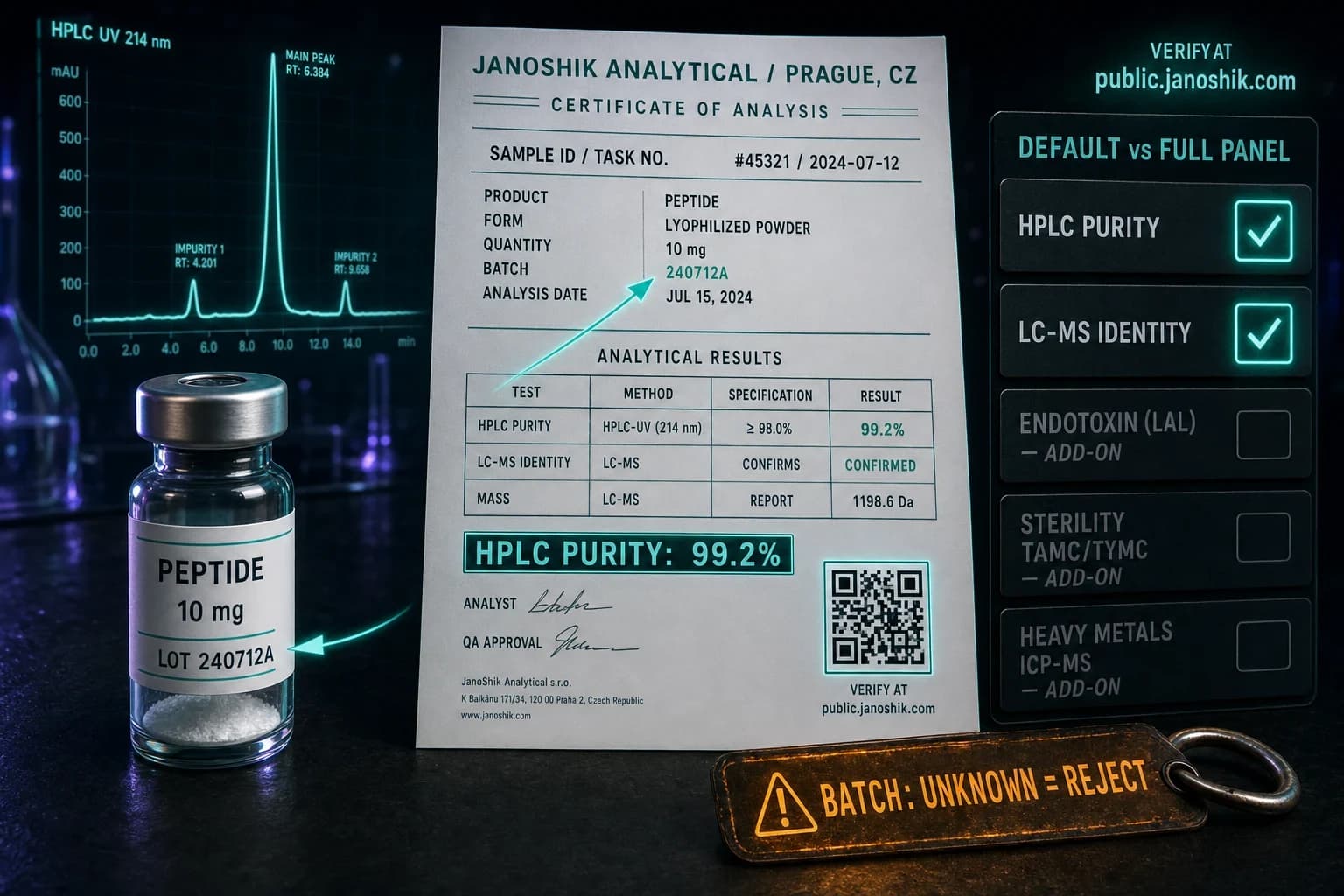
COA and sourcing matter more here than in most categories. These peptides get used for chronic conditions where consistency matters, so third-party certificates of analysis for the vial or capsule you receive are non-optional for serious research. The Ascension Peptides review covers what a per-lot COA should look like, and the lab-tests library is the underlying dataset. Peptide potency claims without COAs are marketing copy, not data.
Tip: When comparing two vendors of the same peptide (say, oral KPV capsules), the differentiator is not price per capsule. It is whether the vendor publishes a per-lot COA identifying purity by HPLC and mass spec. That is the number that determines whether you are running a real research protocol or a placebo.
FAQ
Q: Which single peptide has the best evidence for gut inflammation? KPV. It is the only compound on this list with a positive DSS + TNBS mouse colitis dataset that maps to a clear mechanism (PepT1-mediated NF-kB suppression) and a translatable oral route.
Q: Is BPC-157 approved for anything? No. BPC-157 has no regulatory approval for any indication in any major jurisdiction as of 2026. It is a research compound. See the BPC-157 human clinical data gap explainer for the full picture.
Q: Are oral peptide capsules destroyed by stomach acid? It depends on the peptide. Larazotide is formulated for delayed release specifically to bypass gastric degradation. KPV is small enough (three amino acids) and stable enough to be absorbed via PepT1 in the small intestine. BPC-157 has documented oral activity in animal models. PDA's arginate form is engineered for improved pH stability. Not every peptide survives gastric transit, which is why oral formulations for gut research are typically enteric coated or delayed release.
Q: Can I combine BPC-157 and KPV? Yes. They target different mechanisms (mucosal repair vs. NF-kB inhibition) and are commonly stacked in gut protocols. Both partners carry the two-compound and three-compound stacks (KLOW injectable via Ascension, Gastro Inflammation Formula oral via Limitless).
Disclaimer
This article is for research and educational purposes only. It is not medical advice, and none of the peptides discussed are approved by the FDA or comparable regulatory agencies for the treatment or prevention of any gastrointestinal condition. All dosing conventions, mechanisms, and outcomes described come from published preclinical or clinical research, cited by PMID. Consult a qualified healthcare provider for any medical decision.