At a glance
- FDA approved September 2025 for Barth syndrome (brand name Forzinity)
- Binds cardiolipin on the inner mitochondrial membrane to restore ATP output
- 92% subcutaneous bioavailability, exceptional for a peptide
- Aged mice showed reversed mitochondrial decline within 8 weeks of treatment
- Phase 3 trials active for dry AMD and primary mitochondrial myopathy
The short version
The FDA approved elamipretide (brand name Forzinity) on September 19, 2025. That made it the first mitochondrial-targeted peptide to receive regulatory approval anywhere in the world. The indication is Barth syndrome, a rare genetic disease, but the clinical pipeline stretches far beyond that single condition. Active Phase 3 trials are testing elamipretide in dry age-related macular degeneration and primary mitochondrial myopathy. Preclinical aging data suggests this peptide reverses mitochondrial dysfunction in aged muscle and heart tissue within weeks.
For the longevity research community, SS-31 sits in rare territory: a research peptide with actual FDA precedent behind it.
What is SS-31?
SS-31 stands for Szeto-Schiller 31, named after the two Cornell researchers who designed it. Hazel Szeto and Peter Schiller synthesized this tetrapeptide (D-Arg-Dmt-Lys-Phe-NH2) specifically to concentrate inside mitochondria. Most drugs cannot reliably cross the outer mitochondrial membrane. SS-31 does, and it manages this without needing an energy-dependent transport mechanism.
The peptide carries a 2+ net charge at physiological pH, which drives uptake into the negatively charged mitochondrial matrix. Once inside, it localizes to the inner mitochondrial membrane (IMM), where it binds a phospholipid called cardiolipin (Birk et al., 2013). That interaction is the core of everything SS-31 does.
You will see it listed under multiple names: elamipretide (the generic name), Bendavia (an earlier development name), MTP-131, and Forzinity (the approved brand name). They are all the same molecule.
Why cardiolipin matters
Think of your mitochondria as a power plant. The electron transport chain (ETC) runs along the inner membrane, passing electrons through Complexes I through IV to generate ATP. Cardiolipin is the structural glue that holds those complexes in place. It stabilizes the cristae folds where the ETC operates, and it keeps the complexes arranged in supercomplexes for maximum efficiency.
When cardiolipin gets damaged (through oxidation, aging, or genetic mutations like the tafazzin defect in Barth syndrome), the power plant breaks down. Electron leak increases. Reactive oxygen species (ROS) spike. ATP output drops. The cell enters a vicious cycle: damaged cardiolipin generates more ROS, which damages more cardiolipin.
SS-31 breaks that cycle. It binds cardiolipin with high affinity, inhibits cytochrome c peroxidase activity (the enzyme that catalyzes cardiolipin oxidation during stress), and stabilizes cristae structure (Birk et al., 2013). Less ROS, more efficient electron transport, higher ATP output, preserved mitochondrial membrane potential. A 2025 review from Albert Einstein College of Medicine confirmed that cardiolipin binding, not simple ROS scavenging, is the primary mechanism driving elamipretide's therapeutic effects (Calabrese et al., 2025).
The Barth syndrome breakthrough: TAZPOWER trial data
Barth syndrome (BTHS) is caused by mutations in the tafazzin gene, which encodes an enzyme essential for cardiolipin remodeling. Without functional tafazzin, cardiolipin ratios are disrupted, and mitochondria throughout the body malfunction. Patients develop cardiomyopathy, skeletal muscle weakness, neutropenia, and growth delays. It is a direct test case for whether fixing cardiolipin function fixes the disease.
TAZPOWER tested elamipretide 40 mg subcutaneous daily in BTHS patients. The 168-week open-label extension published in Genetics in Medicine showed remarkable durability (Thompson et al., 2024):
- 6-minute walk test: cumulative improvement of 96.1 meters at week 168 (P = .003)
- Fatigue scores: BTHS-SA Total Fatigue remained below baseline at every measured time point
- Cardiac function: 3D left ventricular stroke volume, end-diastolic volume, and end-systolic volume all showed significant improvement trends
- Retention: 8 of 10 patients completed the full 168-week extension
- Safety: injection-site reactions were the most common adverse event with no serious safety signals
Those results formed the basis for FDA accelerated approval on September 19, 2025.
Beyond Barth: the active clinical pipeline
Barth syndrome affects fewer than 1 in 300,000 people. The real question for the broader research community is whether elamipretide works in common conditions driven by mitochondrial dysfunction. Three major trials are providing answers.
Dry age-related macular degeneration (AMD)
ReCLAIM-2 randomized 176 patients with dry AMD and geographic atrophy to elamipretide 40 mg daily vs placebo for 48 weeks. The primary endpoints (visual acuity change and geographic atrophy area) did not reach statistical significance, but the photoreceptor data told a different story (Ehlers et al., 2024):
- 43% reduction in total ellipsoid zone attenuation/loss vs placebo
- 47% reduction in partial ellipsoid zone degradation vs placebo
- 14.6% of elamipretide patients gained 10+ letters in low-luminance visual acuity vs 2.1% on placebo
The ellipsoid zone endpoint will serve as the primary endpoint for the Phase 3 ReNEW trial, which reached 50% enrollment in early 2025 with data expected in 2026.
Heart failure with reduced ejection fraction
PROGRESS-HF randomized 71 patients (mean ejection fraction 31%) to placebo, elamipretide 4 mg, or 40 mg daily for 28 days. The primary endpoint (change in left ventricular end-systolic volume) was not met, though quality-of-life scores trended toward improvement on the 40 mg dose (Butler et al., 2020). The 28-day treatment window may have been too short for structural cardiac remodeling. Longer exposure data from TAZPOWER's cardiac measurements in Barth patients suggest more time is needed for measurable structural change.
Primary mitochondrial myopathy (PMM)
MMPOWER-3, a Phase 3 trial, is fully enrolled and evaluating elamipretide in PMM. These are rare skeletal myopathic diseases where genetic mutations directly impair mitochondrial function.
| Trial | Phase | Condition | n | Duration | Key Finding |
|---|---|---|---|---|---|
| TAZPOWER | 2/OLE | Barth syndrome | 10 | 168 wk | +96.1 m on 6MWT (P=.003) |
| ReCLAIM-2 | 2 | Dry AMD / GA | 176 | 48 wk | 43% less EZ loss vs placebo |
| PROGRESS-HF | 2 | HFrEF | 71 | 4 wk | Primary endpoint not met |
| MMPOWER-3 | 3 | PMM | Enrolled | Ongoing | Results pending |
| ReNEW | 3 | Dry AMD / GA | 360 target | Ongoing | Data expected 2026 |
The aging data: why longevity researchers pay attention
SS-31 is not approved for aging. No peptide is. But the preclinical data on age-related mitochondrial dysfunction is what drives the majority of research interest.
Siegel et al. (2019) treated 26-month-old mice (equivalent to roughly 75 human years) with SS-31 at 3 mg/kg/day for 8 weeks. The results were striking. SS-31 reversed age-related decline in maximum mitochondrial ATP production (ATPmax), restored oxidative phosphorylation coupling (P/O ratio), and increased gastrocnemius fatigue resistance with significantly greater muscle mass compared to aged controls. Treadmill endurance improved measurably, and redox homeostasis was restored.
Here is the critical detail: SS-31 did not create new mitochondria. It fixed the ones already there. That distinction matters because it points to mitochondrial quality, not quantity, as the therapeutic target.
A 2025 study in Aging Cell extended this work. Mitchell et al. (2025) gave 24-month-old mice elamipretide for 8 weeks and measured cardiac and skeletal muscle function. Old mice showed significant improvements in global longitudinal strain (a sensitive cardiac function marker), ejection fraction, and frailty index. Skeletal muscle force improved across a range of stimulation frequencies, with particularly strong effects in female mice.
One finding stood out: despite improving function, elamipretide did not change epigenetic or transcriptomic age markers. The mice got functionally younger without their biological clocks registering the difference. That dissociation between functional improvement and epigenetic age is scientifically significant and still being investigated.
Separate mechanistic work confirmed that elamipretide improves ADP sensitivity in old mitochondria by reducing glutathionylation of the adenine nucleotide translocator (ANT), the protein that shuttles ADP into the mitochondrial matrix for ATP synthesis (Campbell et al., 2023). Old mitochondria respond sluggishly to energy demand signals. SS-31 makes them responsive again.
Pharmacokinetics: what researchers need to know
Elamipretide has unusually clean pharmacokinetics for a peptide:
- Bioavailability: approximately 92% via subcutaneous injection
- Tmax: 0.5 to 1 hour after SC administration
- Half-life: approximately 4 hours
- Distribution: throughout total body water; Vd approximately 0.5 L/kg
- Protein binding: low, approximately 39%
- Metabolism: sequential C-terminal degradation to inactive M1 (tripeptide) and M2 (dipeptide) metabolites
- Elimination: 100% renal; all peptides and metabolites recovered in urine
- Accumulation: minimal with daily dosing; dose-proportional exposure from 2 to 80 mg
That 92% bioavailability is exceptional for a peptide. Most injectable peptides lose 30 to 50% at the injection site. Elamipretide's small size (four amino acids) and positive charge help it absorb almost completely.
For reconstitution of research-grade SS-31 vials, bacteriostatic water is the standard diluent. A 10 mg vial reconstituted with 2 mL yields 5 mg/mL. Use the reconstitution calculator to confirm volumes for your specific vial size.
How SS-31 compares to other mitochondrial peptides
SS-31 is not the only peptide targeting mitochondrial function, but its mechanism is distinct from each alternative.
MOTS-c is a mitochondrial-derived peptide (encoded by mitochondrial DNA) that activates AMPK and mimics exercise signaling. It works upstream, at the metabolic regulation level. SS-31 works downstream, at the structural membrane level. They address different parts of the mitochondrial dysfunction problem, which is why some researchers study both.
NAD+ supplementation (via precursors like NMN and NR) addresses the age-related decline in NAD+ levels that are required for mitochondrial enzyme function. SS-31 stabilizes the machinery that uses NAD+. Different layers of the same system.
Epithalon targets telomerase activation and telomere maintenance. It operates on a completely different aging axis (replicative senescence vs bioenergetic decline).
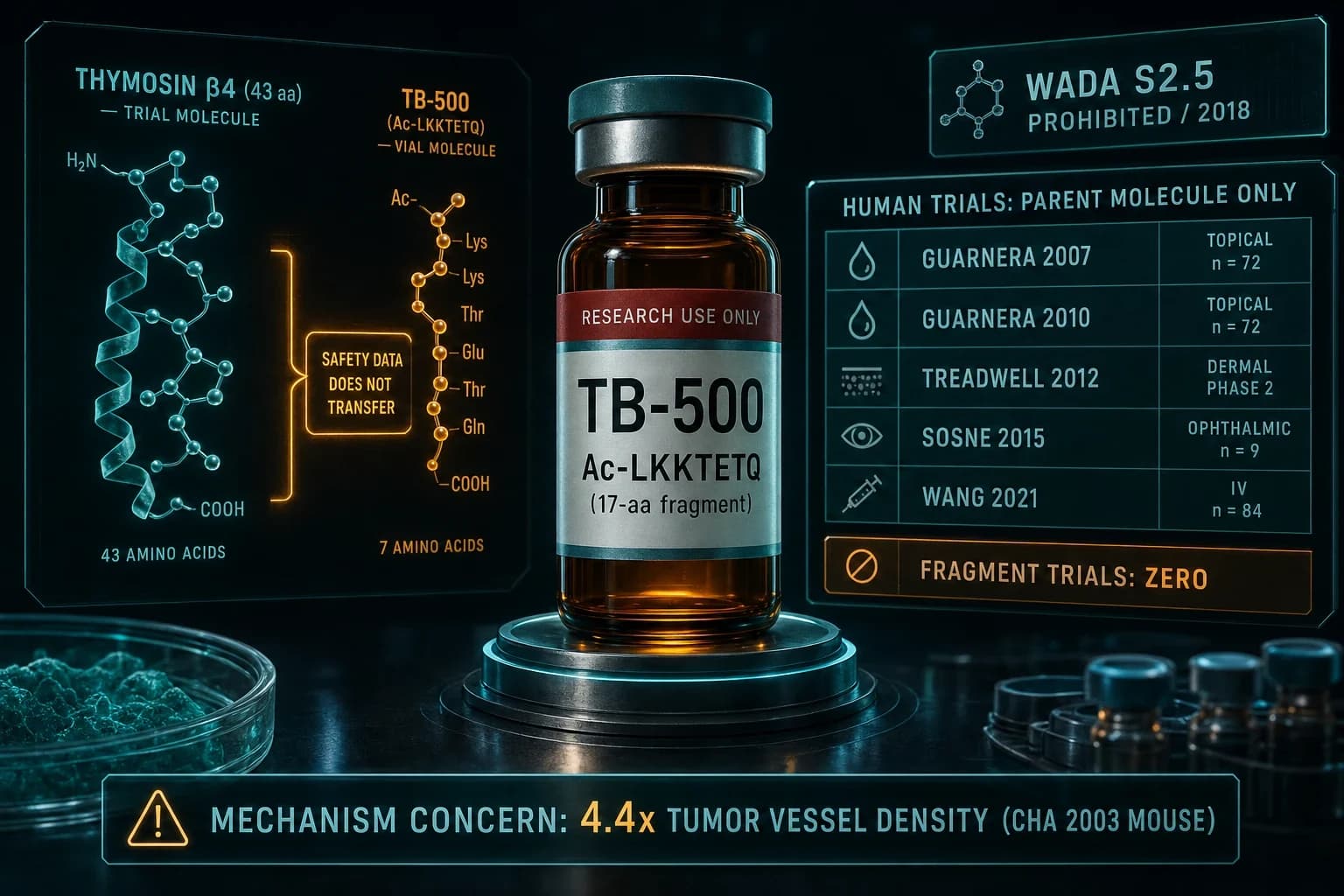
For tissue repair applications, BPC-157 and TB-500 drive angiogenesis and growth factor signaling. They are complementary rather than competitive.
Where to source research-grade SS-31
Research-grade SS-31 is available from Ascension Peptides, with 50% off using code ENHANCED for injectable formulations. Given the 4-hour half-life and daily dosing protocol used in clinical trials, most researchers work with 10 mg vials.
What the data actually tells you
SS-31 has something most research peptides do not: a regulatory agency saying "this works well enough to approve." That is a low bar in absolute terms (accelerated approval, rare disease, small trial), but it is an infinitely higher bar than the zero human approvals carried by compounds like BPC-157 or MOTS-c.
The aging data is preclinical only. Mice are not humans. Eight weeks of treatment in a mouse does not predict decades of use in a person. The cardiac and AMD data in humans is mixed: real signals in secondary endpoints, primary endpoints not met outside of Barth syndrome.
That is the honest picture. SS-31 has stronger clinical backing than almost any other anti-aging research peptide on the market. It also has gaps that only ongoing Phase 3 trials can fill. Both things are true.
This article is for educational and research purposes only. Elamipretide (Forzinity) is FDA-approved for Barth syndrome in patients weighing 30 kg or more. All other applications discussed are investigational. Information presented here is derived from published peer-reviewed research and FDA prescribing information. Consult a qualified healthcare professional before making any decisions about peptide research.