At a glance
- BPC-157 drives angiogenesis by upregulating VEGF in muscle and tendon healing
- TB-500 (thymosin beta-4) promotes cell migration and downregulates inflammation
- ARA-290 regrew corneal nerve fibers over 28 days in a neuropathy trial
- KPV calms inflammation and is orally active through PepT1 transport
- The four cover healing, nerves, and inflammation, so they stack cleanly
The recovery-peptide list that actually has published data is shorter than the internet suggests. Four compounds, four genuinely different jobs. Pile on more than these and you are stacking overlap, not coverage.
BPC-157: the angiogenesis workhorse
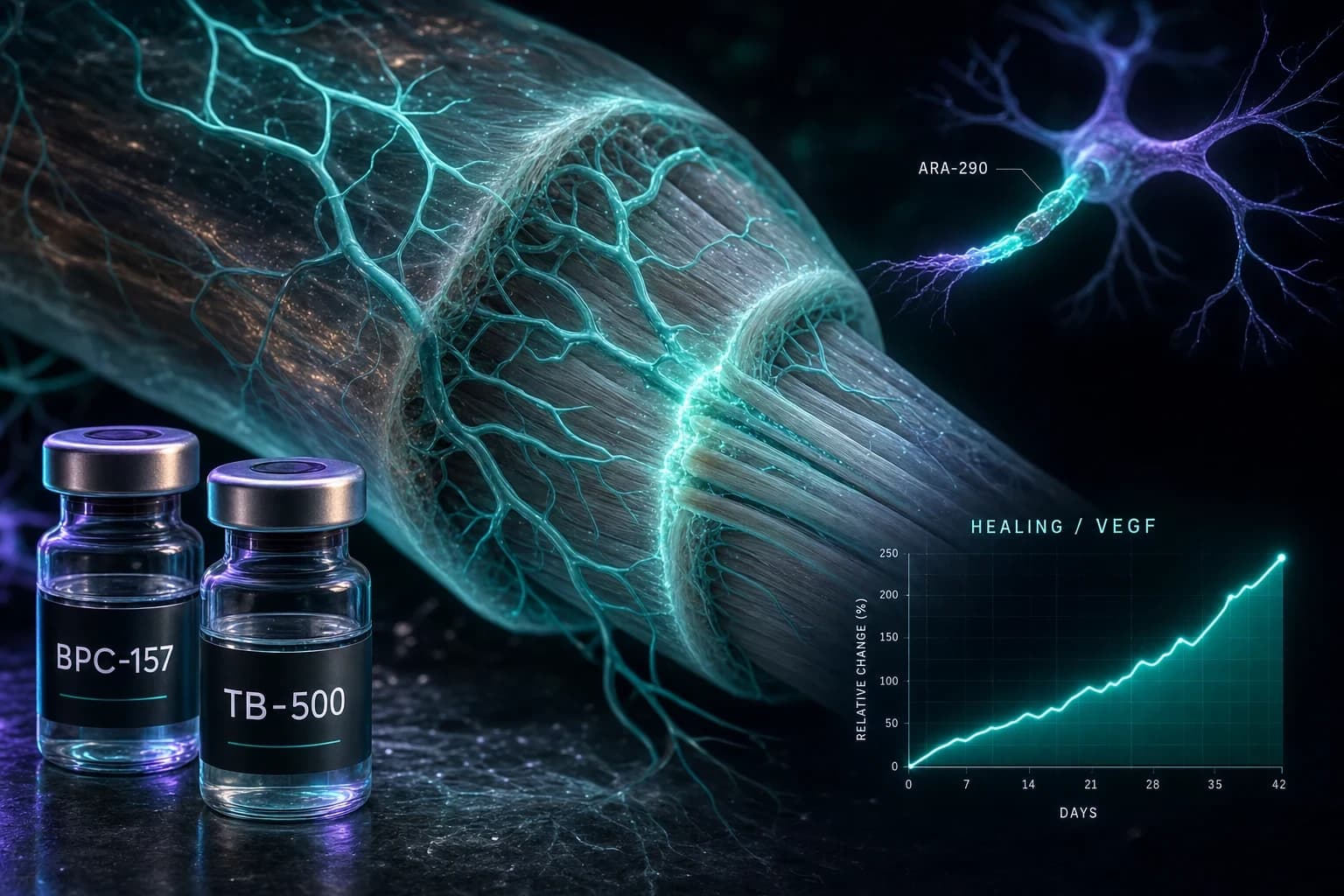
BPC-157 is the one most people start with, and the mechanism is blood supply. It stimulates angiogenesis by upregulating VEGF, which is how it accelerates healing in muscle and tendon tissue (Chang et al., 2011). Separate work shows it improving ligament and tendon-to-bone healing in animal models. The catch worth stating plainly: the evidence is preclinical, with no completed human trials. That does not make it useless, but it makes the certainty lower than the forums imply. The BPC-157 dosage chart has the standard 250 to 500mcg protocol.
TB-500 (thymosin beta-4): migration and remodeling
TB-500 is the systemic partner to BPC-157's local action. As the major actin-sequestering peptide in cells, thymosin beta-4 promotes cell migration, blood vessel formation, and tissue remodeling while downregulating inflammatory chemokines and cytokines (Goldstein et al., 2005). Where BPC-157 works at the site, TB-500 helps the repair machinery travel to where it is needed. The TB-500 dosage chart covers dosing and the two often run together.
ARA-290: the nerve-repair option
ARA-290 (cibinetide) is the one to reach for when the problem is nerve, not tendon. It is derived from the helix-B region of erythropoietin and activates the innate repair receptor without EPO's effect on red blood cells. In a randomized trial in sarcoidosis patients with small-fiber neuropathy, 28 days of ARA-290 improved neuropathic symptoms and initiated regrowth of corneal nerve fibers (Dahan et al., 2013). That is real human data, which is rare in this category. See the ARA-290 dosage chart and the ARA-290 research page.
KPV: the anti-inflammatory finisher
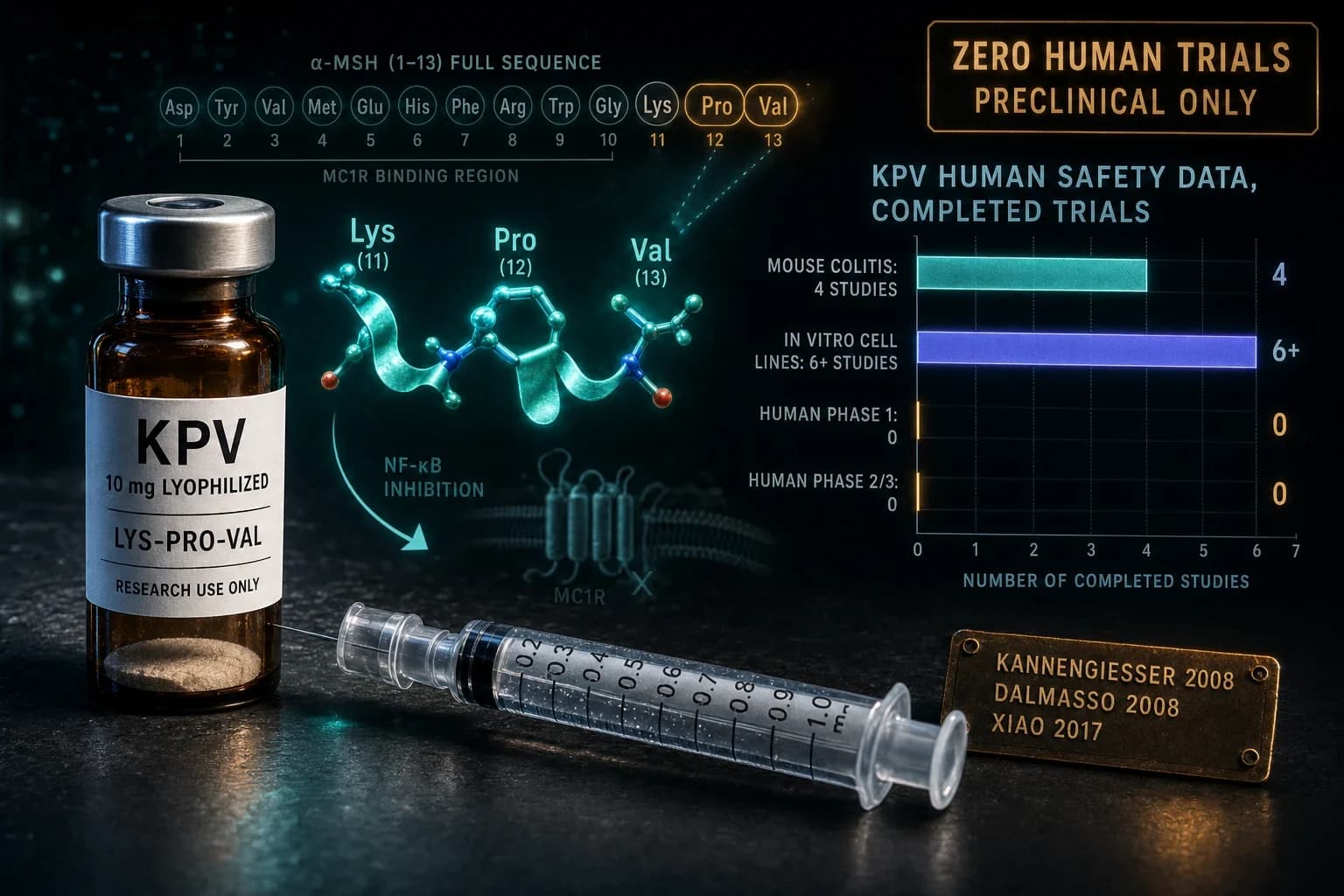
KPV is the tripeptide that calms the inflammation the other three are working around. It reduces inflammation through downregulation of NF-kB, and it is orally active because the gut transports it intact via PepT1 (Dalmasso et al., 2008). It is especially relevant when gut inflammation is part of the picture. The KPV dosage chart covers both the oral and injectable routes.
| Peptide | Job | Route | Human data |
|---|---|---|---|
| BPC-157 | Angiogenesis, tissue healing | Subcutaneous | Preclinical |
| TB-500 | Cell migration, remodeling | Subcutaneous | Preclinical |
| ARA-290 | Nerve repair, neuropathic pain | Subcutaneous | Randomized trial |
| KPV | Anti-inflammatory | Oral or subcutaneous | Preclinical |
The classic stack
Bottom line: BPC-157 and TB-500 are the standard recovery pair because they cover local and systemic healing without overlapping. Add ARA-290 if nerves are involved and KPV if inflammation is the limiting factor. That is the whole toolkit; a fifth peptide is usually redundant.
The BPC-157 and TB-500 combination has its own detailed protocol in the Wolverine stack guide, which is the place to start if you want the reconstitution math and timing rather than the overview.
Purity and sourcing
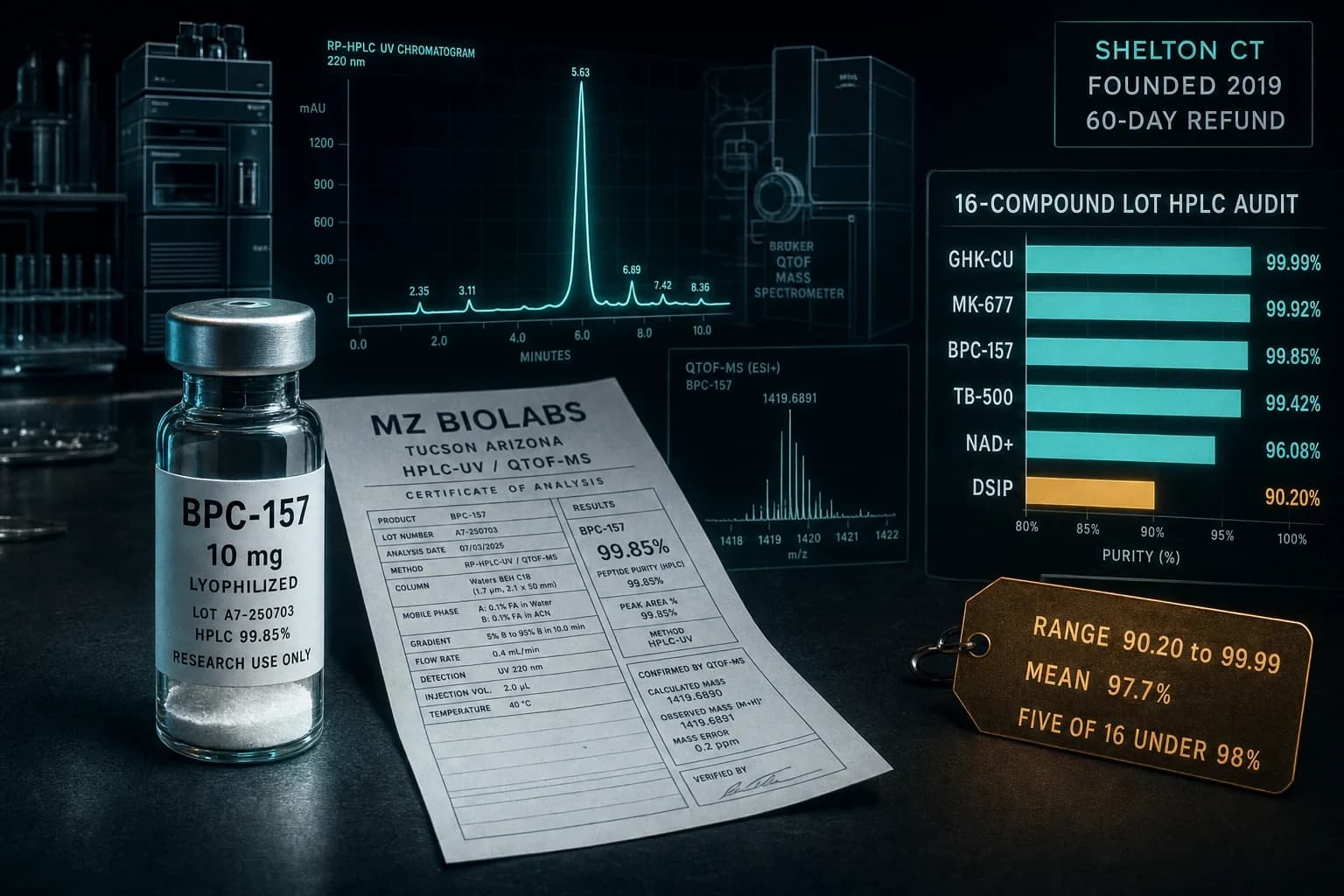
Recovery peptides are run in cycles, so a bad vial means weeks of a failed experiment. Verify the certificate of analysis on our peptide lab test database before buying. BPC-157, TB-500, ARA-290, and KPV are available as research vials from Ascension Peptides with 50% off using code ENHANCED.
This article is for research and educational purposes only. It is not medical advice. Consult a qualified healthcare professional before making any health decision.