At a glance
- Standard dose: 500 mcg BPC-157 + 500 mcg TB-500 daily, subcutaneous
- BPC-157 drives local angiogenesis; TB-500 drives systemic cell migration
- Peak therapeutic window is weeks 3-4 of a 4-6 week cycle
- Pre-mixed 20 mg vial with 2 mL BAC water yields 20 doses at standard
- Inject near the injury site for localized protocols
Why this stack exists
BPC-157 and TB-500 are the two most-researched recovery peptides in the published literature. Both have extensive animal model data showing accelerated tissue repair. But they work through entirely different mechanisms, on different receptors, at different scales.
BPC-157 is a local operator. It drives angiogenesis (new blood vessel formation), upregulates VEGFR2, increases fibroblast migration to the injury site, and modulates the nitric oxide system. When researchers inject BPC-157 near a damaged Achilles tendon in rats, healing accelerates measurably within days (Chang et al., Journal of Applied Physiology, 2011; Krivic et al., Journal of Orthopaedic Research, 2006).
TB-500 (the synthetic active fragment of Thymosin Beta-4) works systemically. It sequesters G-actin monomers, which promotes actin polymerization and enables cell migration throughout the body. It reduces inflammation at a systemic level and has been studied for cardiac tissue repair, hair regrowth, and general wound healing across multiple tissue types.
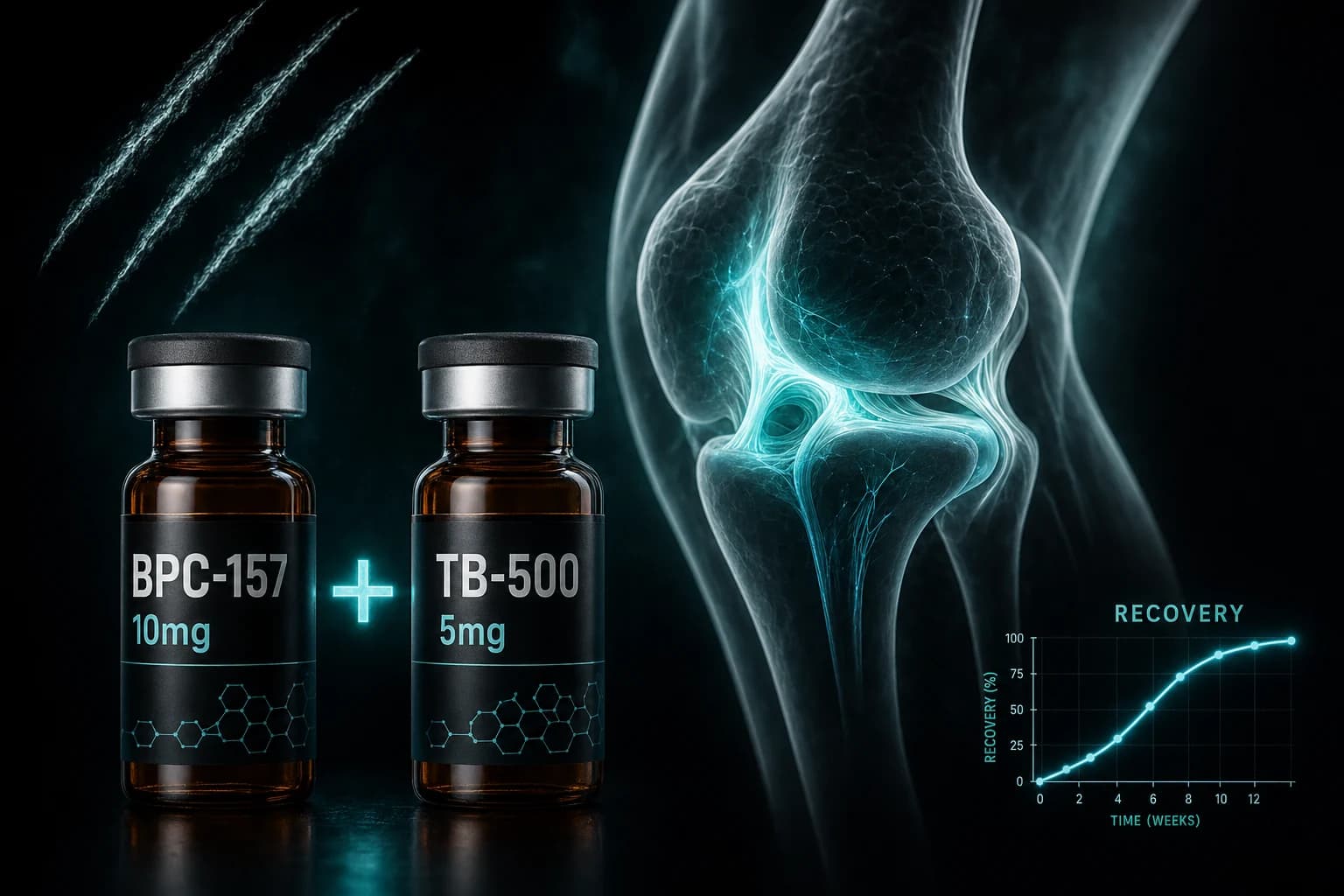
The Wolverine Stack puts both in a single pre-mixed vial: 10 mg BPC-157 + 10 mg TB-500. One reconstitution, one draw, two complementary healing pathways.
The name comes from the obvious reference. Whether it lives up to it depends on your expectations, but the mechanistic logic is sound.
The mechanistic synergy, explained
Understanding why BPC-157 and TB-500 work better together than either works alone requires looking at what happens after tissue damage.
Phase 1: Inflammation (hours to days). Damaged tissue triggers an inflammatory cascade. Immune cells flood the area. Swelling peaks. TB-500 acts here by modulating inflammation systemically through actin regulation and by promoting macrophage migration to clear debris. It does not suppress inflammation entirely (which would impair healing); it modulates the resolution phase so the body transitions from "damage response" to "repair mode" faster.
Phase 2: Proliferation (days to weeks). New blood vessels form. Fibroblasts migrate to the site and begin laying down collagen. BPC-157 is dominant in this phase. It upregulates VEGF (Vascular Endothelial Growth Factor), which drives angiogenesis. More blood vessels mean more oxygen and nutrient delivery to the repair site. It also accelerates fibroblast migration directly (Hsieh et al., Journal of Molecular Medicine, 2017). The result: faster scaffolding for new tissue.
Phase 3: Remodeling (weeks to months). The initial repair tissue matures. Collagen fibers reorganize along stress lines. Both compounds contribute here, but through different pathways. BPC-157's continued growth factor support helps tissue mature properly. TB-500's actin regulation supports the cellular reorganization that turns scar tissue into functional tissue.
The practical outcome: BPC-157 focuses the healing at the specific injury site. TB-500 prepares the entire body for repair. You get local precision and systemic support simultaneously.
Who runs this stack
The Wolverine Stack is the most popular pre-mixed peptide protocol on the market. The typical use cases in the research community:
- Tendon and ligament injuries. Achilles tendinopathy, patellar tendonitis, rotator cuff strains. This is the primary use case in the literature. BPC-157 has the strongest published data for tendon healing specifically (Gwyer et al., Cell and Tissue Research, 2019).
- Post-surgical recovery. Accelerating tissue repair after orthopedic procedures. The angiogenesis and fibroblast migration promoted by BPC-157, combined with TB-500's systemic anti-inflammatory action, targets the two biggest bottlenecks in surgical recovery: blood supply and inflammation.
- Chronic joint issues. Nagging injuries that never fully resolve. The combination addresses both the local tissue deficit and the systemic inflammatory environment that perpetuates chronic conditions.
- Muscle tears and strains. TB-500's actin regulation is directly relevant to muscle cell repair. BPC-157 handles the vascular component.
- Gut healing. BPC-157 was originally isolated from human gastric juice and has specific data for gut tissue repair, including counteracting NSAID-induced gastrointestinal damage (Park et al., Current Pharmaceutical Design, 2020).
James Magnussen, the Australian Olympic swimmer competing in the Enhanced Games, publicly disclosed running BPC-157 + TB-500 as the recovery foundation of his performance protocol.
The protocol
Here is the standard research protocol used for the Wolverine Stack pre-mixed vial (20 mg total: 10 mg BPC-157 + 10 mg TB-500).
Daily dosing
Most protocols use a single daily subcutaneous injection. The standard dose range:
- Conservative: 250 mcg BPC-157 + 250 mcg TB-500 (0.5 mg total per day)
- Standard: 500 mcg BPC-157 + 500 mcg TB-500 (1 mg total per day)
- Aggressive: 750 mcg BPC-157 + 750 mcg TB-500 (1.5 mg total per day)
Since the vial is pre-mixed at a 1:1 ratio, each draw delivers equal amounts of both compounds. Most researchers start at the standard dose and adjust based on response.
Timing
Inject once daily, preferably at the same time each day. Morning or evening both work. BPC-157 has a ~4 hour half-life and TB-500 has a ~2-3 hour half-life, so some protocols split the dose into two daily injections (morning + evening) for more consistent tissue exposure. Whether splitting provides meaningful benefit over once-daily dosing has not been formally tested, but the pharmacokinetic rationale is reasonable.
Injection site
For localized injuries: Inject subcutaneously within a few centimeters of the affected tissue. BPC-157's effects are concentration-dependent at the tissue level, so local injection maximizes its impact on the target area. TB-500 acts systemically regardless of injection site, so you lose nothing by injecting locally.
For systemic protocols (general recovery, gut healing): Inject subcutaneously into the abdominal fat pad or thigh. Rotate injection sites every 2-3 days.
Cycle length
- Standard cycle: 4-6 weeks
- Extended cycle: 6-8 weeks (for chronic conditions or post-surgical recovery)
- Off period: 4-8 weeks between cycles
- Reassessment: Document pain levels, range of motion, or other endpoints before, during, and after each cycle
Reconstitution math for the pre-mixed vial
The Wolverine Stack ships as a 20 mg lyophilized vial (10 mg BPC-157 + 10 mg TB-500).
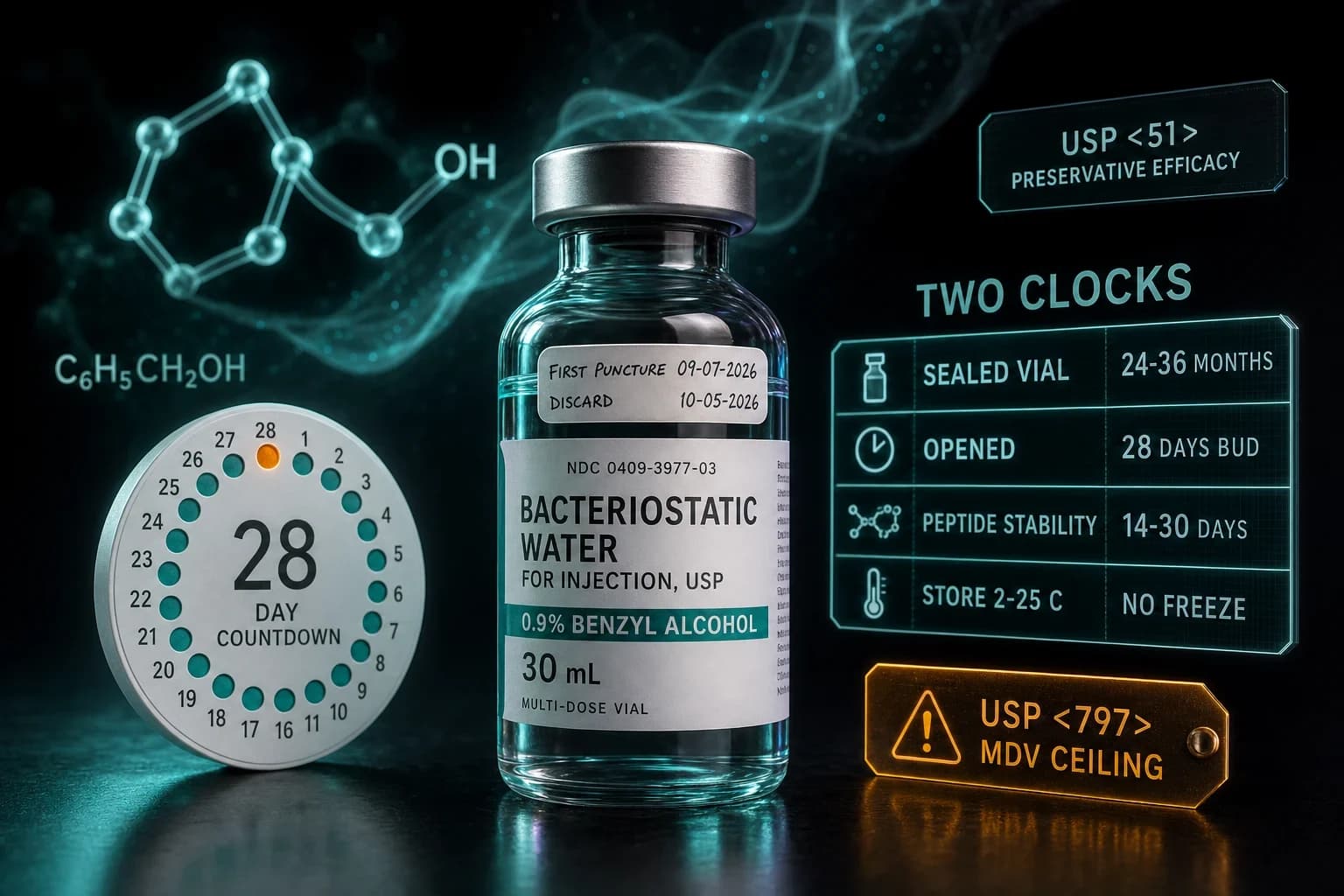
With 2 mL bacteriostatic water:
| Parameter | Value |
|---|---|
| Total concentration | 10 mg/mL (5 mg/mL of each compound) |
| Standard dose (1 mg total) | 0.10 mL = 10 units on a U-100 syringe |
| Conservative dose (0.5 mg) | 0.05 mL = 5 units |
| Aggressive dose (1.5 mg) | 0.15 mL = 15 units |
| Doses per vial (standard) | 20 doses |
| Vial duration (daily dosing) | ~20 days |
With 1 mL bacteriostatic water (higher concentration):
| Parameter | Value |
|---|---|
| Total concentration | 20 mg/mL |
| Standard dose (1 mg total) | 0.05 mL = 5 units |
| Doses per vial | 20 doses |
The 2 mL reconstitution is recommended for most researchers. Smaller volumes make accurate measurement more difficult with standard insulin syringes.
Verify your specific setup with the Reconstitution Calculator.
Reconstitution procedure:
- Let the vial reach room temperature (5-10 minutes)
- Swab the vial stopper with an alcohol pad
- Draw 2 mL of bacteriostatic water into a mixing syringe
- Inject the water slowly along the inside wall of the vial. Never spray directly onto the powder.
- Swirl gently until fully dissolved (30-60 seconds). Do not shake.
- Label the vial with the date
- Refrigerate immediately (2-8 degrees C)
Week-by-week expectations
Based on animal model timelines and community-reported research observations:
Week 1: Minimal observable change. The compounds are establishing tissue-level concentrations. Some researchers report reduced inflammation or mild pain reduction by day 4-5, but this is inconsistent.
Week 2: The first measurable changes typically appear. In animal tendon-healing studies, BPC-157 shows significant improvements in tissue organization and tensile strength by day 10-14 (Chang et al., 2011). Expect reduced swelling and early signs of improved function if addressing an acute injury.
Week 3-4: Peak therapeutic window. Angiogenesis and fibroblast activity are well-established. Most researchers report the most noticeable improvements during this period. Range of motion increases, pain at the injury site decreases, and functional capacity improves.
Week 5-6: Continued improvement, though the rate of change typically slows compared to weeks 3-4. This is the remodeling phase, where initial repair tissue matures. Some researchers extend to 8 weeks for chronic conditions that responded well during weeks 3-4.
Post-cycle: Effects typically persist for 2-4 weeks after discontinuation as the tissue remodeling initiated during the cycle continues. This is not permanent structural change in most cases, but the repair work done during the cycle provides a foundation for continued natural healing.
Important: These timelines are estimates based on animal data and anecdotal research reports. Individual variation is significant. Chronic injuries with years of degeneration will respond more slowly than acute injuries.
Common mistakes
1. Underdosing TB-500 relative to BPC-157. Researchers who buy separate vials sometimes run full-dose BPC-157 with minimal TB-500 to save money. This defeats the synergistic purpose. The pre-mixed 1:1 ratio in the Wolverine Stack eliminates this problem.
2. Skipping injection site rotation. Repeated injection at exactly the same spot causes localized irritation and can impair absorption. Rotate within the target area (for local protocols) or between abdominal quadrants (for systemic protocols).
3. Shaking the vial. Peptides are fragile. Shaking denatures the compound and creates foam that traps peptide on the vial walls, reducing effective dose. Always swirl.
4. Running cycles that are too short. A 2-week cycle is not enough. The proliferation and remodeling phases need time. Minimum 4 weeks for meaningful results.
5. Expecting overnight results. BPC-157 and TB-500 accelerate natural healing processes. They do not bypass biology. A torn ACL is not healing in a week regardless of what you inject.
6. Eating the cost of two separate vials. The pre-mixed Wolverine Stack is typically cheaper than buying equivalent amounts of BPC-157 and TB-500 separately. You also eliminate the second reconstitution and the possibility of ratio errors.
7. Storing reconstituted vials at room temperature. Reconstituted peptides degrade rapidly outside the refrigerator. Always store at 2-8 degrees C and use within 21-28 days.
When to consider GLOW instead
The GLOW Blend adds GHK-Cu (a copper tripeptide) to the BPC-157 + TB-500 base. GHK-Cu drives collagen I/III synthesis, elastin production, and extracellular matrix remodeling, making it relevant for:
- Skin quality and anti-aging. GHK-Cu is one of the best-studied compounds for collagen synthesis and skin rejuvenation.
- Scar remodeling. If the injury involves visible scarring, GHK-Cu's matrix remodeling effects add a dimension the Wolverine Stack alone does not cover.
- Post-surgical cosmetic recovery. When both tissue healing and skin appearance matter.
If your research is purely musculoskeletal (tendon, ligament, muscle, joint), the Wolverine Stack covers it. If skin quality, scarring, or anti-aging is part of the equation, upgrade to GLOW.
For gut-specific protocols that also involve systemic inflammation, the KLOW Blend adds KPV (an alpha-MSH-derived anti-inflammatory tripeptide) on top of the GLOW base, providing targeted NF-kB pathway inhibition.
Stacking with other protocols
The Wolverine Stack focuses on recovery. Some researchers layer it with growth hormone optimization:
- Wolverine + FIT Stack: BPC-157/TB-500 for tissue repair plus CJC-1295/Ipamorelin for GH-mediated recovery amplification. The GH pulse from the FIT Stack enhances the anabolic environment that supports tissue healing. Run the Wolverine dose in the morning and the FIT dose before bed.
- Wolverine + GHK-Cu standalone: For researchers who want targeted matrix remodeling without buying the full GLOW Blend.
Source and availability
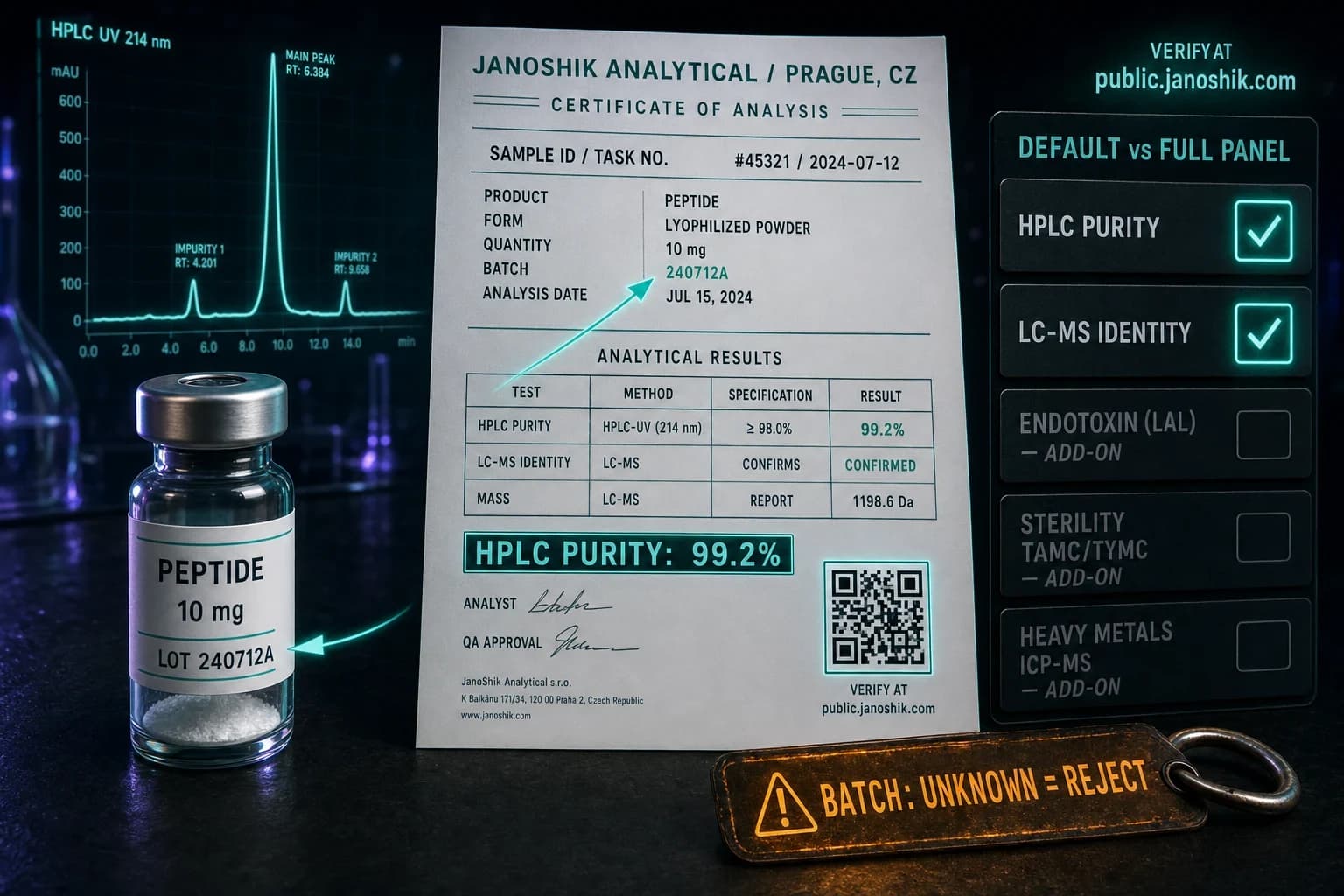
The Wolverine Stack (20 mg pre-mixed BPC-157 + TB-500) is available from our partner Ascension Peptides with 50% off using code ENHANCED. COA-verified at 98%+ purity, US-based shipping. For BPC-157 sold as a standalone vial, the BPC-157 sourcing guide with COAs covers what to verify before any vendor pickup.
- Wolverine Stack details
- BPC-157 compound guide
- TB-500 compound guide
- Reconstitution Calculator
- Half-Life Visualizer
This article is for educational and informational purposes only. BPC-157 and TB-500 are not approved for human use. All dosing information is derived from animal studies and allometric scaling. Consult a qualified healthcare professional before making any decisions about peptide research.