At a glance
- Oral BPC-157 has ~3% systemic bioavailability but strong local GI effects
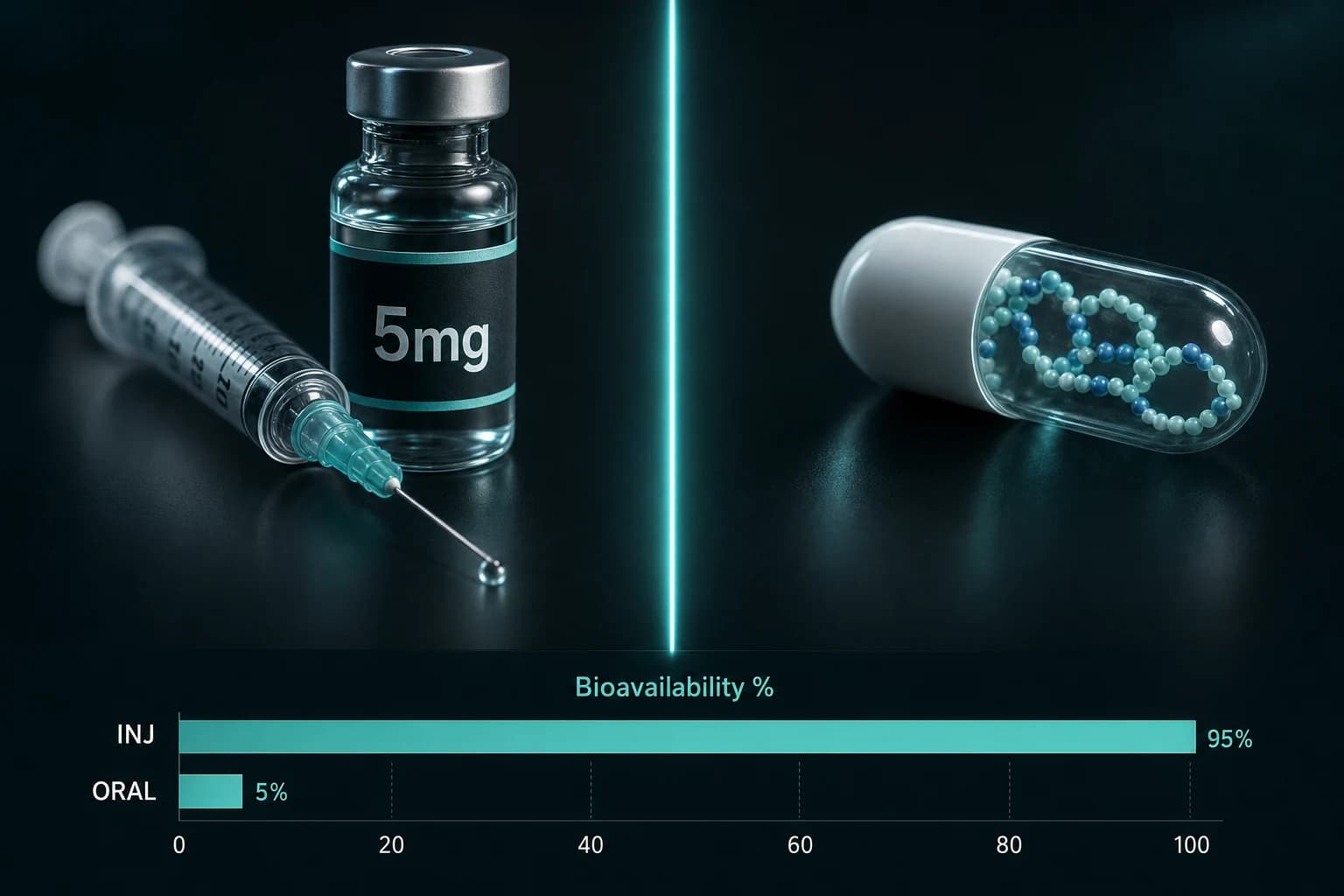
- Subcutaneous injection delivers 65-100% bioavailability for most peptides
- Intranasal delivery achieves up to 4x greater CNS bioavailability than SC
- MK-677, Tesofensine, and 5-Amino-1MQ are designed for oral use only
- Route determines target tissue: oral for gut, injectable for systemic, nasal for brain
The real question is not "which is better"
Every week, the same question shows up in peptide forums: should I use injectable or oral? The framing is wrong. It assumes you are choosing between two versions of the same thing, like generic vs brand-name ibuprofen. You are not.
Different administration routes produce different pharmacokinetic profiles, different tissue distributions, and in some cases entirely different biological effects. BPC-157 taken orally is not a "weaker version" of injectable BPC-157. It is a different tool aimed at a different target. The same logic applies to GHK-Cu, KPV, and several other compounds that now ship in both formats.
This guide breaks down exactly what happens when a peptide enters your body through each route, which compounds are designed for oral use versus adapted for it, and how to pick the format that actually matches your research endpoint.
What bioavailability means (and why the number alone is misleading)
Bioavailability is the fraction of an administered dose that reaches systemic circulation in active form. Intravenous injection is the reference standard at 100%. Everything else is measured against it.
Subcutaneous injection typically delivers 65-100% bioavailability for peptides and small proteins, depending on molecular properties. The compound enters the interstitial fluid, diffuses into capillaries, and reaches circulation with minimal degradation. There is no first-pass metabolism because the drug never touches the liver before reaching its targets. However, presystemic catabolism (proteolysis in the interstitial space, macrophage clearance during lymphatic transport) can reduce actual absorption. A 2021 review in the Journal of Controlled Release (Bown et al.) found that injection site, peptide size, and local tissue factors all significantly influence subcutaneous pharmacokinetics.
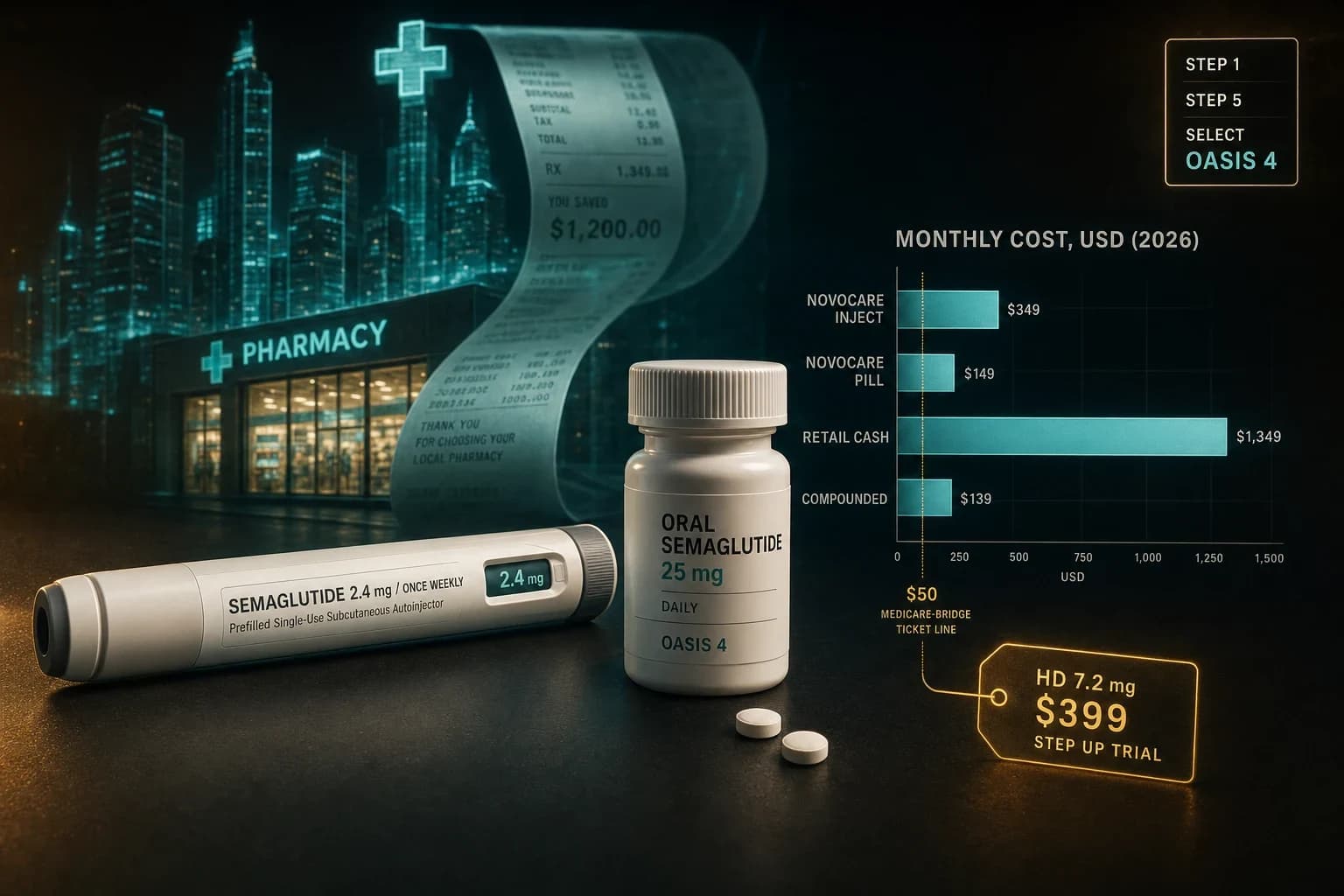
Oral administration is a gauntlet. The peptide must survive stomach acid (pH 1.5-3.5), resist pancreatic proteases in the duodenum, cross the intestinal epithelium, and then survive first-pass hepatic metabolism before anything reaches systemic circulation. For most unmodified peptides, oral bioavailability is below 1%. To put that in perspective: oral semaglutide (Rybelsus), despite being co-formulated with the absorption enhancer SNAC (sodium salcaprozate) specifically engineered to boost gastric uptake, achieves only about 1% oral bioavailability. That is with a $1 billion pharmaceutical development program behind it. A raw peptide in a capsule faces even steeper odds.
Intranasal delivery sits in between. The nasal mucosa is thin, richly vascularized, and bypasses hepatic first-pass metabolism entirely. Systemic bioavailability typically ranges from 10-50% depending on molecular weight and lipophilicity. For peptides under 6 kDa, it is a legitimate alternative to injection. A 2022 review in Pharmaceutics (Alabsi et al.) confirmed that small peptides administered intranasally can achieve up to 4x greater CNS bioavailability compared to subcutaneous injection by traveling directly along olfactory and trigeminal nerve pathways. More on this in the nasal sprays section.
Here is the critical nuance that bioavailability numbers miss: for some compounds, low systemic bioavailability is not a limitation. It is a feature. Oral BPC-157 has poor systemic absorption (approximately 3% in rats per He et al., Frontiers in Pharmacology, 2022), but it has excellent local concentration in the GI tract. If your research endpoint is gut healing, that is exactly what you want.
Compounds designed for oral use
Some compounds were built from the ground up to survive the GI tract. These are not peptides crammed into capsules and hoped for the best. They are small molecules or modified peptides engineered for oral stability.
MK-677 (Ibutamoren)
MK-677 is not technically a peptide at all. It is a non-peptide ghrelin receptor agonist, a small molecule with a spiropiperidine structure that mimics the action of ghrelin at the growth hormone secretagogue receptor (GHS-R1a). Its oral bioavailability is high precisely because it is a peptidomimetic: the non-peptide scaffold confers complete resistance to proteolysis and enables efficient gastrointestinal absorption. Peak plasma concentration (Tmax) is reached within approximately 1 hour of dosing, and the elimination half-life of roughly 24 hours supports convenient once-daily administration.
Once absorbed, MK-677 produces sustained GH elevation for the full dosing interval. In the Murphy et al. study (JCEM, 1998), a double-blind crossover trial in eight calorically restricted volunteers, 25mg daily for 7 days produced peak GH responses of 55.9 mcg/L (vs. ~9 mcg/L placebo on day 1) and raised mean IGF-1 from 186 ng/mL to 264 ng/mL (P < 0.01 vs. placebo). Separately, Nass et al. (JCEM, 2008) showed that MK-677 increased IGF-1 levels in healthy older adults to the range seen in young adults, with the effect sustained over 12 months. No injection required.
Available from Limitless Biotech as 12.5mg capsules (60 count) with code ENHANCED.
Tesofensine
Tesofensine is a triple monoamine reuptake inhibitor (serotonin, norepinephrine, dopamine) originally developed by NeuroSearch for Alzheimer's and Parkinson's disease. During those trials, researchers noticed substantial weight loss as a "side effect." The Phase 2 obesity trial (Astrup et al., Lancet, 2008) randomized 203 obese patients (BMI 30-40) across five Danish centers to tesofensine 0.25mg, 0.5mg, or 1.0mg daily for 24 weeks on an energy-restricted diet. Results were dose-dependent: 4.5%, 9.2%, and 10.6% placebo-adjusted weight loss respectively. The 0.5mg dose was noted to produce roughly double the weight loss of any obesity drug approved at the time. It is a small molecule with excellent oral bioavailability, a 200+ hour terminal half-life, and once-daily dosing. The most common adverse events were dry mouth, nausea, and constipation; heart rate increased by 7.4 bpm at 0.5mg but blood pressure remained unchanged versus placebo.
Available as 500mcg oral capsules from Limitless Biotech with code ENHANCED.
SLU-PP-332
SLU-PP-332 is a synthetic pan-ERR (estrogen-related receptor) agonist with highest potency for ERR-alpha. It mimics the transcriptional effects of endurance exercise by inducing DDIT4, a key protein normally upregulated after aerobic exercise bouts, and increasing mitochondrial function and cellular respiration in skeletal muscle. Published work by Billon et al. (2023, Journal of Pharmacology and Experimental Therapeutics) at Washington University and Saint Louis University showed striking results in mice: treated normal-weight animals ran 70% longer and 45% further than vehicle controls, while obese mice ran 50% further and lost 12% of their body weight. The compound also increased the proportion of type IIa oxidative muscle fibers, which are associated with sustained aerobic effort. It is a synthetic small molecule designed for oral delivery. No first-pass metabolism concerns.
Available as 250mcg oral capsules from Limitless Biotech with code ENHANCED.
5-Amino-1MQ
5-Amino-1MQ is a selective inhibitor of nicotinamide N-methyltransferase (NNMT), an enzyme overexpressed in adipose tissue. Inhibiting NNMT increases NAD+ salvage pathway flux and shifts energy metabolism toward fat oxidation. Neelakantan et al. (Biochemical Pharmacology, 2018) demonstrated anti-obesity effects with oral dosing in rodent models: treated mice showed significantly reduced body weight, white adipose mass, and adipocyte size without affecting food intake or producing observable adverse effects. The compound is a small molecule quinolinium salt with inherent oral stability. Caco-2 cell assays confirmed excellent passive and active membrane transport with no detectable efflux, explaining why 5-amino-1MQ became the preferred tool compound for NNMT research over earlier inhibitors with poor membrane permeability.
Available as 50mg oral capsules from Limitless Biotech with code ENHANCED.
The common thread: none of these are traditional peptides. They are all small molecules or peptidomimetics that were either discovered or engineered with oral administration as the primary route.
Oral peptide delivery is evolving fast
It is worth pausing to acknowledge the broader pharmaceutical context. The global peptide therapeutics market was valued at $42.8 billion in 2023 and is projected to exceed $80 billion by 2033 (CAGR 7.9%). Over 200 clinical trials involving peptide-based therapeutics were conducted in 2023-2024 alone. A significant portion of that R&D spend is aimed at solving the oral bioavailability problem.
The most advanced solution so far is the SNAC (sodium salcaprozate) technology used in Novo Nordisk's oral semaglutide (Rybelsus, FDA-approved June 2020). SNAC transiently increases transcellular permeability of the gastric epithelium to facilitate absorption. Even with this purpose-built pharmaceutical platform, oral semaglutide achieves only about 1% bioavailability compared to the subcutaneous formulation.
Other emerging strategies include permeation enhancers (sodium caprate, medium-chain fatty acids, chitosan derivatives), nanoparticle carriers (mesoporous silica nanoparticles with surface modifications), cell-penetrating peptides, and hydrophobic ion pairing (HIP). The most promising formulations combine multiple strategies: a SEDDS carrier for lipid protection, an enzyme inhibitor to block proteolysis, a permeation enhancer to improve epithelial crossing, and a mucoadhesive polymer to increase contact time. No single technology overcomes all the barriers on its own.
For the research peptide community, this means two things. First, if a major pharma company with billions in R&D budget can only achieve ~1% oral bioavailability for a GLP-1 agonist, unmodified peptides in simple capsules face even steeper challenges. Second, the technology is improving rapidly, and oral peptide delivery that seemed impossible five years ago is now a legitimate and growing field.
Compounds adapted for oral delivery
This is a fundamentally different category. These are actual peptides (amino acid sequences) that were originally researched as injectables and have since been formulated into oral capsules. The pharmacology changes with the route.
BPC-157: the most important example
BPC-157 is a 15-amino-acid peptide derived from human gastric juice. Its name literally stands for Body Protection Compound. Unlike standard peptides that are rapidly destroyed in gastric fluid, BPC-157 remains stable in human gastric juice for over 24 hours without requiring any carrier molecules (Sikiric et al., Current Pharmaceutical Design, 2018). This unusual property is what makes oral formulation plausible at all, and it is why Sikiric's group proposed BPC-157 as a mediator of Robert's cytoprotection, the mechanism by which the GI mucosa maintains its own integrity.
Injectable BPC-157 (subcutaneous, 250-500mcg daily) enters systemic circulation and distributes to musculoskeletal tissues. He et al. (Frontiers in Pharmacology, 2022) conducted the first formal pharmacokinetic study of BPC-157 in rats and beagle dogs and found that intramuscular bioavailability was 14-19% in rats and 45-51% in dogs, with an elimination half-life under 30 minutes and linear pharmacokinetics across all tested doses. The compound was rapidly metabolized into small peptide fragments that entered normal amino acid pathways, with excretion primarily via urine and bile. The published animal literature on tendon healing (Chang et al., J Appl Physiol, 2011), ligament repair, and vascular regeneration (Seiwerth et al., Curr Pharm Des, 2014) almost exclusively uses intraperitoneal or subcutaneous injection. If your research targets a torn Achilles, a rotator cuff, or systemic inflammation, injection is the studied route.
Oral BPC-157 stays predominantly in the GI tract. He et al. (2022) measured oral bioavailability at approximately 3% in rats, meaning 97% of the dose is broken down or retained locally in the gastrointestinal tract. That sounds like a failure until you understand the mechanism. The peptide's gastric stability means it reaches the intestinal mucosa intact, where it exerts local effects on gut epithelial cells, tight junctions, and mucosal blood flow. Sikiric et al. demonstrated that oral BPC-157 counteracts NSAID-induced gastrointestinal injury, heals experimental gastric ulcers, and stabilizes intestinal tight junctions in rodent models. A 2025 abstract presented at the American College of Gastroenterology (ACG) described oral BPC-157 as "an emerging adjunct" for GI applications. The mechanism is local, not systemic.
This is the single most important point in this entire article: oral and injectable BPC-157 are not interchangeable. They serve different research endpoints. Oral for gut healing and GI inflammation. Injectable for musculoskeletal repair and systemic effects. Choosing between them is not a convenience decision. It is a research design decision.
Injectable BPC-157 is available from Ascension Peptides (5mg and 10mg vials) with 50% off using code ENHANCED. Oral BPC-157 capsules (250mcg, 60 count) are available from Limitless Biotech with code ENHANCED.
GHK-Cu
GHK-Cu (Glycyl-L-Histidyl-L-Lysine Copper) is a naturally occurring tripeptide-copper complex. Injectable GHK-Cu distributes systemically and has been researched for wound healing, hair growth stimulation, and systemic anti-aging effects through modulation of over 4,000 genes (Pickart et al., BioMed Research International, 2012). Topical GHK-Cu is the most common format for skin-specific research (collagen synthesis, elastin production, wrinkle depth reduction).
Oral GHK-Cu capsules represent a newer research area. The tripeptide is small enough (molecular weight ~403 Da) that some intestinal absorption occurs, and its copper-binding properties may partially protect it from proteolytic degradation. GHK exhibits a Cu2+ affinity comparable to that of albumin's copper transport sites, forming the GHK-Cu complex in vivo, which enhances stability compared to the free peptide. Animal studies have detected orally administered GHK-Cu in the bloodstream, confirming that absorption does occur, though exact systemic bioavailability data in humans remains sparse. Newer delivery approaches, including liposomal encapsulation, are being explored to improve oral uptake. A 2025 study in Frontiers in Pharmacology also identified GHK-Cu's anti-inflammatory effects in experimental colitis models, suggesting the oral route may have local GI benefits beyond systemic distribution.
Injectable GHK-Cu: available from Ascension Peptides with 50% off using code ENHANCED. Oral GHK-Cu capsules (2mg, 60 count): available from Limitless Biotech with code ENHANCED.
KPV
KPV is a tripeptide (Lys-Pro-Val) derived from the C-terminal end of alpha-melanocyte-stimulating hormone (alpha-MSH). It retains alpha-MSH's anti-inflammatory activity without its melanogenic effects. At nanomolar concentrations, KPV inhibits NF-kB and MAP kinase inflammatory signaling pathways and reduces pro-inflammatory cytokine production (IL-1beta, IL-6, TNF-alpha).
Oral KPV targets gut inflammation specifically, and the mechanism has been well characterized. The landmark Dalmasso et al. study (Gastroenterology, 2008) showed that KPV is actively transported into intestinal epithelial cells via the PepT1 transporter, with a Km of approximately 160 micromolar, one of the lowest Kms reported for any PepT1 substrate. This high-affinity transport means that even low oral doses efficiently deliver KPV to the intracellular compartment of colonocytes and immune cells. In vivo, oral KPV (added to drinking water) significantly reduced inflammation in both DSS-induced and TNBS-induced colitis mouse models, measured by decreased body weight loss, lower colonic myeloperoxidase activity, reduced histological inflammation scores, and lower pro-inflammatory cytokine mRNA levels. A follow-up study by Xiao et al. (Molecular Pharmaceutics, 2017) demonstrated that hyaluronic acid-functionalized nanoparticles loaded with KPV achieved therapeutic efficacy at a 12,000-fold lower concentration than free KPV, pointing toward next-generation oral delivery strategies.
Injectable KPV would theoretically provide systemic anti-inflammatory effects, but most of the published research on KPV's inflammation-modulating properties focuses on local GI or topical applications. No registered clinical trials exist specifically for KPV; all evidence comes from in vitro and animal model studies.
Oral KPV capsules (250mcg, 60 count): available from Limitless Biotech with code ENHANCED.
The nasal route: a third option for cognitive peptides
For brain-targeted research, neither oral nor injectable is optimal. Oral delivery has near-zero CNS penetration for most peptides. Subcutaneous injection delivers to systemic circulation, but the blood-brain barrier blocks most peptides from reaching brain tissue.
Intranasal delivery sidesteps both problems. Small peptides administered nasally can travel directly to the CNS via the olfactory nerve (cranial nerve I) and the trigeminal nerve (cranial nerve V). Three distinct pathways exist across the olfactory epithelium: a paracellular route through tight junctions, a transcellular route via receptor-mediated endocytosis across sustentacular cells, and an axonal transport route where peptides are taken up into olfactory neurons and carried to the olfactory bulb (Alabsi et al., Pharmaceutics, 2022). This is not theoretical. It is the basis for intranasal oxytocin research, intranasal insulin trials, and the primary delivery route for Selank and Semax.
Selank
Selank is a synthetic analog of Tuftsin (a naturally occurring immunomodulatory peptide). It modulates GABA, serotonin, and dopamine systems and increases BDNF expression. Pharmacokinetic studies in animal models have estimated intranasal bioavailability at approximately 92.8%, with rapid CNS penetration via olfactory epithelium transport that bypasses first-pass hepatic metabolism. Intranasal Selank at 250-500mcg reaches measurable CNS concentrations within minutes. In animal studies, a single intranasal dose elevated BDNF mRNA in the hippocampus at 3 hours and BDNF protein at 24 hours, demonstrating sustained CNS bioavailability. In human studies, altered functional connectivity between the right amygdala and temporal cortex regions was detected within 20 minutes of intranasal administration. The short plasma half-life (~30 minutes) is less relevant because the peptide reaches brain tissue through a route that partially bypasses plasma.
Semax
Semax is a synthetic heptapeptide derived from ACTH(4-10). It upregulates BDNF and NGF, modulates dopaminergic and serotonergic neurotransmission, and has been studied for memory enhancement and stroke recovery. Like Selank, it is administered intranasally at 250-1000mcg for direct CNS delivery. Comparison studies of intranasal versus intraperitoneal administration in mice showed that the two routes produce different pharmacological spectra, confirming that the nasal route engages distinct CNS targets through its direct transport mechanism rather than simply providing systemic exposure that crosses the blood-brain barrier.
Both are available as nasal spray formulations from Ascension Peptides with 50% off using code ENHANCED.
For a deeper look at the intranasal route, see the full Nasal Sprays guide.
The reconstitution reality check
One of the main reasons people gravitate toward oral capsules is the perceived complexity of injectable peptides. Here is what is actually involved.
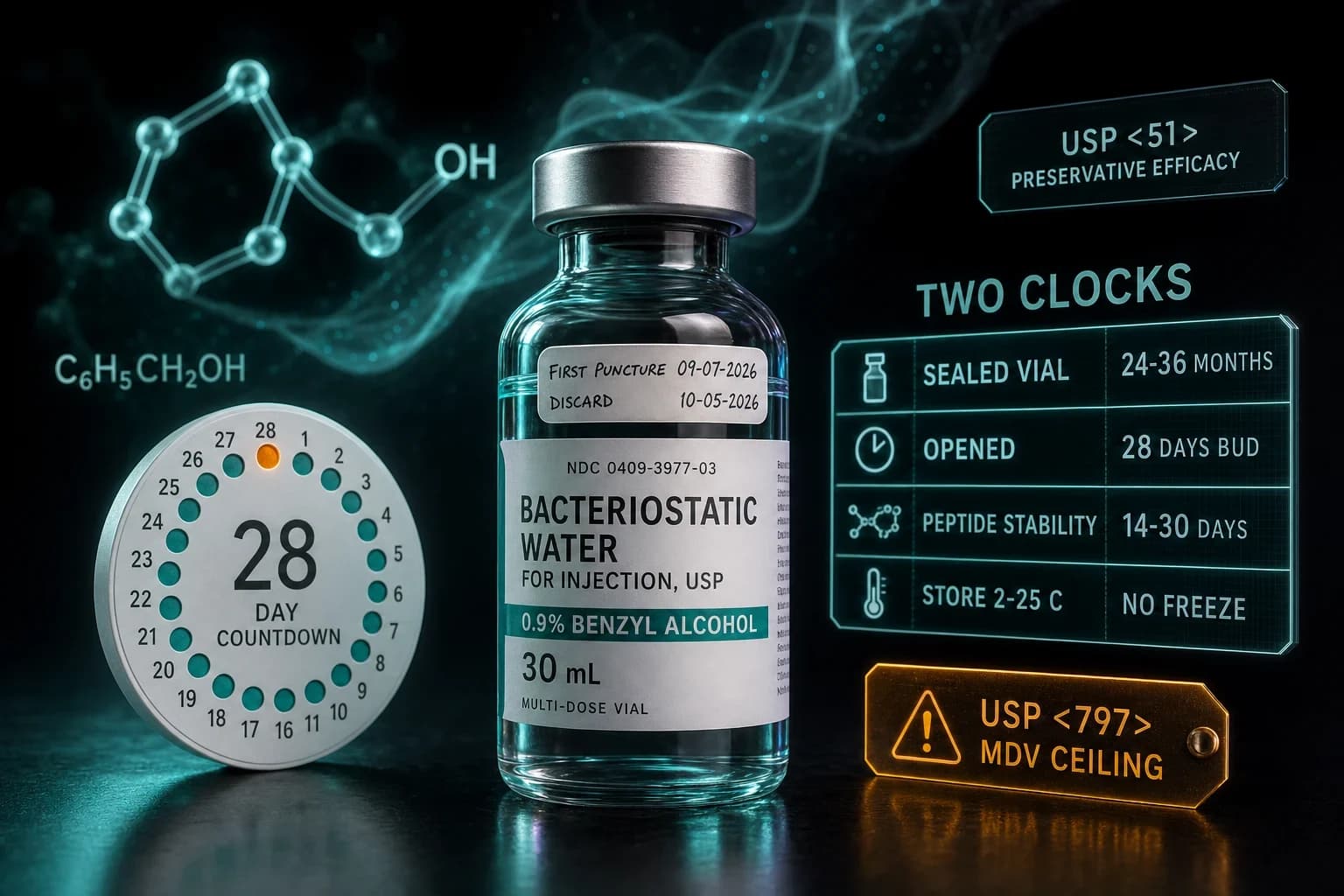
Equipment needed: lyophilized peptide vial, bacteriostatic water, a 3mL syringe with needle (for drawing water), insulin syringes (for dosing), alcohol swabs.
The process: Swab both vial stoppers. Draw BAC water into the syringe. Inject it slowly down the inner wall of the peptide vial. Swirl gently (never shake). Label the vial with the date. Refrigerate.
The math: Concentration (mcg/mL) = peptide amount (mg) x 1000 / water volume (mL). For a 5mg BPC-157 vial with 2mL BAC water, that is 2,500 mcg/mL. A 250mcg dose = 0.10 mL = 10 units on a U-100 insulin syringe.
The Reconstitution Calculator eliminates the arithmetic entirely. Plug in your vial size, water volume, and target dose; it gives you the exact syringe draw.
Is reconstitution complicated? Honestly, no. Anyone who has ever followed a recipe can do it. But it does require supplies, refrigeration, and about 5 minutes of setup per vial. It is not something you do at an airport or in a hotel room without planning.
If that friction matters to your workflow, oral capsules remove it entirely: open bottle, take capsule, done. Whether that convenience justifies the tradeoffs (different pharmacokinetics, higher cost per dose, limited compound selection) depends on your specific situation.
Cost comparison: the per-dose math
Oral capsules are pre-dosed, shelf-stable, and require zero supplies. They also cost more per milligram than raw lyophilized peptide. Here is a representative comparison.
BPC-157 injectable (Ascension Peptides, 5mg vial with code ENHANCED):
- 5mg vial provides 20 doses at 250mcg each
- Add cost of BAC water (
$8-12 per 30mL vial, lasts many reconstitutions) and insulin syringes ($15-20 per 100) - Effective cost per dose: roughly $2-4 depending on exact pricing
BPC-157 oral (Limitless Biotech, 250mcg x 60 capsules with code ENHANCED):
- 60 pre-dosed capsules
- No additional supplies needed
- Cost per dose: roughly $1.50 per capsule at the discounted price
The oral capsules are competitively priced per dose for BPC-157 specifically, but remember: oral and injectable BPC-157 target different endpoints. You are not buying the same product in different packaging.
For MK-677, the comparison is simpler because oral is the intended route. At $76.49 (discounted) for 60 capsules of 12.5mg, the cost is about $1.27 per dose. There is no injectable MK-677 comparison because the compound was designed for oral use.
The general pattern: oral capsules win on convenience and lose on flexibility. You cannot adjust dose granularity with capsules the way you can with injectable solutions. And if you need a compound that only comes as injectable (most of the peptide catalog), the point is moot.
Compound-by-compound decision matrix
This is the practical reference. For each compound available in multiple formats, the table shows which route serves which research goal.
| Compound | Format options | Best for oral | Best for injectable | Best for nasal |
|---|---|---|---|---|
| BPC-157 | Injectable, Oral | GI healing, gut inflammation, IBD research | Tendon/ligament repair, musculoskeletal, systemic | N/A |
| GHK-Cu | Injectable, Oral, Topical | Systemic anti-aging (convenience) | Wound healing, hair growth, systemic distribution | N/A |
| KPV | Oral | Gut inflammation, colitis models | Limited published data for SC route | N/A |
| MK-677 | Oral (primary) | GH/IGF-1 elevation, sleep, body composition | Not applicable (designed for oral) | N/A |
| Tesofensine | Oral (primary) | Appetite suppression, weight research | Not applicable (designed for oral) | N/A |
| 5-Amino-1MQ | Oral (primary) | NNMT inhibition, metabolic research | Not applicable (designed for oral) | N/A |
| SLU-PP-332 | Oral (primary) | Exercise mimetic, endurance, fat oxidation | Not applicable (designed for oral) | N/A |
| Selank | Nasal, Injectable | N/A | Peripheral immune modulation | Anxiolytic, nootropic, CNS-targeted |
| Semax | Nasal, Injectable | N/A | Systemic neuroprotection | Memory, BDNF, stroke recovery, CNS-targeted |
| TB-4 Fragment | Oral | Tissue repair (convenience, emerging data) | N/A (full TB-500 injectable is the studied format) | N/A |
| Epithalon | Oral, Injectable | Telomerase activation (convenience) | Telomerase activation (published route) | N/A |
A few patterns jump out:
- Compounds designed for oral use (MK-677, Tesofensine, 5-Amino-1MQ, SLU-PP-332) have no meaningful injectable alternative. Oral is the correct and only practical route.
- Compounds with dual-format research (BPC-157, GHK-Cu) are not interchangeable between formats. The route determines the target tissue.
- Cognitive peptides (Selank, Semax) are best served by the nasal route for CNS endpoints, with injectable as a fallback for peripheral effects.
Oral peptide blends: stacking without syringes
One advantage of the oral format is pre-built stacks. Limitless Biotech offers two multi-peptide blends that would otherwise require combining multiple vials:
Gastro Inflammation Formula (BPC-157 + KPV + N-Acetyl Larazotide): Three gut-targeted peptides in one capsule. BPC-157 for mucosal healing, KPV for NF-kB-mediated inflammation, and Larazotide for tight junction regulation. This combination makes pharmacological sense for GI research because all three compounds act locally in the gut. Available from Limitless Biotech with code ENHANCED.
Healing & Repair Blend (BPC-157 + TB-4 Frag 1-4 + GHK-Cu): A multi-pathway tissue repair stack. The oral format means you are relying on whatever systemic absorption these peptides achieve through the GI tract, which is less characterized than the injectable route. For researchers who want the Wolverine Stack concept without needles, this is the closest available option.
When to choose what: a practical decision framework
Choose injectable if:
- Your research endpoint is musculoskeletal (tendon, ligament, bone, joint)
- You need precise dose control and titration flexibility
- You want the route with the most published pharmacokinetic data
- Cost per milligram matters and you are comfortable with reconstitution
- You are targeting systemic distribution of healing peptides
Choose oral if:
- Your research targets the GI tract (gut healing, inflammation, permeability)
- The compound was designed for oral use (MK-677, Tesofensine, 5-Amino-1MQ, SLU-PP-332)
- Convenience, travel-friendliness, or needle avoidance is a priority
- You want pre-built stacks without mixing multiple vials
- You accept the pharmacokinetic tradeoffs for adapted peptides
Choose nasal if:
- Your research targets the CNS (cognition, anxiety, neuroprotection)
- You are working with Selank, Semax, Oxytocin, PT-141, or Kisspeptin
- You need fast onset (5-15 minutes to peak concentration)
- You want to bypass both GI degradation and the blood-brain barrier
Use multiple formats if:
- You are researching BPC-157 for both gut and musculoskeletal endpoints (oral for GI, injectable for systemic)
- You want GHK-Cu systemically (oral or injectable) and topically for skin
- Your protocol includes both cognitive peptides (nasal) and recovery peptides (injectable)
The bottom line
The injectable vs oral question has no universal answer because it is not a single question. It is a matrix of compound, target tissue, research endpoint, and practical constraints.
For compounds designed for oral use, oral is correct by default. For compounds adapted to oral delivery, the route changes the pharmacology. For brain-targeted peptides, nasal beats both. And for the majority of the research peptide catalog, subcutaneous injection remains the most studied, most bioavailable, and most flexible route.
The best approach is to stop thinking about "injectable vs oral" as a lifestyle preference and start thinking about it as a research design variable. Pick the route that matches your endpoint.
Browse by format
- All oral peptide capsules (Limitless Biotech, code ENHANCED)
- Nasal spray peptides (Ascension Peptides, 50% off with code ENHANCED)
- Full injectable peptide catalog (Ascension Peptides, 50% off with code ENHANCED)
- Reconstitution Calculator
- BPC-157 Dosing Guide
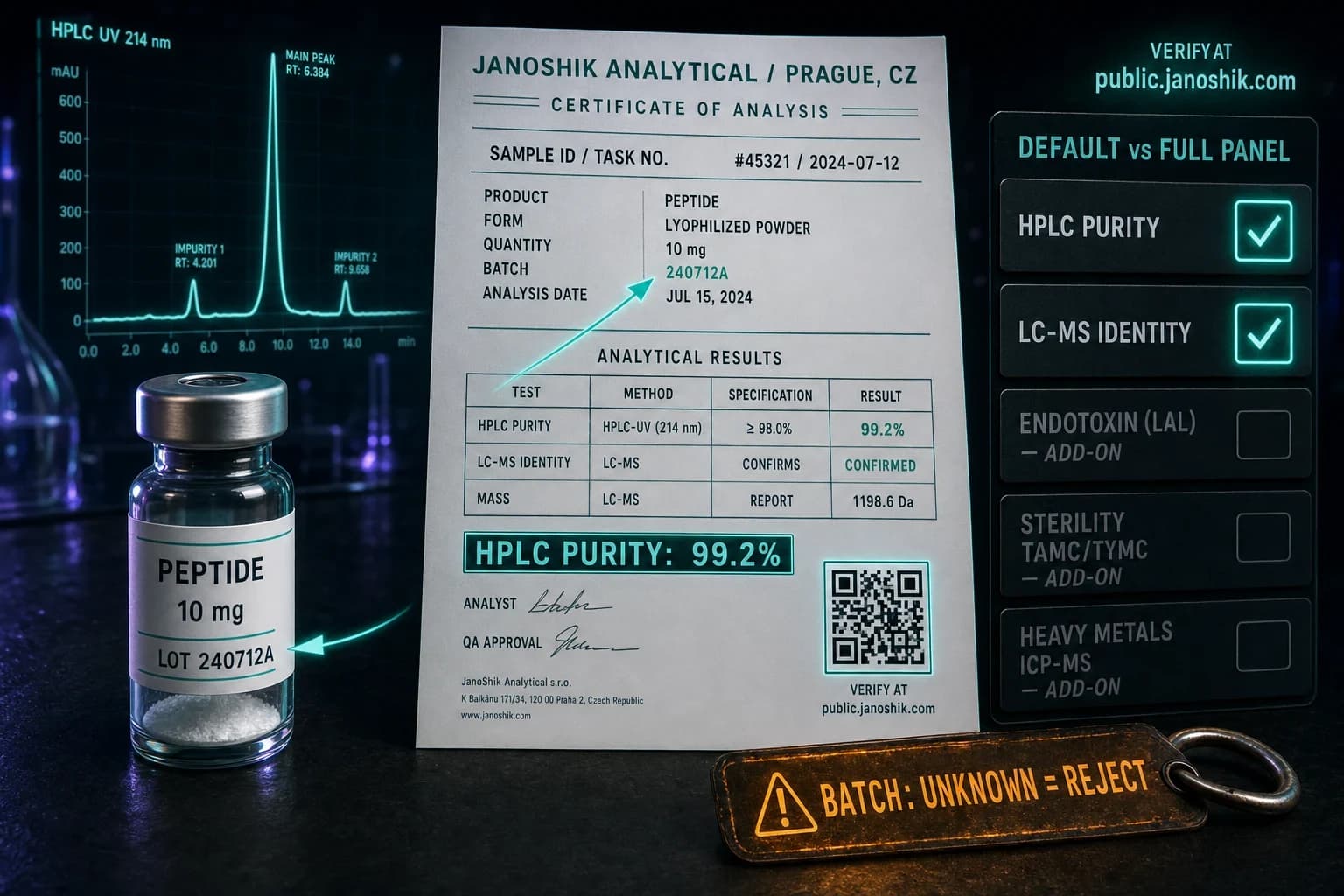
- Where to buy BPC-157 (with COAs)
- Wolverine Stack
This article is for educational and informational purposes only. None of the compounds discussed are approved for human use as described. All information is derived from published research and is intended for research purposes only. Consult a qualified healthcare professional before making any decisions about peptide research.