At a glance
- Standard research protocol: 0.5 mg once daily oral, with 0.25 mg as the starting dose during a 1-2 week ramp
- Phase 2 produced 9.2% placebo-adjusted weight loss at 0.5 mg over 24 weeks (Astrup et al., Lancet 2008)
- Half-life is roughly 200 hours, supporting once-daily dosing without trough effects
- Heart rate increases ~7 bpm at 0.5 mg; blood pressure was unchanged versus placebo in Phase 2
- Phase 3 was FDA-endorsed but never completed; tesofensine remains research-grade only
Tesofensine is the most-studied small molecule weight-loss compound that never made it to market. The Phase 2 trial showed 9.2% placebo-adjusted weight loss at the 0.5 mg dose over 24 weeks (Astrup et al., Lancet, 2008), roughly double what any FDA-approved obesity drug delivered at the time the trial was published.
The 2025 attention is partly nostalgia for the data and partly the result of research-grade oral capsules being available again from peptide vendors. The dosing question is the practical one: how much, when to start, how to ramp, and what side effects to expect at each step.
This guide covers the dose-response data from the Phase 2 trial, the standard research-grade protocol that maps to it, the pharmacokinetics that drive once-daily dosing, and the head-to-head positioning against semaglutide, tirzepatide, and other oral metabolic compounds.
The standard research protocol
Across the Phase 2 trial dose arms and forum-documented research-use protocols, the convergent dosing is 0.5 mg once daily for the bulk of the cycle, with a 1-to-2-week ramp from 0.25 mg to manage early side effects.
| Phase | Dose | Frequency | Duration |
|---|---|---|---|
| Ramp | 0.25 mg | Once daily, morning | Week 1-2 |
| Standard | 0.5 mg | Once daily, morning | Week 3-24 |
| Aggressive | 1.0 mg | Once daily, morning | Optional (higher AE rate) |
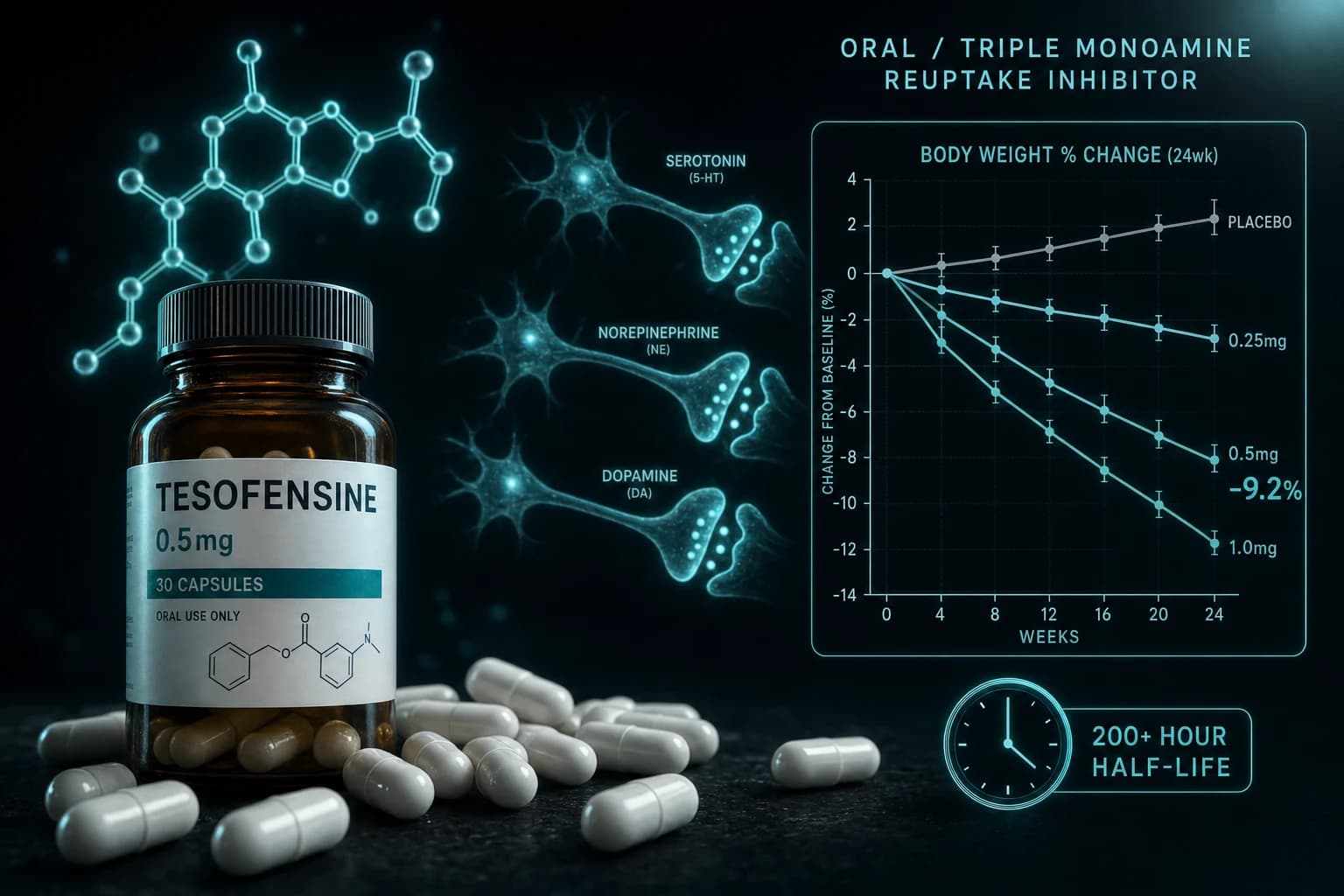
The 0.5 mg dose produced 9.2% mean weight loss in the Phase 2 trial after 24 weeks of energy-restricted diet plus drug (Astrup et al., 2008). The 1.0 mg dose produced 10.6% but with a meaningfully higher rate of psychiatric side effects and tachycardia. The 0.25 mg dose produced 4.5%, similar to lower-end GLP-1 monotherapy at the time.
The trade-off between 0.5 mg and 1.0 mg is the same one most researchers encounter with monoamine reuptake inhibitors: each step up the dose curve adds incremental efficacy but more cardiovascular and psychiatric risk. The 0.5 mg dose is generally considered the sweet spot in the published data.
Why dosing splits into a ramp
Tesofensine's half-life is approximately 200 hours (Bara-Jimenez et al., 2008). At steady state, daily dosing produces stable plasma levels with minimal peak-to-trough variation. This is why once-daily dosing works without timing-of-day issues.
The downside of the long half-life is that side effects from the first dose last for days. If you start at 0.5 mg and have an adverse reaction, you cannot wash it out quickly. Starting at 0.25 mg for 1-2 weeks lets you assess tolerance at half the dose before committing to the standard research dose.
The most common dose-limiting side effects in the Phase 2 trial were dry mouth, nausea, constipation, and insomnia. Heart rate increased by an average of 7.4 bpm at 0.5 mg. Blood pressure was unchanged versus placebo, which is unusual for a sympathomimetic and reflects tesofensine's mixed monoamine profile.
Mechanism in one paragraph
Tesofensine is a triple monoamine reuptake inhibitor: it blocks reuptake of serotonin, norepinephrine, and dopamine in the central nervous system. The dopamine reuptake inhibition is the part that distinguishes it from earlier obesity compounds like sibutramine (which was primarily serotonin and norepinephrine). Dopamine transporter occupancy of approximately 18-22% has been measured by PET imaging at 0.5 mg (Appel et al., 2014). The combined effect on satiety, energy expenditure, and reward signaling drives the appetite-suppression and weight-loss profile.
For mechanistic depth, Hansen et al., Curr Pharm Des, 2010 and Hansen and Sjödin, Obes Rev, 2013 cover the appetite-sensation and energy-metabolism mechanisms in detail.
What the dose-response actually looked like
The Phase 2 trial randomized 203 obese patients (BMI 30-40) across five Danish centers to placebo, tesofensine 0.25 mg, 0.5 mg, or 1.0 mg, plus an energy-restricted diet, for 24 weeks.
| Arm | Mean weight loss (24 wk) | Placebo-adjusted | Notable side effects |
|---|---|---|---|
| Placebo | -2.0% | reference | minimal |
| Tesofensine 0.25 mg | -6.5% | -4.5 ppt | mild dry mouth, nausea |
| Tesofensine 0.5 mg | -11.2% | -9.2 ppt | dry mouth, nausea, constipation, +7 bpm HR |
| Tesofensine 1.0 mg | -12.6% | -10.6 ppt | above plus mood changes, sleep disturbance |
The 0.5 mg result was the headline. At 9.2 percentage points above placebo over 24 weeks, this was roughly twice the effect size of orlistat and approximately matched the early sibutramine numbers, but without the equivalent blood pressure increase.
For the same-trial framework, the tirzepatide vs semaglutide head-to-head and the orforglipron Phase 3 evidence cover the modern oral and injectable comparators that have since been published.
Tesofensine vs the current obesity field
Where does tesofensine sit if you compare it to what is available in 2026?
| Compound | Format | Mechanism | Best published efficacy | Status |
|---|---|---|---|---|
| Tesofensine 0.5 mg | Oral, once daily | Triple monoamine reuptake | -9.2 ppt at 24 wk (Phase 2) | Research-grade only |
| Semaglutide 2.4 mg | Injectable, weekly | GLP-1 agonist | -12.4 ppt at 68 wk (STEP 1) | FDA approved (Wegovy) |
| Tirzepatide 15 mg | Injectable, weekly | GIP/GLP-1 dual | -17.8 ppt at 72 wk (SURMOUNT-1) | FDA approved (Zepbound) |
| Retatrutide 12 mg | Injectable, weekly | GIP/GLP-1/glucagon | -22.2 ppt at 48 wk (Phase 2) | Phase 3 ongoing |
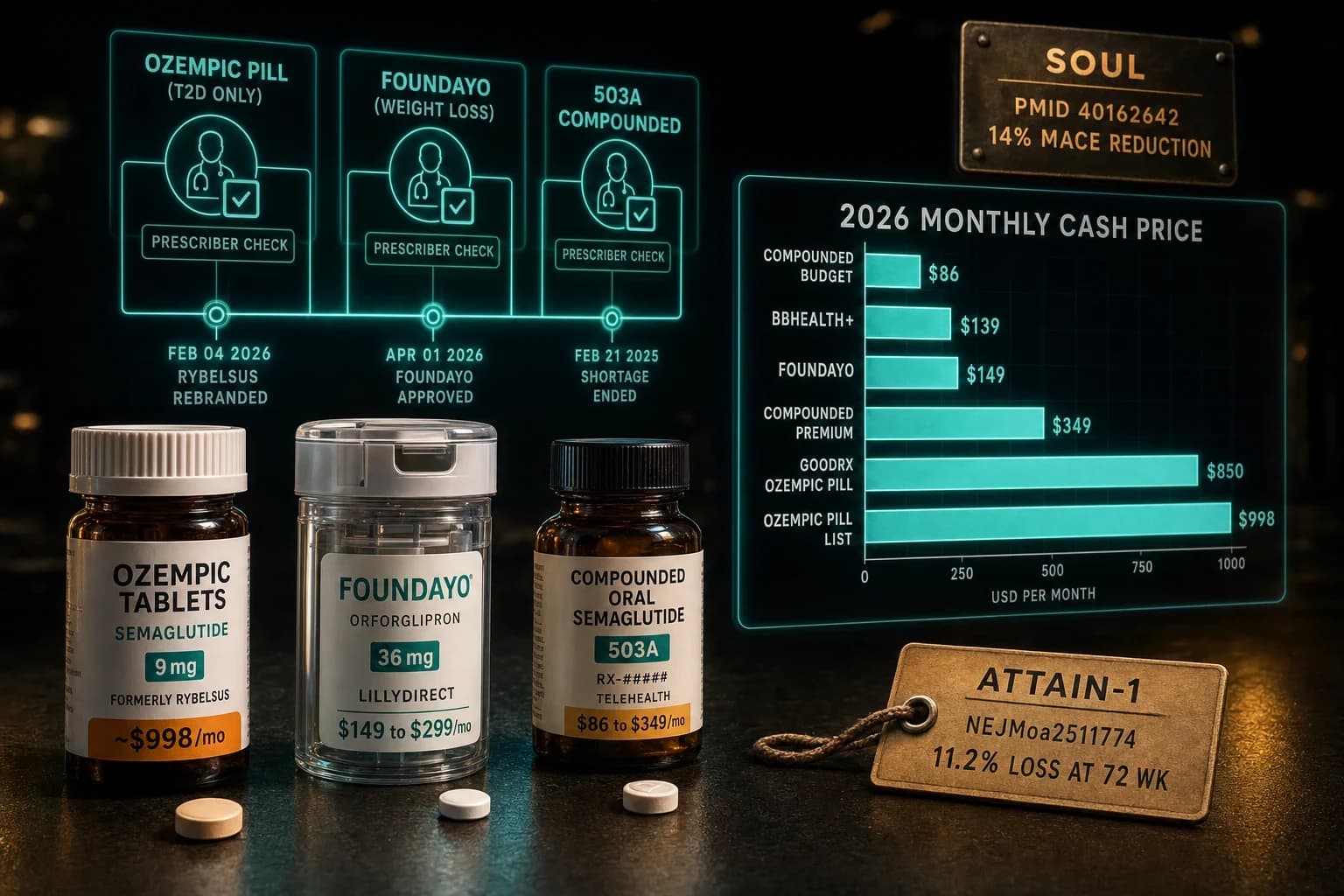
| Orforglipron | Oral, once daily | GLP-1 agonist | -12.4 ppt at 72 wk (ATTAIN-1) | Filed, not yet approved |
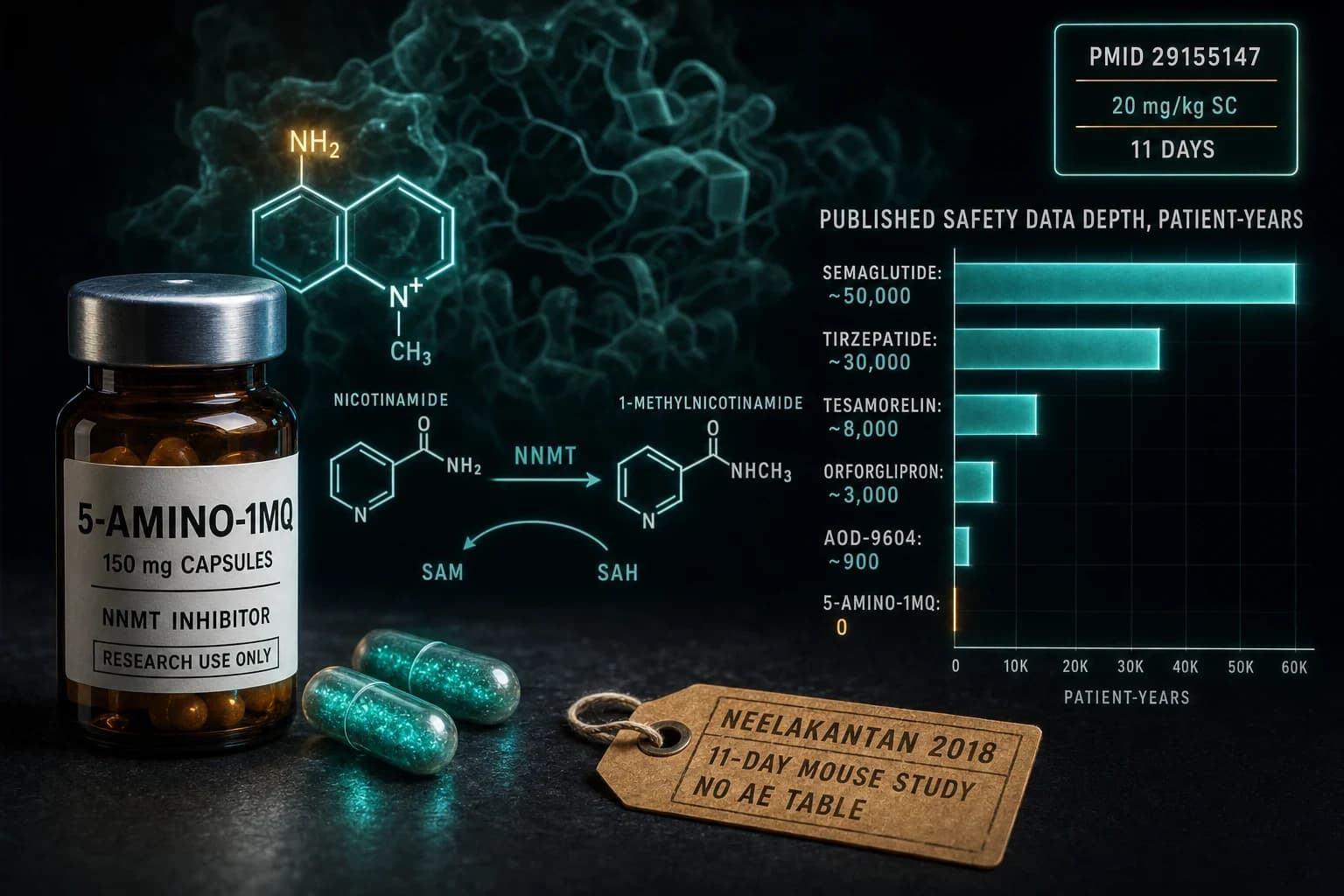
| 5-Amino-1MQ | Oral | NNMT inhibitor | preclinical primarily | Research-grade only |
Tesofensine's positioning today: it is a non-GLP-1 oral with a meaningfully different mechanism and a published Phase 2 effect size that matches what semaglutide produces at much later time points. The catch is the absence of Phase 3 confirmation. The trial program was endorsed by the FDA but never completed because of corporate restructuring at NeuroSearch, not because of safety or efficacy issues.
For researchers running comparative work, tesofensine offers a non-incretin oral lever that pairs differently with the GLP-1 class than other orals. The oral GLP-1 alternatives coverage describes what the GLP-1-class oral pipeline looks like, and the GLP-1 muscle loss research covers what the lean-mass profile of GLP-1 weight loss looks like, which is a different question from non-GLP-1 mechanisms like tesofensine.
Side effects worth understanding
The Phase 2 side effect profile was dose-dependent and mostly tolerable at 0.5 mg.
Dry mouth (45% at 0.5 mg vs 20% placebo). Anticholinergic-style effect from norepinephrine reuptake inhibition. Generally mild.
Nausea (24% at 0.5 mg vs 11% placebo). Most common in week 1-2, typically resolves with continued dosing. The ramp from 0.25 mg helps.
Constipation (16% at 0.5 mg vs 4% placebo). Hydration and fiber typically manage this.
Insomnia and sleep disturbance (~12% at 0.5 mg). Mostly an issue when dosing later in the day. Standard guidance is morning-only dosing.
Heart rate increase (mean +7.4 bpm at 0.5 mg). Sustained throughout the trial. This is the signal that gave the FDA pause when the safety database was reviewed for hypothetical Phase 3 endpoints.
Mood and anxiety changes (more pronounced at 1.0 mg). The 1.0 mg arm produced more reports of irritability and anxiety than 0.5 mg. This is one of the main reasons the 0.5 mg dose is preferred.
The compound is not appropriate for research subjects with pre-existing cardiovascular issues, uncontrolled hypertension, or psychiatric history. The published safety database is from 24-week trials in carefully selected obese patients without these comorbidities.
Sourcing
Research-grade tesofensine is sold as oral capsules. Limitless Biotech ships tesofensine in the oral metabolic catalog with code ENHANCED. Capsule formats are typically 0.5 mg per capsule, which makes the 0.5 mg standard dose a single capsule.
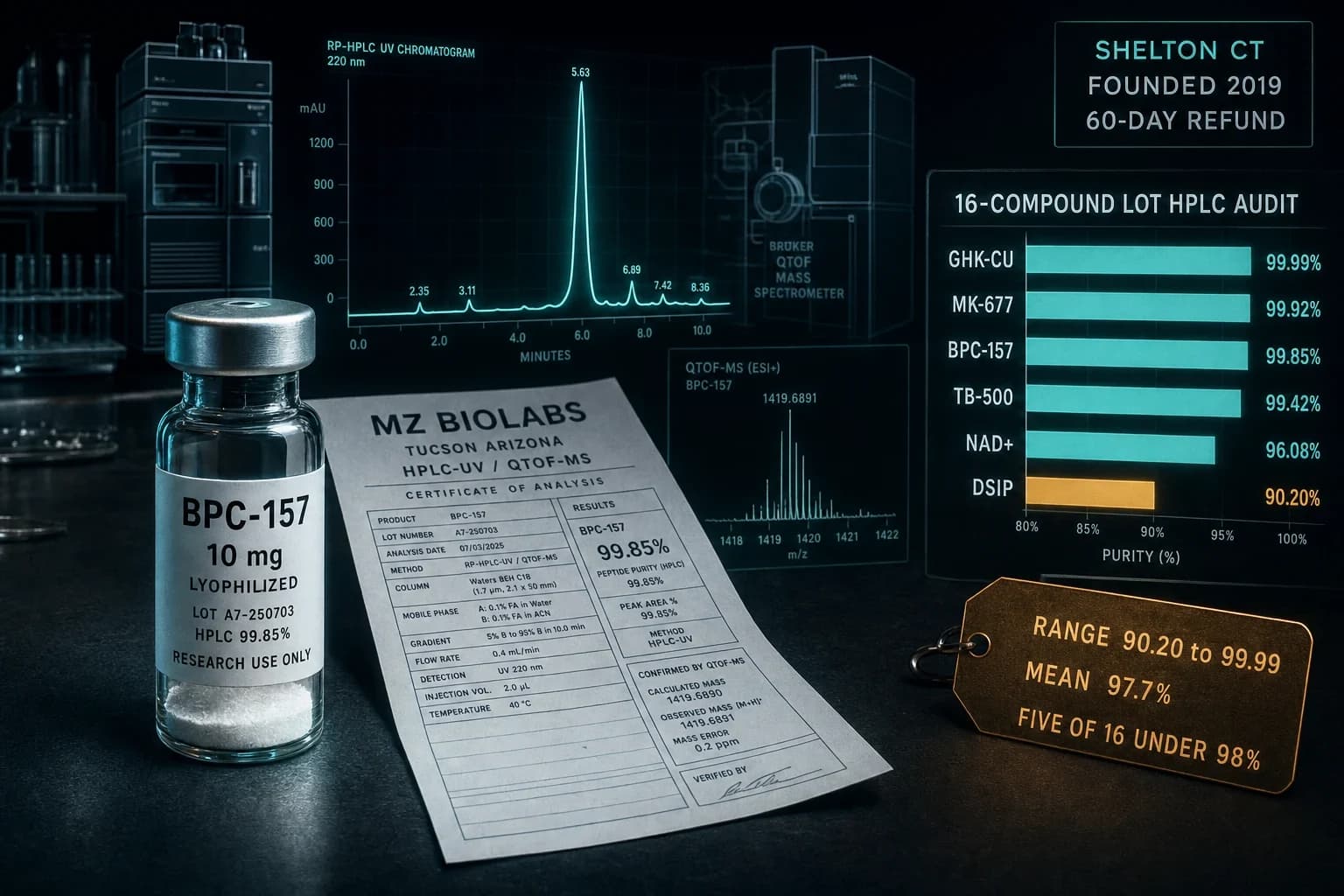
For our broader sourcing analysis, the best legit peptide vendors 2026 ranking covers vendor-by-vendor COA standards. The injectable vs oral peptides bioavailability guide covers the route-of-administration tradeoffs for compounds that have multiple format options, though tesofensine is oral by design.
FAQ
What is the standard tesofensine research dose?
The standard research-grade protocol is 0.5 mg once daily in the morning, after a 1-to-2-week ramp from 0.25 mg. The 0.5 mg dose produced 9.2 percentage points of placebo-adjusted weight loss in the published Phase 2 trial. The 1.0 mg dose produced slightly more weight loss but with materially higher side effect rates.
Why ramp from 0.25 mg if I want the 0.5 mg dose?
Tesofensine has a 200-hour half-life, so the first dose lingers for days. Side effects from a starting dose that turns out to be too aggressive are not easy to wash out. The ramp lets you assess tolerance at half the dose before committing to the standard research dose. Most early adverse events (dry mouth, nausea) are dose-dependent and the 0.25 mg arm tolerated them with notably fewer reports.
How long should a tesofensine cycle run?
The published Phase 2 data is 24 weeks. Forum-documented research protocols typically run 12-24 weeks. Beyond 24 weeks extrapolates past what has been directly published. Researchers running longer cycles report continued weight loss but the rate slows after week 16-20, which is consistent with most weight-loss compounds.
Does tesofensine work better than semaglutide?
The Phase 2 effect size at 0.5 mg over 24 weeks was 9.2 percentage points placebo-adjusted, comparable to what semaglutide 2.4 mg produced over a similar duration in early STEP-1 readouts. At longer durations (52-68 weeks), semaglutide accumulates additional benefit; tesofensine has not been directly tested at 68 weeks. The compounds work through completely different mechanisms (monoamine reuptake versus GLP-1 receptor agonism), and there is no head-to-head trial.
Is tesofensine safe?
In 24-week Phase 2 trials in carefully selected obese patients without cardiovascular or psychiatric comorbidities, tesofensine had a tolerable side effect profile at 0.5 mg. Heart rate increased by an average of 7.4 bpm, which sustained throughout the trial. Blood pressure was unchanged. The 1.0 mg dose had higher rates of mood-related side effects. The compound is not appropriate for research subjects with pre-existing cardiovascular disease or psychiatric history. Long-term safety beyond 24 weeks has not been established.
Why was tesofensine never approved?
Phase 3 was endorsed by the FDA but the trial program was never completed. NeuroSearch, the developer, restructured for financial reasons unrelated to the compound, and the Phase 3 program was not picked up by another sponsor. As of 2026, tesofensine remains research-grade only with no approved indication.
Further reading
- Orforglipron Phase 3 evidence: Lilly's oral GLP-1 in 2026
- 5-Amino-1MQ NNMT inhibitor research review
- GLP-1 muscle loss: lean mass preservation research
- Tirzepatide vs Semaglutide head-to-head 2026
- Best legit peptide vendors 2026
- Injectable vs oral peptides: bioavailability guide
This article is for educational and research purposes only. Tesofensine is sold under research-use disclosures and is not approved by the FDA for any indication. None of the dosing protocols described should be interpreted as medical advice. Tesofensine is not appropriate for research subjects with cardiovascular disease, uncontrolled hypertension, or psychiatric history. Consult a qualified clinician for individual medical questions.