At a glance
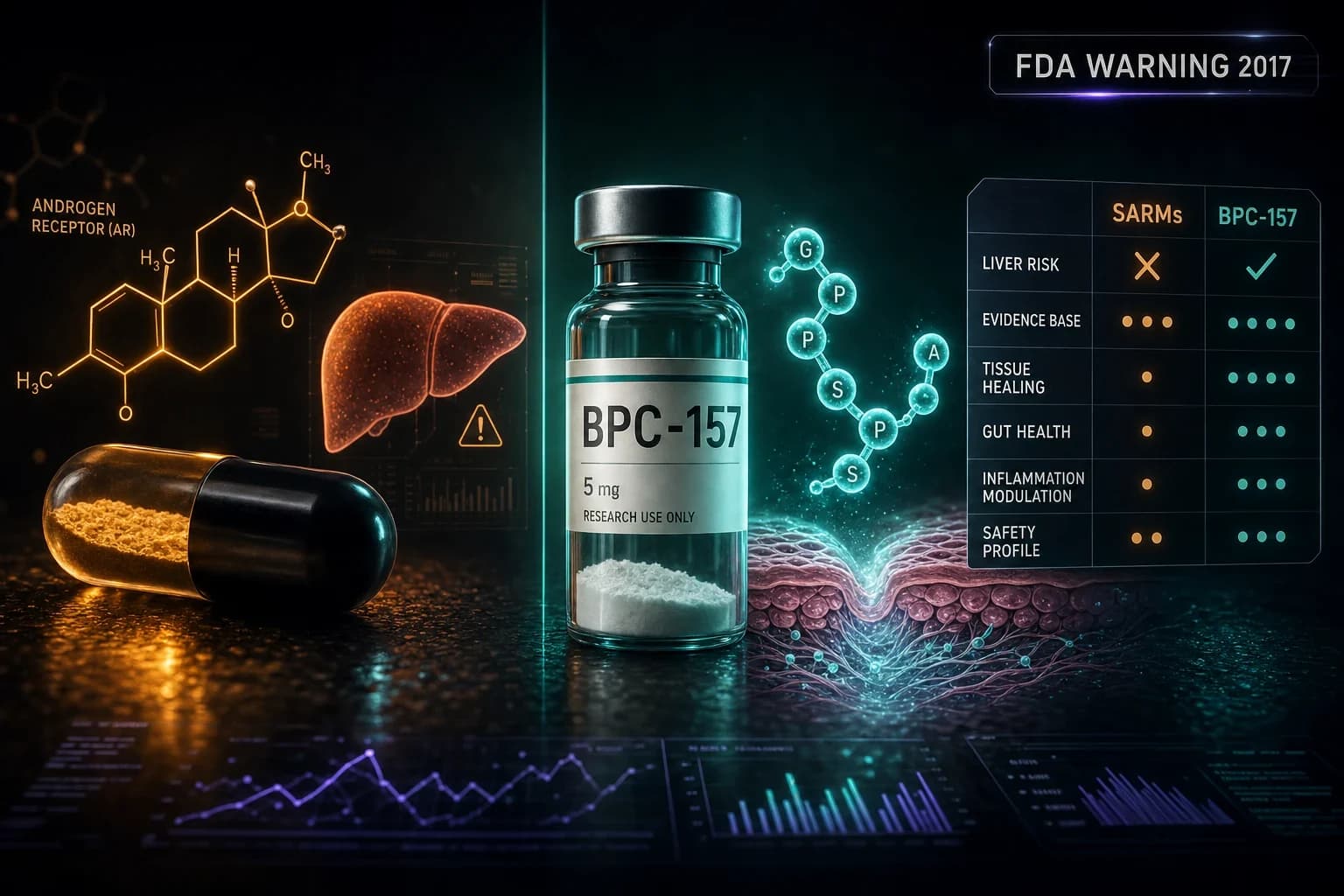
- SARMs are non-steroidal androgen receptor ligands. Research peptides are short amino-acid signaling molecules. Different targets, different risks.
- A 2023 systematic review found 15 published cases of SARM-associated drug-induced liver injury among recreational users (Vignali et al. Mil Med 2023, PMID 37218811).
- A 12-week trial of oral SARM OPK-88004 significantly suppressed HDL-C at all doses tested (Guo et al. J Endocr Soc 2022, PMID 35822201).
- Zero SARMs are FDA-approved. A handful of peptides are (tesamorelin, sermorelin, PT-141, semaglutide). Most "research peptides" sold online are not.
- Peptides have their own weakness: for many popular ones (BPC-157, TB-500), human clinical evidence is sparse. Do not swap steroid claims for peptide hype.
Two classes of research compound get lumped together in the same forum threads, the same vendor pages, and the same "which is safer" videos. They are not the same thing. SARMs (selective androgen receptor modulators) are non-steroidal molecules that bind androgen receptors. Research peptides are short chains of amino acids that act on growth-factor, GH-secretagogue, or wound-repair pathways. They target different receptors, have different regulatory status, and fail in different ways.
If you have been Googling "sarms vs peptides" because you want to figure out which one carries less risk or does what people claim, this piece pulls the actual published evidence into one place. No hype either direction.
The short version
SARMs are anabolics. They push muscle protein synthesis by activating the androgen receptor in muscle and bone tissue with less prostate activity than testosterone (Solomon et al. Sex Med Rev 2019, PMID 30503797). None are approved for human use in any country. The published safety literature for recreational users is dominated by hepatotoxicity case reports and consistent HDL cholesterol suppression.
Research peptides are a heterogeneous category. Some are FDA-approved drugs sold at pharmacies (tesamorelin for HIV lipodystrophy, sermorelin as an old growth-hormone stimulation test agent, PT-141 as bremelanotide for HSDD, semaglutide as Ozempic and Wegovy). Others (BPC-157, TB-500, epithalon) are sold as "research use only" chemicals with real preclinical literature but very thin human evidence.
Bottom line: SARMs and peptides are not the same class of compound and should not be compared by "which is better." They target different pathways, and both categories contain molecules with dramatically different evidence bases. The useful question is compound-by-compound.
What SARMs actually are
Non-steroidal androgen receptor ligands. Chemically they look nothing like testosterone but bind the same nuclear receptor. Because they lack the steroid backbone, they are not substrates for 5α-reductase or aromatase, so they do not convert to dihydrotestosterone or estradiol. That is why they were designed: a "tissue-selective" androgen without the prostate and skin side effects of exogenous testosterone (Solomon et al. Sex Med Rev 2019, PMID 30503797).
The most commonly sold in the grey market: ostarine (MK-2866, enobosarm), ligandrol (LGD-4033), testolone (RAD-140), andarine (S-4), YK-11, and stenabolic (SR9009, which is actually a REV-ERB agonist and not a SARM at all despite the marketing).
None of these have completed a Phase 3 registrational trial. Enobosarm got the closest with the POWER program in cancer cachexia. The Phase 2 data showed statistically significant lean mass gains in cancer patients at 1 mg and 3 mg daily but the Phase 3 endpoints did not deliver a clean win, and the program pivoted to breast cancer indications. GTx never earned an FDA approval for the muscle-wasting label.
What "peptides" actually means here
Any chain of amino acids shorter than a full protein, roughly. In the sourcing world the label covers several very different subgroups:
- Growth-hormone secretagogues: sermorelin, tesamorelin, ipamorelin, CJC-1295, hexarelin. They trigger the pituitary to release endogenous growth hormone rather than replacing it.
- Repair peptides: BPC-157, TB-500 (thymosin beta-4 fragment), KPV, LL-37. Marketed for tissue healing.
- Melanocortins: PT-141 (bremelanotide, FDA-approved), melanotan II.
- Metabolic peptides: the whole GLP-1 class (semaglutide, tirzepatide, retatrutide), amylin agonists.
- Neurotropic: selank, semax, cerebrolysin, dihexa.
These target completely different receptors: GHRH-R, ghrelin receptor, VEGF pathway, melanocortin receptors, GLP-1R. Any statement of the form "peptides do X" is almost certainly wrong. You have to specify which one.
For our broader peptide sourcing context, see the best legit peptide vendors 2026 ranking and the what is a COA guide.
Class comparison at a glance
| Attribute | SARMs | Research peptides (typical) |
|---|---|---|
| Chemical class | Non-steroidal small molecules | Short amino acid chains |
| Primary target | Androgen receptor (nuclear) | Varies: GHRH-R, ghrelin-R, VEGF pathway, GLP-1R, melanocortin R |
| Route | Oral | Mostly subcutaneous injection; some nasal or oral |
| FDA approved for human use | Zero | Several (tesamorelin, sermorelin, bremelanotide, semaglutide, tirzepatide, others) |
| Legal status in US | Prohibited in dietary supplements, banned by WADA, but not federally scheduled as of 2026 | Varies. Approved ones are legal by prescription. Grey-market "research use only" molecules are not for human consumption. |
| HPTA suppression | Reported for most SARMs at supraphysiologic dose | Not a class effect. Peptide-specific. |
| Documented hepatotoxicity | Yes, multiple published case reports and case series | Rare, molecule-specific |
| Primary motivation for use | Anabolism (muscle, bone) | Heterogeneous: recovery, GH release, satiety, sexual function |
Two rows deserve to be unpacked: safety and legal status. That is where the "sarms vs peptides" question actually gets its edge.
Where the SARM safety record sits
Case reports and case series have moved SARM safety data out of the anecdotal column. A 2023 systematic review searched PubMed, Scopus, Web of Science, and ClinicalTrials.gov for SARM safety data and included 33 studies (15 case reports or series, 18 clinical trials) covering 2,136 participants with 1,447 exposed to SARMs (Vignali et al. Mil Med 2023, PMID 37218811). The case-report side of the literature was dominated by drug-induced liver injury: 15 published DILI cases attributed to SARMs at the time of that review.
Additional reporting has continued to accumulate. An Australian case series covering nine referral centers between 2017 and 2023 identified 40 cases of bodybuilding-supplement DILI, of which 14 were attributed to SARMs (ligandrol 5, testolone 5, ostarine 2). The NIH LiverTox chapter on SARMs now catalogues these as a distinct DILI category, with typical onset 2 to 3 months into use and cholestatic or mixed-pattern injury patterns.
Lipid effects are even more consistent. In a 12-week randomized dose-ranging trial of an oral SARM (OPK-88004) in men who had undergone prostatectomy, HDL-C was significantly suppressed at every dose tested (Guo et al. J Endocr Soc 2022, PMID 35822201). HDL particle size and cholesterol efflux capacity were essentially unchanged, so the SARM dropped the absolute number of HDL particles without changing their function. The authors flagged this as needing outcome-trial follow-up before calling it definitively atherogenic, but the suppression itself was clear.
A 2023 mechanism review in Nutrients pointed out that androgen-receptor activation in liver drives hepatic lipase up, which is the biochemical route by which most androgens (endogenous and exogenous) pull HDL down (Cannarella et al. Nutrients 2023, PMC10420890). SARMs are not exempt because the mechanism is intrinsic to AR activation. Case reports of acute myocarditis in RAD-140 users appear in the same review.
A 2024 pharmacovigilance analysis of suspected SARM cases reported to national databases (Leciejewska et al. Eur J Clin Pharmacol 2024, doi 10.1007/s00228-023-03592-3) confirmed hepatobiliary events as the dominant adverse-event class.
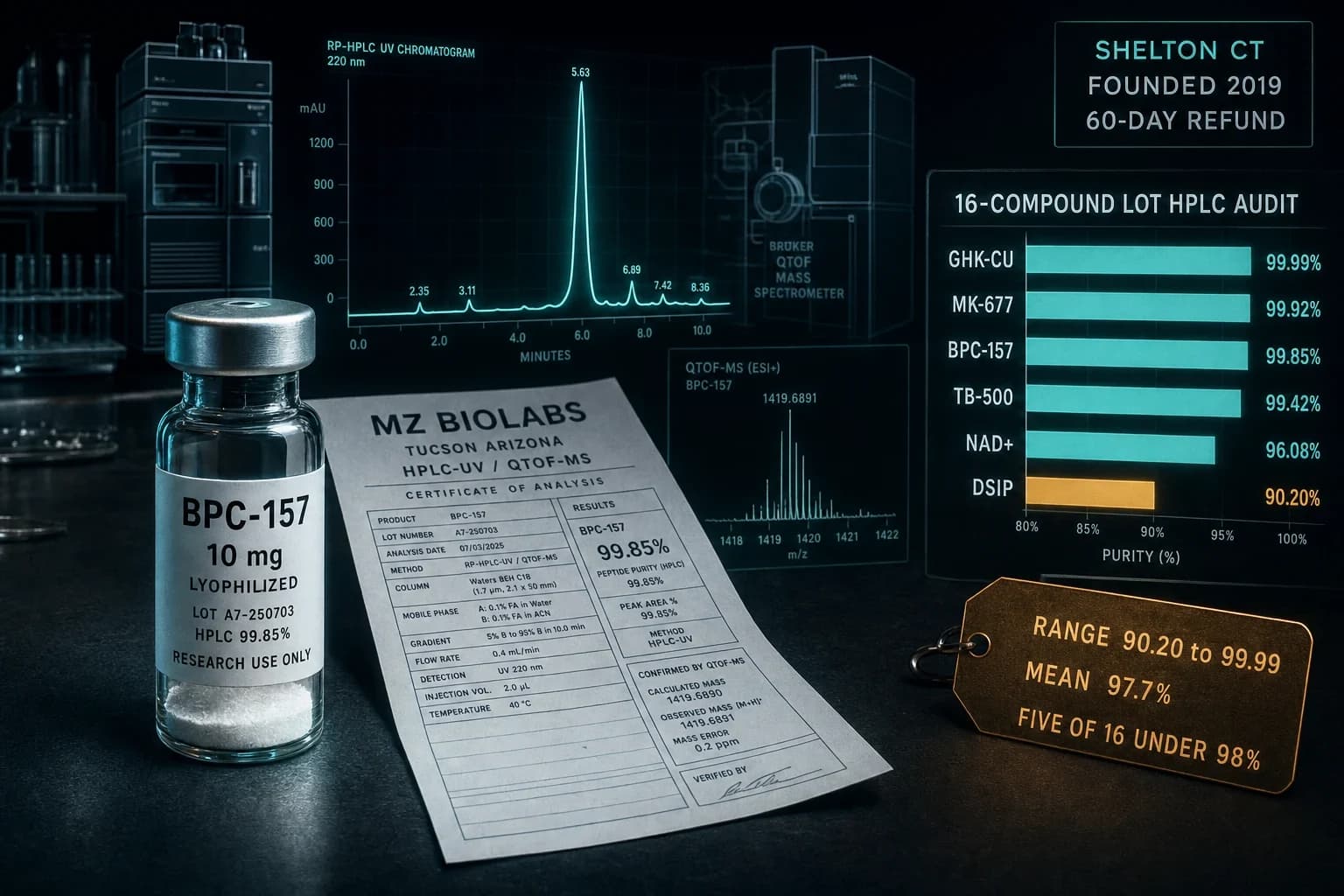
Warning: Every SARM DILI case above involved a product bought online. Purity is not assumed. A 2016 analytical study of a black-market LGD-4033 product found the labeled compound present, but the same drug-testing literature reports mislabeled and contaminated products elsewhere (Geldof et al. Drug Test Anal 2017, PMID 26767942). For anyone buying anything in this category, a third-party COA is the difference between "unknown compound in a vial" and something you can at least verify. Our COA lab-test library is the reference we point people to.
Where the peptide safety record sits
This is where the compound-by-compound rule bites. You cannot answer "are peptides safer than SARMs" without picking a peptide.
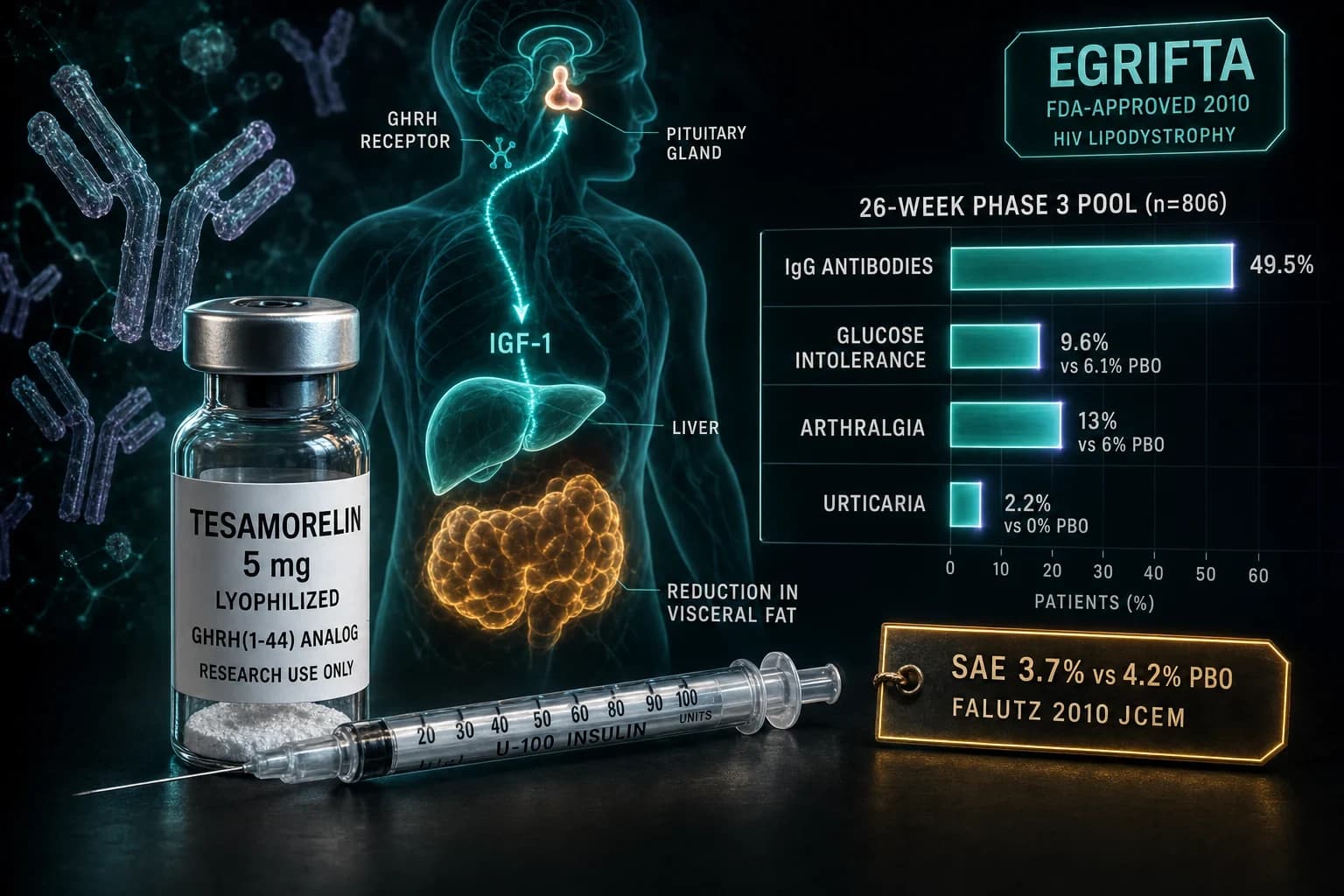
Approved peptide drugs. Tesamorelin (Egrifta) has years of Phase 3 data in HIV lipodystrophy and a full FDA label. Semaglutide, tirzepatide, and bremelanotide have real safety datasets from tens of thousands of patients. Sermorelin was FDA-approved for pediatric growth hormone stimulation testing and pulled from the market in 2008 for commercial reasons, not safety. These molecules do not sit in the same evidence bucket as SARMs.
Growth-hormone secretagogues sold as research chemicals. Ipamorelin, CJC-1295, hexarelin. Human data exists (mostly Phase 1 and 2 from the era when Ares, Theratechnologies, and others were developing them). Common adverse events: injection-site reactions, transient flushing, water retention, and the risk of edging into supraphysiologic GH pulses if stacked or overdosed. Not benign, but not the DILI pattern seen with SARMs.
Repair peptides. BPC-157 and TB-500 are the tricky case. A 2025 systematic review in HSS Journal on BPC-157 in orthopaedic sports medicine identified 36 studies, of which only a handful were human, and concluded that human evidence remains inadequate to support clinical recommendations (Vasireddi et al. HSS J 2025, doi 10.1177/15563316251355551). The single published human safety pilot at the time of that review was an IRB-approved IV study in two subjects. That is the entire published human safety base for BPC-157. Preclinical work is extensive but overwhelmingly from a single research group led by Sikiric, which is a well-known independent-replication problem in the literature (Jozwiak et al. Pharmaceuticals 2025, PMC11859134).
We wrote up that human evidence gap in more detail in our BPC-157 human clinical data gap article and the BPC-157 side effects piece. The short version: "no reports of harm in animal models" is not the same claim as "no risk in humans."
Note: Absence of published harm signals is not proof of safety. It usually means nobody has looked. For BPC-157 and TB-500 specifically, no randomized placebo-controlled efficacy or safety trial has been completed and published as of mid-2026.
HPTA and reversibility
SARMs suppress endogenous testosterone. The Vignali systematic review pulled out consistent luteinizing-hormone and testosterone drops across the SARM clinical trials analyzed, with recovery taking weeks to months after cessation depending on dose and duration (Vignali et al. 2023, PMID 37218811). Recreational users at supraphysiologic doses commonly report post-cycle recovery periods measured in months, and the case-report literature includes documented persistent hypogonadism.
Peptides as a class do not suppress the HPTA. The exception is gonadorelin analogs, which in fact do the opposite (they stimulate it). This is why growth hormone secretagogues, repair peptides, and metabolic peptides do not require a post-cycle protocol the way SARMs and anabolic steroids do.
If your goal is anabolism specifically and you want to preserve the axis, the honest answer is that there is no free lunch. SARMs deliver anabolism because they activate the androgen receptor. The activation is what causes both the muscle growth and the negative feedback loop that suppresses the HPTA. Peptides do not cause that specific muscle-growth effect (except indirectly through GH), which is precisely why they also do not cause that specific suppression.
Legal status in 2026
SARMs. As of mid-2026, no SARM is FDA-approved. SARMs cannot legally be sold as or in dietary supplements in the US. Multiple attempts at federal legislation (the SARMs Control Act of 2018, 2019, and successor bills) would have added them to Schedule III alongside anabolic steroids under the Controlled Substances Act. None have passed. They remain in a grey zone: not scheduled at the federal level, prohibited in supplements, subject to FDA warning letters, and banned by WADA for competing athletes.
Peptides. Approved peptide drugs (tesamorelin, sermorelin, bremelanotide, semaglutide, tirzepatide) are legal by prescription. Compounded versions of GLP-1s exist under 503A and 503B pharmacy pathways with active regulatory turbulence. "Research use only" peptides sold online are not for human consumption and are not FDA-approved for anything.
Neither category is legal to use recreationally in the way people actually use them. Both categories require the buyer to understand that "research use only" is a legal disclaimer, not a quality certification. Our peptide legality overview walks through the 2026 regulatory picture in more detail.
When each category earns its place in research
This is where content-mill "vs" articles usually collapse into hype for one side. It is worth being blunt.
- SARM research is legitimate. Enobosarm reached Phase 3 in cancer cachexia and continues to be studied in breast cancer. LGD-4033 has completed Phase 1 studies in healthy men. The problem is not the research; it is the gap between "1 mg for 12 weeks under clinical monitoring" and "20 mg for 8 weeks off a grey-market vial."
- Peptide research is legitimate. Tesamorelin has an FDA label. Semaglutide is on nearly every cardiovascular endpoint you can imagine (SELECT, FLOW, STEP-HFpEF). The problem is not the research; it is the gap between the approved compound at the approved dose and the "peptide stack" being sold to recreational users.
- The overlap. Someone deciding between "ostarine for muscle" and "BPC-157 for tendon" is not really comparing categories. They are comparing an anabolic (with documented liver risk in recreational use) to a repair peptide (with almost no human evidence base). Both answers, honestly stated, are "there is not enough evidence to support the way you would use this."
For readers who want to look at specific compounds rather than the category label, our compound pages are the right next stop: BPC-157, tesamorelin, sermorelin, ipamorelin, TB-500. Each links out to the dosage chart where one exists.
Sourcing note
If someone reading this is going to buy anything in either category, at minimum: verify a real independent COA, avoid anything sold explicitly as a dietary supplement (that is a FDA warning letter waiting to happen), and check purity and identity by a third-party lab. Our best legit peptide vendors 2026 piece and our Ascension Peptides review both dig into the specific COA and testing questions that separate real vendors from repackagers.
For research injectables specifically, Ascension Peptides publishes third-party HPLC and mass spec COAs and offers 50% off with code ENHANCED (Ascension Peptides). For oral and nasal peptide preparations, Limitless Biotech (review) is our other partner, code ENHANCED. Neither sells SARMs, which is the point: our editorial position is that the peptide category has legitimate research-use compounds with genuinely useful COA infrastructure. The SARM category does not, and we do not route buy CTAs there.
The takeaway
SARMs and peptides are not interchangeable. SARMs are androgen receptor agonists with a documented hepatotoxicity and HDL-suppression signal in real published cases and clinical trials. Peptides are a heterogeneous class where some molecules have Phase 3 approval-grade evidence, and others have almost no human data at all. If you were about to click "add to cart" on either based on a comparison video, the useful next step is not "which class." It is "for this specific compound, what does the human evidence actually show, and is it enough."
Everything on this page is research-purposes only and is not medical advice. Nothing here is an endorsement for human use of any research chemical. Talk to a clinician before making any decisions about medications or supplements.