At a glance
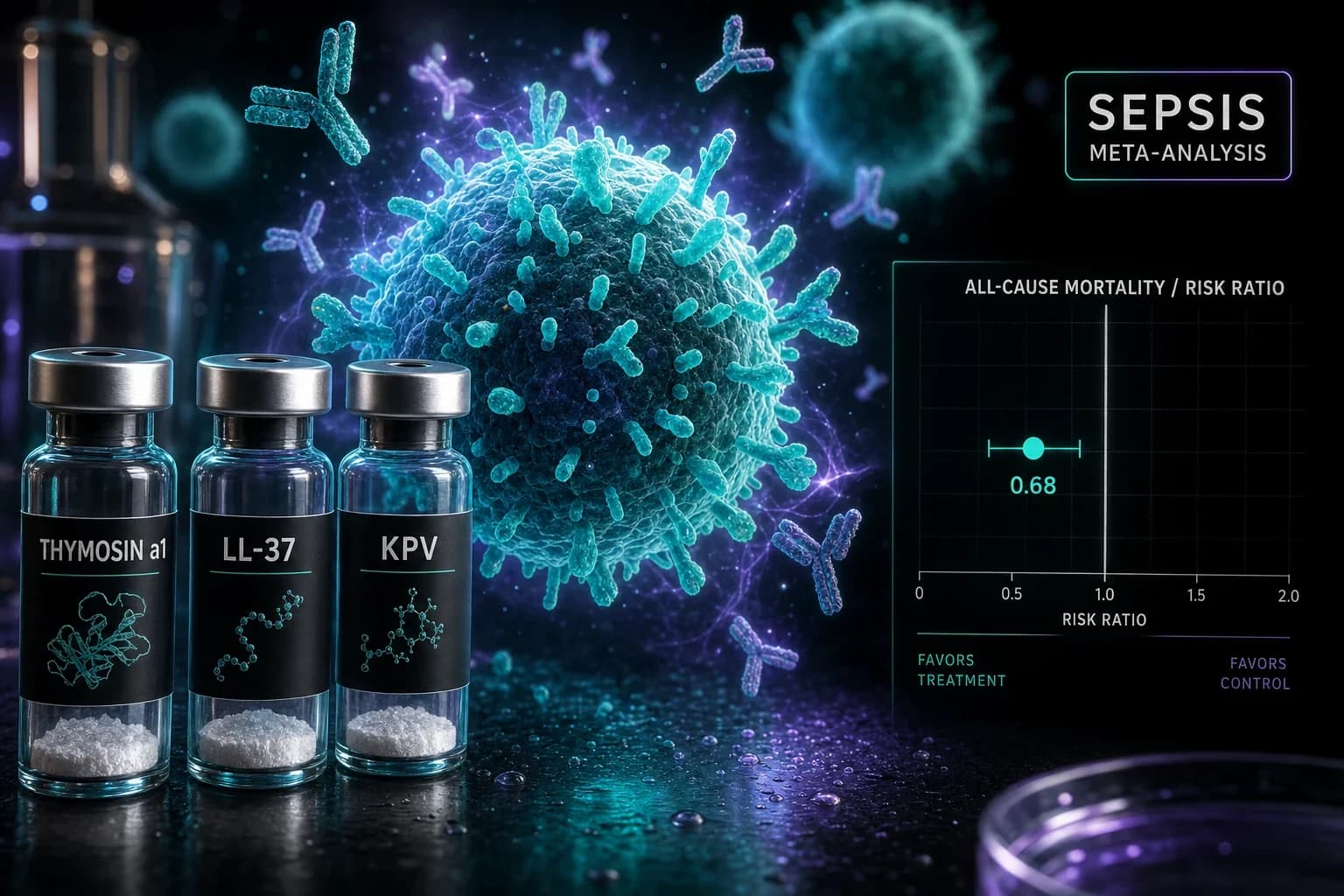
- Thymosin alpha-1 lowered all-cause mortality in a sepsis meta-analysis (pooled RR 0.68)
- LL-37 is the only human cathelicidin, active against bacteria, fungi, and viruses
- KPV calms inflammation and is orally active through PepT1 transport
- Thymosin alpha-1 research dose: 1.6mg subcutaneous, twice weekly
- VIP shifts immune signaling from inflammatory Th1 toward regulated responses
Your immune system does not need "boosting." That word is a marketing shortcut. What a small group of peptides actually do is more specific and more interesting: they change the signals immune cells use to decide when to attack, when to stand down, and when to repair. That difference is the whole point.
Four peptides have real published data behind their immune effects. Thymosin alpha-1, LL-37, KPV, and VIP each work on a different part of the system. Here is what the studies show, how researchers dose them, and which ones are worth combining.
Bottom line: Thymosin alpha-1 has the deepest clinical record, including a sepsis meta-analysis showing lower mortality. LL-37 and KPV act on infection and inflammation directly. VIP tunes the balance between inflammatory and regulated responses. None are approved in the US for general use, and purity varies wildly by source.
Thymosin alpha-1: the one with actual human trials
Most "immune peptides" have rat data and a good story. Thymosin alpha-1 has decades of clinical use. It is a 28-amino-acid fragment of prothymosin alpha, and its pharmaceutical form (Zadaxin) is approved in dozens of countries as an immune modulator and vaccine adjunct.
A comprehensive 2020 review traces its use across immunocompromised states, cancer care, vaccine response, and serious infection. The most compelling number comes from a 2015 systematic review and meta-analysis: across randomized sepsis trials, thymosin alpha-1 was associated with a pooled all-cause mortality risk ratio of 0.68. That is a hard endpoint, not a surrogate marker.
The mechanism is restraint, not stimulation. Thymosin alpha-1 helps mature and rebalance T cells and dendritic cells, which is why it shows up in both "the immune system is underreacting" and "the immune system is overreacting" contexts.
Researchers typically follow the Zadaxin schedule: 1.6mg subcutaneously, twice weekly, spaced three to four days apart. The full breakdown, including acute-support loading, is on the thymosin alpha-1 dosage chart, and the clinical record is covered in depth in our thymosin alpha-1 clinical evidence guide.
LL-37: your body's built-in antibiotic
LL-37 is the only cathelicidin humans make. It is a 37-residue amphipathic helix that punches holes in bacterial membranes and also carries immunomodulatory signaling, per the foundational Dürr and Ramamoorthy review (2006). Its activity spans bacteria, fungi, and some enveloped viruses, which is unusual for a single molecule.
There is a catch worth stating plainly. LL-37 shows dose-dependent cytotoxicity toward host cells at higher concentrations in vitro. More is not better here. That is exactly why research protocols stay conservative, usually 100 to 250mcg per day for short courses. The LL-37 dosage chart has the reconstitution math and the localized-versus-systemic split, and the compound overview lives on the LL-37 research page.
KPV: the gut-calming tripeptide
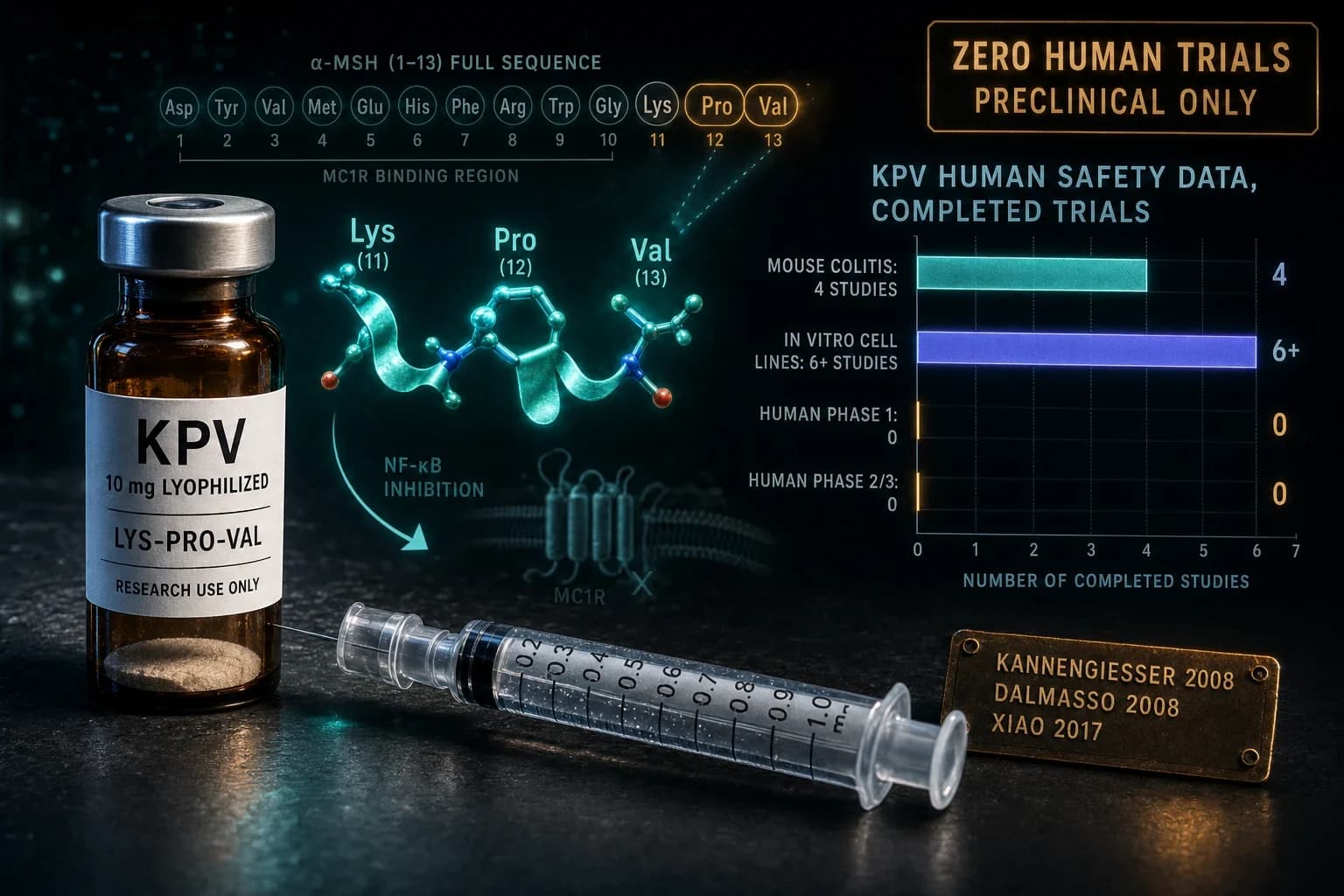
KPV is the C-terminal tripeptide of alpha-MSH (Lys-Pro-Val), and it is the immune peptide you can actually take orally. It is transported intact through the gut by PepT1, which is what makes the capsule format viable.
Two 2008 studies in Gastroenterology-adjacent literature carry the weight here. Dalmasso and colleagues showed that PepT1-mediated KPV uptake reduces intestinal inflammation, and a parallel study found KPV was anti-inflammatory across two separate murine colitis models. The mechanism is downregulation of NF-kB and pro-inflammatory cytokine signaling inside the cell.
Standard research dosing runs 250 to 500mcg per day, subcutaneous or oral. The KPV dosage chart covers both routes. For the reconstitution math on the injectable form, the reconstitution calculator does the unit conversions for you.
VIP: the immune thermostat
VIP (vasoactive intestinal peptide) is a 28-amino-acid neuropeptide that behaves less like a switch and more like a dimmer. The Delgado and Ganea review describes it as a homeostatic regulator: in innate immunity it inhibits inflammatory cytokines from macrophages and dendritic cells, and in adaptive immunity it nudges the balance away from inflammatory Th1 responses.
Because its systemic half-life is only a couple of minutes, research almost always uses the intranasal route. That is the format most protocols follow, detailed on the VIP dosage chart. The compound background sits on the VIP research page.
TB-500: repair, not defense
TB-500 (thymosin beta-4) is not strictly an immune peptide, but it belongs in this conversation because inflammation and repair are two ends of the same process. Per Goldstein and colleagues (2005), thymosin beta-4 downregulates inflammatory chemokines and cytokines while promoting cell migration, blood vessel formation, and tissue repair. It is the compound you reach for when the goal is resolving damage rather than fighting a pathogen. Details are on the TB-500 dosage chart.
Side-by-side
| Peptide | Primary immune role | Typical route | Research dose |
|---|---|---|---|
| Thymosin alpha-1 | T-cell and dendritic-cell rebalancing | Subcutaneous | 1.6mg twice weekly |
| LL-37 | Broad-spectrum antimicrobial | Subcutaneous | 100-250mcg daily |
| KPV | Anti-inflammatory (gut and systemic) | Oral or subcutaneous | 250-500mcg daily |
| VIP | Inflammatory-to-regulated signaling | Intranasal | 50mcg per actuation |
| TB-500 | Inflammation resolution and repair | Subcutaneous | See dosage chart |
How researchers combine them
The logic of stacking these is to cover different jobs, not to pile on the same effect. Thymosin alpha-1 with KPV pairs a systemic T-cell modulator with a gut-localized anti-inflammatory, which is why the thymosin alpha-1 and BPC-157 recovery protocol is a common starting point for people thinking about resilience and repair together.
Tip: If you are new to this category, one peptide at a time is the honest approach. Immune modulation is bidirectional, and running four novel signals at once makes it impossible to attribute any response to any single compound.
Where purity actually matters
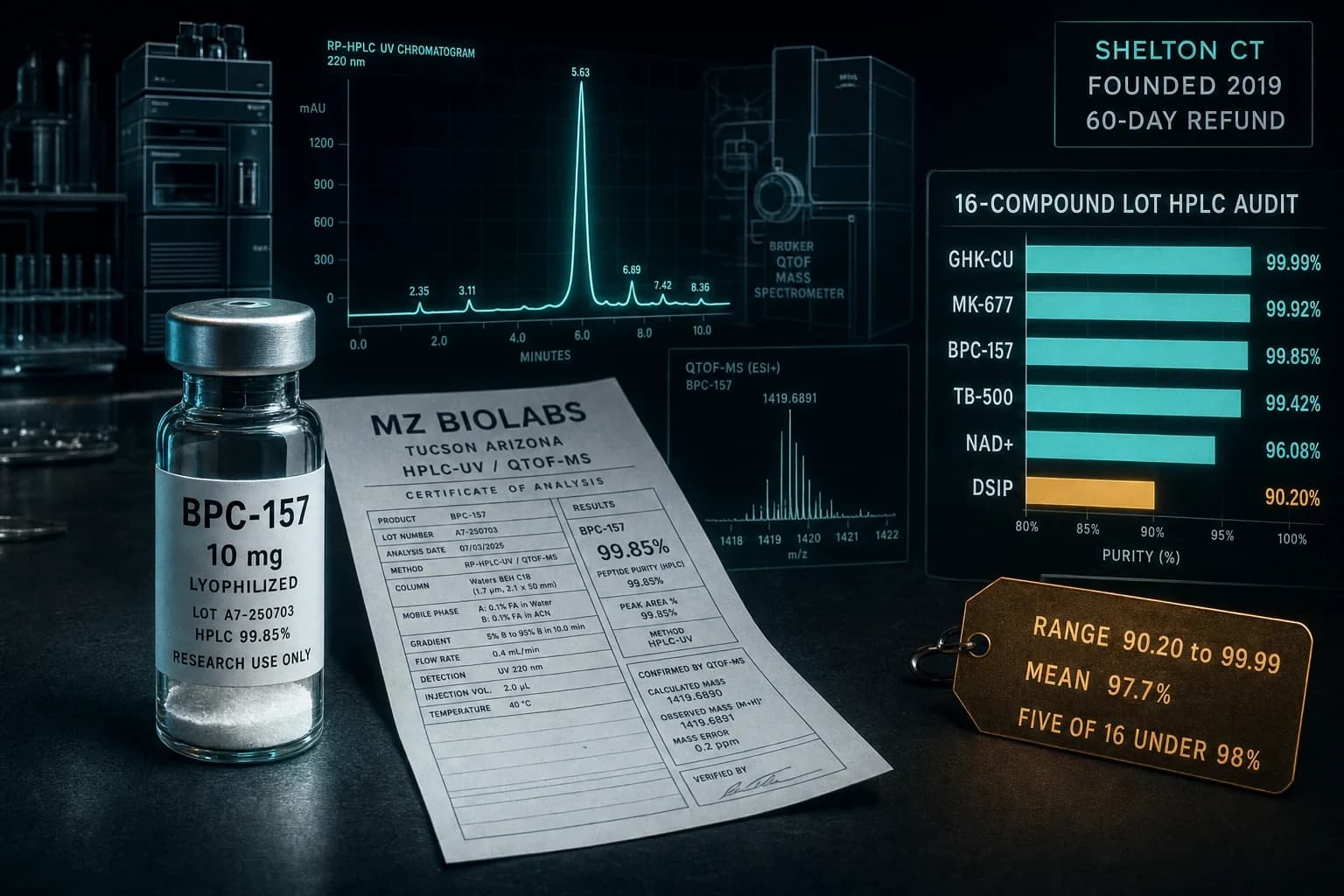
Immune peptides are among the most frequently mislabeled compounds in the research market, and thymosin peptides in particular are notorious for identity substitution. A vial that is 80 percent pure, or that contains a different peptide entirely, is not a smaller version of the effect. It is a different experiment.
Check the certificate of analysis before anything else. Our peptide lab test database tracks per-lot HPLC purity across vendors so you can verify the actual document, not a marketing claim. For a vendor we have vetted in depth, see the Ascension Peptides review.
Thymosin alpha-1, LL-37, KPV, and TB-500 are available as injectable research vials from Ascension Peptides with 50% off using code ENHANCED. KPV also comes in oral capsules and VIP in a nasal spray from Limitless Biotech with code ENHANCED for orals and sprays.
The honest caveats
None of these is an approved consumer product in the US. Thymosin alpha-1 is a prescription drug in other countries, and research-grade powder is not a substitute for prescribed Zadaxin. The human evidence is deepest for thymosin alpha-1 and thinnest for the rest. Immune modulation can interact with autoimmune conditions and immunosuppressive medication in ways that are not fully mapped. Source only COA-verified material, and treat every protocol here as a research reference rather than a plan.
This article is for research and educational purposes only. It is not medical advice, and nothing here is a recommendation to use these compounds in humans. Consult a qualified healthcare professional before making any health decision.