At a glance
- Standard combined protocol: Thymosin α-1 at 1.6 mg twice weekly + BPC-157 at 250 mcg daily, both subcutaneous
- Mechanism stack: Tα-1 modulates T-cell maturation and Th1 immune response; BPC-157 drives angiogenesis and tissue repair through complementary pathways
- Most-researched in post-surgical recovery, immunocompromised tissue repair, and chronic infection-adjacent research contexts
- Thymosin α-1 is FDA-approved as Zadaxin in 35+ countries for hepatitis B/C and as immune adjuvant (not US-approved)
- Cycle typically 4-8 weeks; both peptides have favorable tolerability profiles in published literature
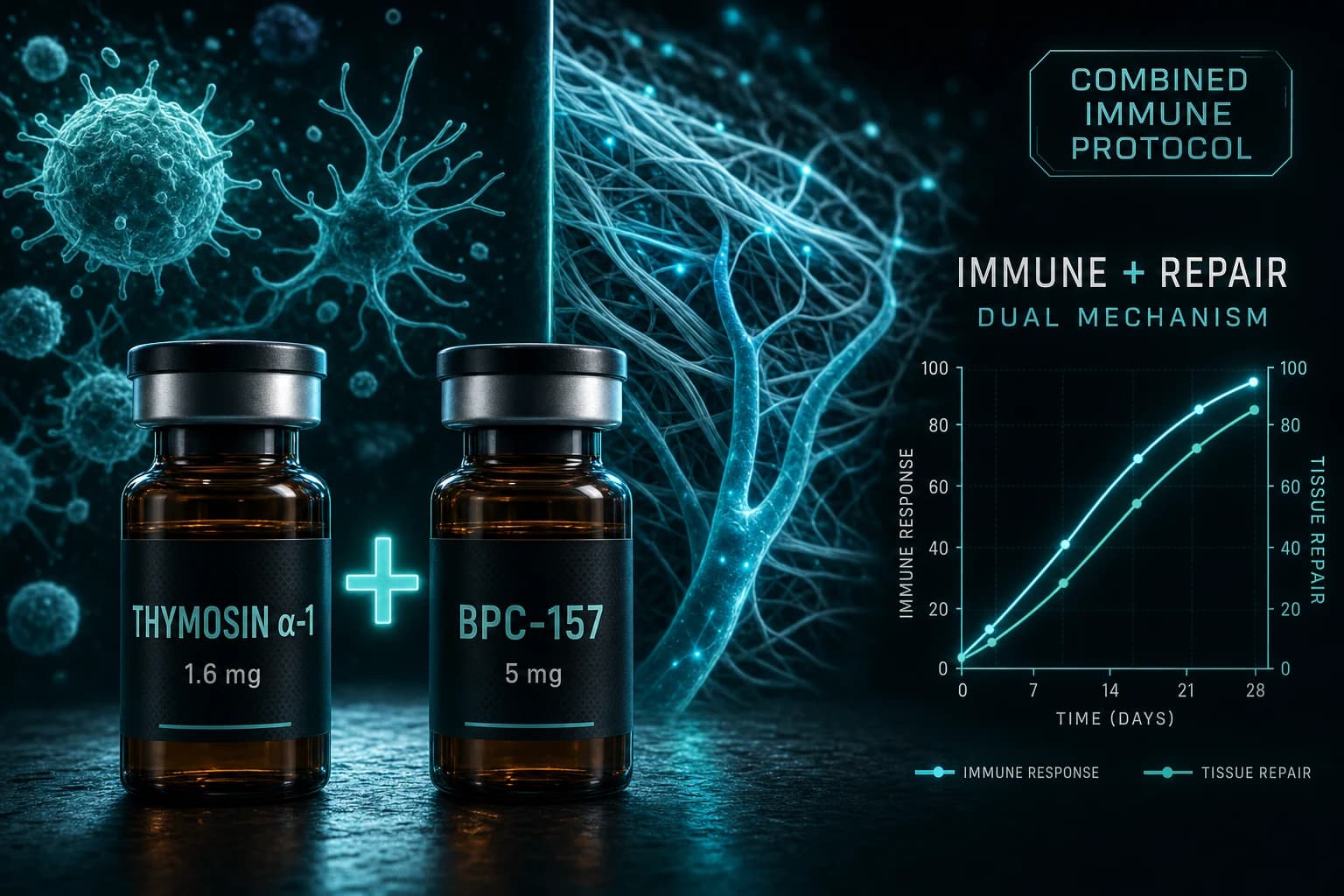
The thymosin α-1 plus BPC-157 stack is one of the cleaner two-compound research protocols in recovery research. The mechanistic case is direct: thymosin α-1 modulates the T-cell side of immunity through documented Th1 response support, while BPC-157 drives angiogenesis and growth factor expression at the local tissue level. Combined, the stack covers immune competence plus structural repair through pathways that do not compete for the same receptor systems.
This article covers the mechanistic case for the stack, the standard research dose protocols, what the published evidence says for each compound separately (combined trials do not exist), and the practical considerations including how the post-FDA-reclassification regulatory landscape changes access.
Why combine these two peptides
The stack rationale is mechanism-based rather than trial-based. There are no published combined-protocol trials of thymosin α-1 plus BPC-157. The combination is justified by the complementary mechanisms of each compound:
| Compound | Primary mechanism | Acts at | Time scale of effect |
|---|---|---|---|
| Thymosin α-1 | T-cell maturation, Th1 response support | Systemic immune cells | Days to weeks |
| BPC-157 | Angiogenesis, growth factor expression | Local tissue, gut, injury sites | Hours to days |
Stack research applications target situations where both deficits are likely present:
- Post-surgical recovery research: Surgery transiently suppresses immune competence and creates tissue repair demand simultaneously. The stack addresses both deficits.
- Chronic infection-adjacent research: Where tissue damage from chronic infection creates ongoing repair demand and the inflammatory milieu has impaired immune response.
- Immunocompromised tissue repair research: Patients on immunosuppressive medications or with documented immune deficits face slower tissue healing. The stack provides immune support without engaging the same pathways as immunosuppressants.
The stack does not address conditions like autoimmune flares where additional immune activation would be counterproductive. The Th1 support that thymosin α-1 produces is biologically distinct from a generalized immune boost, but the directionality is still toward immune competence rather than suppression.
Bottom line: Run this stack when both deficits matter. For pure tissue repair without immune concerns, BPC-157 alone is sufficient. For immune support without tissue damage, thymosin α-1 alone is the right tool. The combination is justified when both deficits are present together.
Thymosin α-1 mechanism and evidence
Thymosin α-1 (Tα-1) is a 28-amino-acid peptide derived from prothymosin α. It was first isolated from thymus tissue in the 1970s and has been studied extensively in immunomodulation contexts since.
The mechanism: Tα-1 promotes T-cell maturation, supports Th1 immune response polarization, and modulates dendritic cell function. The effect tilts the immune system toward cellular immunity (Th1) rather than humoral immunity (Th2).
Published evidence base:
- Hepatitis B and C: Thymosin α-1 (marketed as Zadaxin) is approved in 35+ countries outside the US for hepatitis B and C treatment, particularly as an immune adjuvant alongside antiviral therapy. The clinical trial database is substantial.
- Sepsis adjuvant: Multiple randomized trials have tested Tα-1 as adjuvant therapy in severe sepsis. Results have been mixed; the largest trial (ETASS) showed reduced mortality in subgroups but did not reach significance overall.
- Cancer immunotherapy adjuvant: Tα-1 has been studied as an adjuvant in vaccine and chemotherapy protocols, particularly in melanoma and hepatocellular carcinoma.
- Immune modulation in HIV: Some Phase 2 work has tested Tα-1 in HIV-positive patients with poor CD4 recovery.
For the deeper compound-specific evidence review, see the existing Thymosin alpha-1 immune peptide clinical evidence article and the thymosin alpha-1 compound guide.
BPC-157 mechanism and evidence
BPC-157 is a synthetic 15-amino-acid peptide derived from a sequence in human gastric juice. The published evidence base is substantial but rodent-heavy:
- Tendon and ligament healing: Multiple rodent studies showing accelerated healing of Achilles tendon, medial collateral ligament, and quadriceps muscle injuries.
- GI mucosal protection: Original characterization was in gastric ulcer rodent models. Effects on intestinal inflammation, esophagitis, and colitis have been documented.
- Angiogenesis: Local VEGF upregulation and capillary network formation at injury sites.
- Growth factor expression: Upregulation of growth hormone receptor, EGR1, and several growth factors in injured tissue.
The systematic review caveat: a 2024 paper noted that despite extensive preclinical work, human RCT data for BPC-157 remains limited. The stack rationale rests on the preclinical evidence and the assumed translation to human research applications.
For the deeper compound-specific coverage, see the BPC-157 dosing protocol guide and the pentadeca arginate PDA research for the newer formulation.
The standard combined research protocol
The convergent research-grade protocol for the stack:
| Compound | Dose per injection | Frequency | Timing | Duration |
|---|---|---|---|---|
| Thymosin α-1 | 1.6 mg | Twice weekly (Mon/Thu) | Morning, SC | 4-8 weeks |
| BPC-157 | 250 mcg | Once daily | Morning, SC | 4-8 weeks |
| Optional higher BPC-157 | 500 mcg | Once daily, split AM/PM | SC | 4-8 weeks |
Reasons for the dose convergence:
-
Thymosin α-1 dose: 1.6 mg twice weekly is the dose used in most published clinical and research protocols. This translates from the Zadaxin approved-indication dosing.
-
BPC-157 dose: 250-500 mcg daily is the standard research range. The 250 mcg starting dose is conservative; 500 mcg is used for more aggressive protocols.
-
Twice-weekly Tα-1 vs daily BPC-157: The compounds have different pharmacokinetic profiles. Tα-1 has a longer effective duration in immune modulation contexts, justifying less frequent dosing. BPC-157 acts more locally and benefits from steady-state daily exposure.
For reconstitution math:
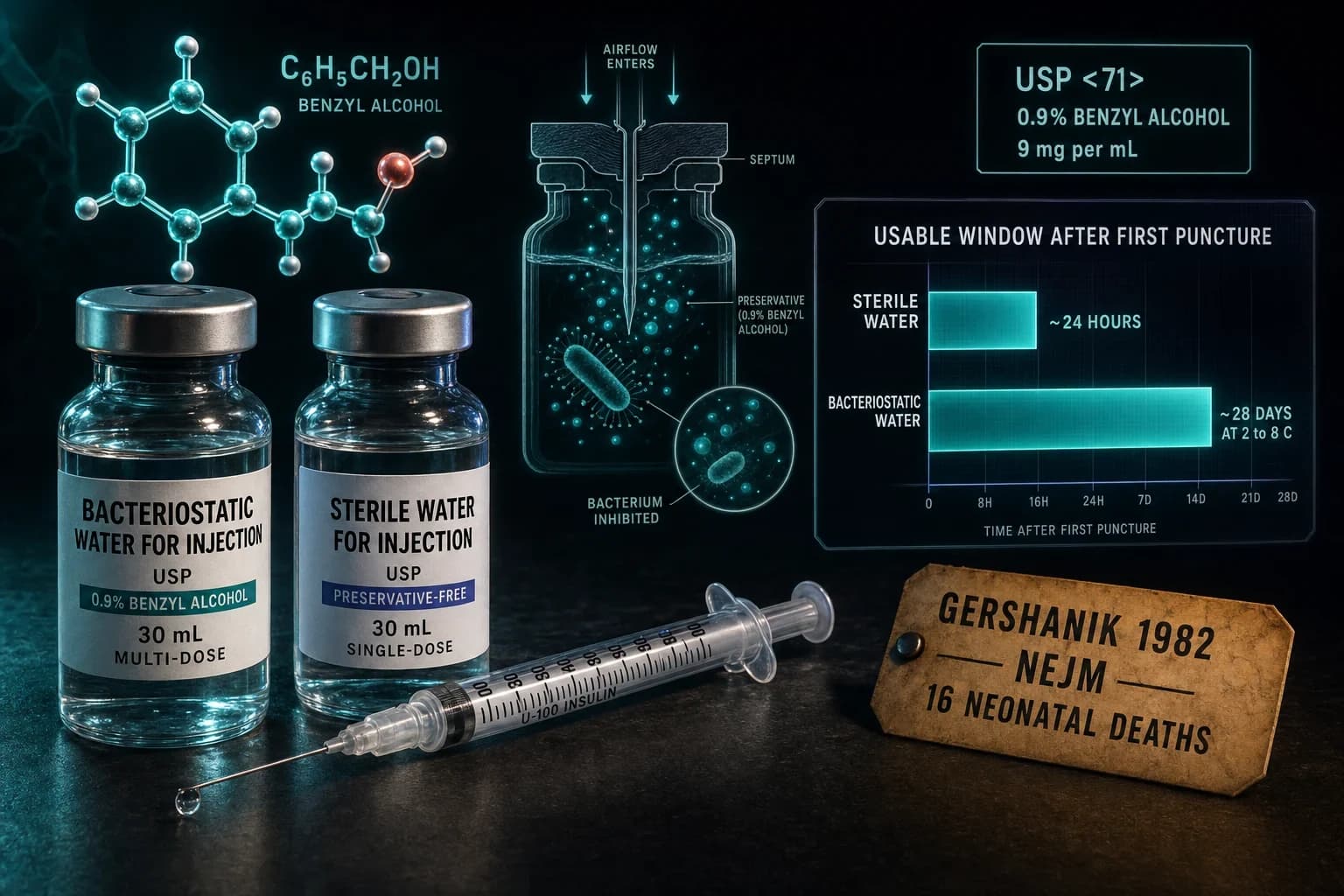
- Thymosin α-1: Most retail vials are 5 mg. Reconstitute with 3.2 mL bacteriostatic water for 1.56 mg/mL concentration. A 1 mL draw (100 IU on U-100 syringe) delivers approximately 1.56 mg.
- BPC-157: Most retail vials are 5 mg. Reconstitute with 2 mL bacteriostatic water for 2.5 mg/mL concentration. A 0.1 mL draw (10 IU) delivers 250 mcg.
The reconstitution calculator handles arbitrary vial sizes for both compounds.
When to run this stack
The clearest research applications:
Post-surgical recovery research. Surgery produces both transient immune suppression and significant tissue repair demand. Running the stack for 4-6 weeks beginning shortly after the procedure addresses both deficits during the critical healing window.
Chronic infection-adjacent research. Patients with chronic Lyme disease, persistent EBV reactivation, or chronic viral infections face both immune dysregulation and accumulated tissue damage. The stack mechanism aligns with both components.
Immunocompromised tissue healing research. Research subjects on immunosuppressive medications or with documented T-cell deficits have slower tissue repair. The stack provides immune support and direct tissue repair signaling.
Post-illness recovery research. Following severe respiratory or systemic illness, both immune competence and tissue repair capacity may be transiently impaired. The 4-week stack protocol matches the typical recovery window.
When NOT to run this stack:
- Active autoimmune disease flares (additional Th1 support could worsen autoimmune activity)
- Research subjects on biologics or checkpoint inhibitors (mechanistic interactions are unknown)
- Pregnancy and breastfeeding contexts (no safety data)
- Active malignancy (immune modulation effects on tumor biology are complex)
Stack alternatives and complements
If the goals of the Tα-1 + BPC-157 stack are not fully addressed by the combination, several alternative or additive compounds are worth considering:
| Goal | Add to base stack | Mechanism rationale |
|---|---|---|
| Additional tissue repair | TB-500 (2.5 mg weekly) | Systemic cell migration and actin regulation |
| Anti-inflammatory support | KPV (500 mcg oral daily) | NF-κB / IL-1β inhibition (gut-targeted) |
| Skin and matrix remodeling | GHK-Cu (1-2 mg daily) | Collagen synthesis, matrix metalloproteinase regulation |
| Anti-microbial (topical) | LL-37 (topical) | Cathelicidin antimicrobial + re-epithelialization |
| Mitochondrial support | SS-31 (10 mg daily) | Cardiolipin protection, mitochondrial function |
The full multi-peptide protocol becomes complex quickly. For most research applications, the Tα-1 + BPC-157 base is sufficient and additional compounds should be added only when the research question specifically calls for them.
For the broader stack-design context, see the KLOW Blend premium skin + gut recovery protocol, the GLOW Blend skin recovery protocol, and the Wolverine Stack BPC-157 + TB-500.
Safety profile of the combined stack
Both compounds have favorable individual safety profiles. The combination has not been formally studied for interactions, but the mechanism profiles do not suggest obvious additive risks:
Thymosin α-1: Published trials report mild and transient injection-site reactions as the most common adverse event. Hepatitis B/C trials with prolonged exposure showed no significant systemic toxicity. The largest sepsis trial (ETASS) showed no excess mortality or serious adverse events in the Tα-1 arm.
BPC-157: Reported as well-tolerated across animal studies and forum-documented research use. The systematic review noted that human RCT safety data is limited, but no concerning safety signals have emerged from the published preclinical work or from anecdotal research-use reports.
Combination: No formally documented interactions. The compounds act through different pathways (T-cell maturation versus growth factor expression) and do not share metabolic or receptor pathways.
How the FDA reclassification affects this stack
The February 27, 2026 HHS announcement moved 14 of 19 peptides from FDA Category 2 back to Category 1, restoring legal compounding-pharmacy access. BPC-157 was among the peptides reclassified. Thymosin α-1 was not among the 14 reclassified peptides but had a more nuanced status: it is approved in 35+ countries outside the US, so US compounding access has historically been limited regardless of the Category 1/2 designation.
The practical implication for the stack:
- BPC-157 component: Now accessible through licensed US compounding pharmacies with a prescription.
- Thymosin α-1 component: Still primarily available through research-grade retail or through compounding pharmacies that have specific licensing.
For broader regulatory context, see the FDA 503A peptide compounding review and the Enhanced Games May 24 article for how the reclassification has reshaped the market.
Sourcing
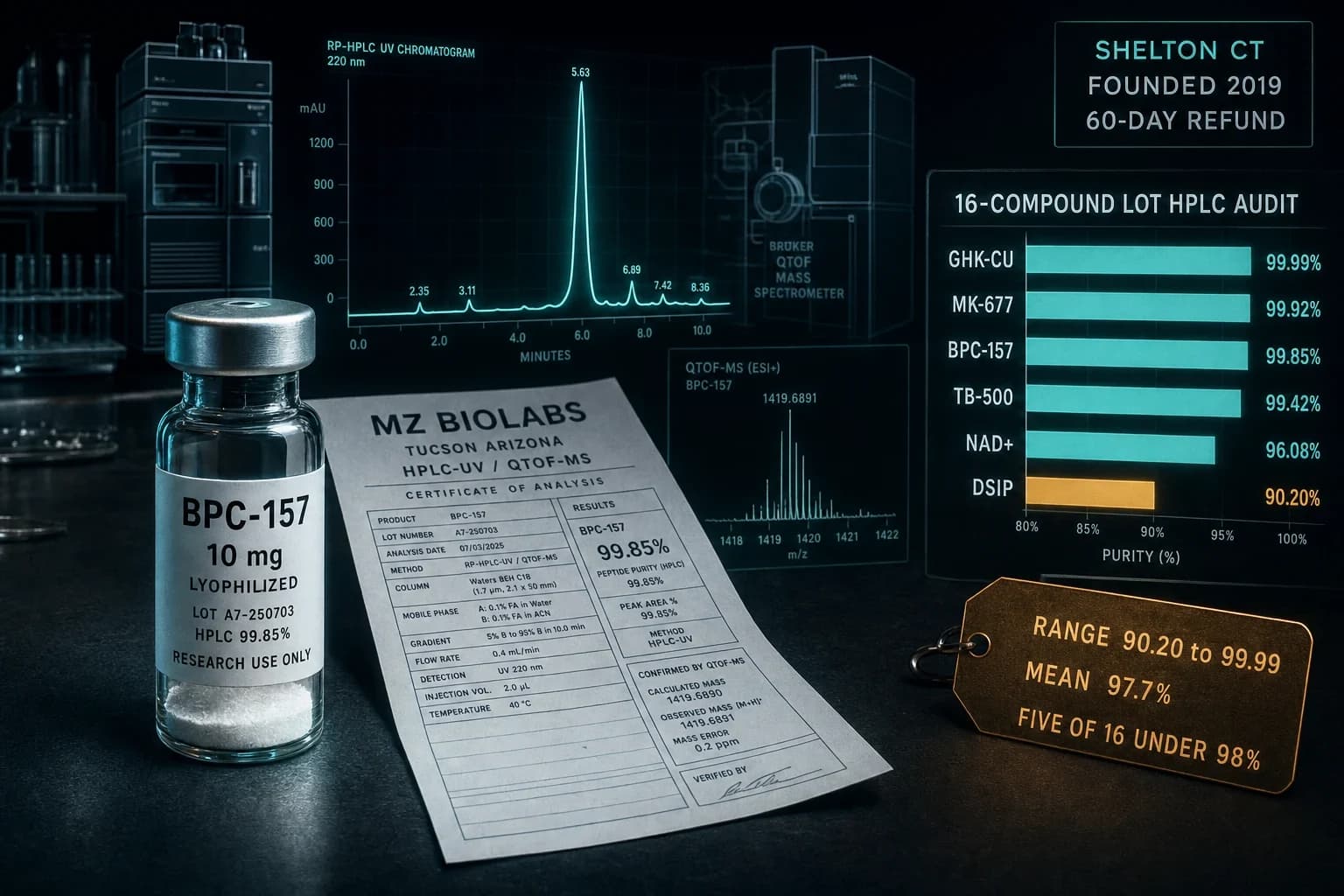
For research-grade injectable thymosin α-1 and BPC-157 vials with public per-batch COAs, Ascension Peptides ships both compounds with 50% off using code ENHANCED. For our broader sourcing analysis, see the best legit peptide vendors 2026 ranking and the where to buy BPC-157 with COAs guide.
FAQ
What is the standard Thymosin α-1 + BPC-157 stack dose?
Thymosin α-1 at 1.6 mg subcutaneous twice weekly (Monday and Thursday) plus BPC-157 at 250 mcg subcutaneous daily. Both compounds injected in the morning. Cycle duration typically 4-8 weeks. Higher BPC-157 doses (500 mcg daily split AM/PM) are used in more aggressive protocols.
Why combine these two peptides?
The stack rationale is mechanism-based: Thymosin α-1 modulates T-cell maturation and Th1 immune response while BPC-157 drives angiogenesis and tissue repair through growth factor expression. The two compounds act through different pathways and address different deficits, making the combination useful where both immune competence and tissue repair demand are present.
When should I run this stack?
Most-cited research applications include post-surgical recovery, chronic infection-adjacent research, immunocompromised tissue healing, and post-illness recovery. The stack is not appropriate for active autoimmune flares, research subjects on biologics or checkpoint inhibitors, pregnancy/breastfeeding, or active malignancy contexts.
How long should a cycle last?
Standard cycles run 4-8 weeks. The 4-week minimum allows the immune modulation and tissue repair signaling to produce measurable effects. The 8-week cap is largely inherited from published Thymosin α-1 protocols and the typical BPC-157 research-use cycle duration. Longer cycles beyond 8 weeks extrapolate past the directly tested window.
Has this combination been studied in trials?
No formal published trials of the Tα-1 + BPC-157 combination exist as of May 2026. The stack rationale rests on the individual compound evidence bases applied to the complementary mechanism case. Researchers running the combination are extrapolating from each compound's separate trial data.
What about adding TB-500 to this stack?
TB-500 can be added for additional systemic tissue repair support through actin regulation and cell migration. The three-compound stack (Tα-1 + BPC-157 + TB-500) is mechanistically defensible but increases injection count and protocol complexity. For most research applications, the two-compound base is sufficient. The BPC-157 + TB-500 Wolverine Stack covers the BPC-157 + TB-500 combination separately.
Is this stack appropriate for the Enhanced Games athletes?
The disclosed Enhanced Games athlete protocols emphasize tissue recovery (BPC-157 + TB-500) and growth hormone support (CJC-1295 + Ipamorelin) rather than immune-targeted compounds like thymosin α-1. The Tα-1 + BPC-157 stack is more suited to medical research contexts than to pre-event athletic preparation. See the Enhanced Games May 24 article for the athlete-specific stack patterns.
Further reading
- Thymosin alpha-1 immune peptide clinical evidence
- BPC-157 dosing protocol guide
- BPC-157 compound guide
- Thymosin alpha-1 compound guide
- Wolverine Stack: BPC-157 + TB-500 recovery protocol
- KPV oral peptide gut inflammation research
- Pentadeca arginate (PDA): BPC-157 successor research
- LL-37 cathelicidin antimicrobial peptide guide
- FDA 503A peptide compounding review July 2026
- Reconstitution Calculator
This article is for educational and research purposes only. Thymosin alpha-1 is approved as Zadaxin in 35+ countries outside the US but is not FDA-approved for any indication in the US. BPC-157 is sold under research-use disclosures and is not FDA-approved for any indication. None of the content above constitutes medical advice. Consult a qualified clinician for individual medical questions about recovery research or immune-related conditions.