At a glance
- Bakri's filter: does the peptide have a known receptor? That predicts reliability.
- BPC-157's popular 250 mcg dose comes from websites, not human dose-finding trials.
- Semaglutide cut weight 14.9% at 68 weeks (STEP-1); GLP-1 receptors sit in ovaries.
- Retatrutide hit 24.2% mean weight loss at 48 weeks in Phase 2.
- US peptide gray market runs $5-10B/year; every active ingredient is Chinese-made.
Andrew Huberman has spent years telling people that supplements are mostly noise. So when he hands Dr. Abud Bakri almost three hours to walk through injectable peptides on the June 1, 2026 Huberman Lab episode, the framing matters. This is not a hype reel. It is a board-certified internist drawing a line between the peptides that behave predictably and the ones that are a bet.
That line is the most useful thing in the episode, and it is the thread we pull on here. For each major theme, we lay out what Bakri argued, then run our own reality check against the human evidence. Some claims hold up cleanly. Some rest on animal data that never crossed into people. A few are practical warnings worth memorizing.
The one question Bakri uses to sort every peptide
Bakri's organizing idea is simple: does the peptide have a known receptor or not? That single question predicts how reliable the effects will be.
A receptor-targeted peptide like semaglutide binds a defined target (the GLP-1 receptor), so its effects are largely predictable and dose-dependent. A pleiotropic peptide like BPC-157 touches many pathways at once (angiogenesis, nitric oxide signaling, growth-factor receptors), so the outcome is harder to forecast and harder to study cleanly. One is a key cut for a specific lock. The other is more like dumping WD-40 into the whole mechanism and seeing what loosens.
We use that lens below. Peptides with clean receptor stories (GLP-1s, GHRH analogs) have real human trials behind them. The pleiotropic darlings (BPC-157, the bioregulators) live almost entirely in animal and Soviet-era literature. Knowing which bucket you are in tells you how much to trust the marketing.
Bottom line: "Known receptor versus not" is the most portable idea in the episode. Receptor-targeted peptides are predictable and trial-backed. Pleiotropic peptides are interesting and under-evidenced in humans. Treat the two categories differently.
BPC-157: spectacular in rats, nearly silent in humans
Bakri's BPC-157 take was refreshingly honest for a peptide this hyped. He described the mechanism (it upregulates VEGF, drives cell migration, modulates nitric oxide, and raises growth-hormone-receptor density on damaged tissue) while flagging that the human data barely exists. He also made a point that should stop every buyer cold: the common "200 to 250 mcg" dose comes from peptide websites, not from human dose-finding studies.
He is right on the mechanism. BPC-157 stimulates angiogenesis by upregulating VEGF expression in injured muscle and tendon, shown in vivo even though isolated cell cultures did not respond (Brcic et al., J Physiol Pharmacol 2009, PMID 20388964). That same angiogenic action is the double edge Bakri and Huberman both circle: new blood vessels heal injured tissue, but blood vessels also feed tumors. Huberman said he avoids BPC-157 when he is not injured because of the theoretical risk of vascularizing something you do not want vascularized.
Here is the part the supplement ads will never tell you. The overwhelming majority of that healing literature traces to a single research group in Croatia led by Predrag Sikiric. Independent replication in humans is thin to nonexistent. The two human trials that exist were early-phase studies on rectal enemas for inflammatory bowel disease, and the full data was never published in a form you can scrutinize. We dig into exactly why that gap persists in our companion piece on the BPC-157 human clinical data gap.
So when someone says "the standard dose is 250 mcg," ask where that number came from. No published human dose-response curve anchors it. Our BPC-157 guide and the BPC-157 dosing protocol cover what researchers actually use and why those numbers are conventions, not clinical findings.
Warning: BPC-157 has dozens of glowing animal studies and essentially zero published human efficacy data. The popular dose is a website convention. If you use it, you are running an n-of-1 experiment, not following a protocol.
GLP-1s: predictable, powerful, and quietly tied to fertility
GLP-1 receptor agonists are Bakri's cleanest example of a known-receptor peptide. He noted the origin story most people miss: the first GLP-1 drug, exenatide, came from a peptide in Gila monster venom. From there he raised two flags worth taking seriously.
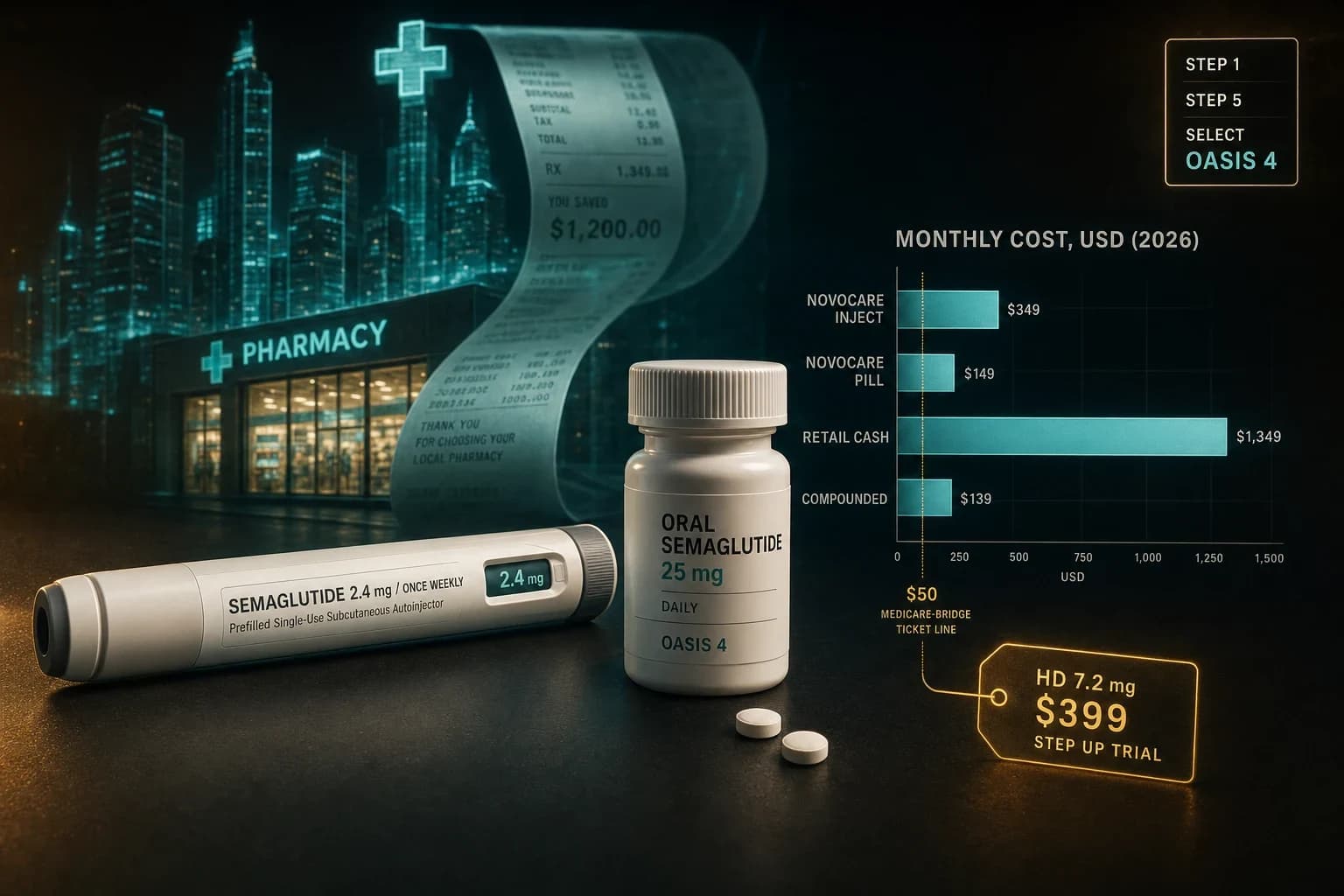
The first is supraphysiologic activation. Bakri argued that pharmaceutical GLP-1 dosing can hit the receptor at something like a thousandfold above what your gut produces after a meal, and we genuinely do not know the long-term neuroplasticity or learning consequences of pinning a receptor open like that for years. The efficacy is not in question. STEP-1 reported 14.9% mean body-weight loss at 68 weeks on semaglutide 2.4 mg versus 2.4% on placebo, with 86.4% of the treatment arm losing at least 5% (Wilding et al., NEJM 2021, PMID 33567185). The question is what else that signaling does over a decade.
The second flag is fertility. GLP-1 receptors are expressed in the ovaries, and the "Ozempic babies" phenomenon (unplanned pregnancies on GLP-1s) is real enough that it has its own clinic conversations. Part of the mechanism is mundane: weight loss restores ovulation in people with obesity or PCOS. Part of it may be the drug slowing gut motility and reducing oral-contraceptive absorption. A 2026 case series tracked first-trimester semaglutide exposures and the pregnancy outcomes that followed (Morton et al., Obstet Med 2026, PMID 40487375); the honest summary is that the human safety dataset is still small. We unpack the receptor biology and the contraception angle in GLP-1 fertility and long-term effects.
Bakri's prescribing model is the sober one: lowest effective dose, paired with real lifestyle change, then taper rather than ride the max dose forever. If you are comparing molecules, our semaglutide guide and GLP-1 dosing comparison lay out the dose ladders side by side.
GHK-Cu: the collagen remodeler with two hard rules
GHK-Cu was where Bakri got practical. The copper tripeptide does something most "collagen boosters" cannot: it builds and breaks down collagen at the same time, which is what proper tissue remodeling looks like versus laying down disorganized scar. He also noted that serum GHK sits around 200 ng/mL in your twenties and falls hard by your sixties.
The remodeling mechanism is well documented. GHK stimulates collagen and glycosaminoglycan synthesis while modulating matrix metalloproteinases and their inhibitors, which is precisely the build-and-remodel duality Bakri described; plasma GHK runs about 200 ng/mL at age 20 and drops to roughly 80 ng/mL by age 60 (Pickart et al., BioMed Res Int 2015, PMID 26236730). Topical GHK-Cu has compared favorably to retinoic acid and vitamin C for collagen stimulation in controlled cosmetic studies, with the bonus of far less irritation.
Then came the two rules. First: if your topical GHK-Cu is not blue, the copper has fallen out and you are paying for an inactive peptide. The blue is the copper complex; lose the color, lose the point. Second, and louder: do not inject GHK-Cu into your face. Topical is the studied route for skin, and injecting a copper peptide into facial tissue is not a validated cosmetic practice.
If skin is your goal, our GHK-Cu guide covers formulation and concentration, and the GLOW blend shows how GHK-Cu gets paired with recovery peptides for skin work.
Tip: Two GHK-Cu rules from the episode, both correct: a quality topical should be visibly blue (that is the copper still bound), and you do not inject copper peptides into your face. Use the topical route the studies actually tested.
The bioregulator bet: epithalon, pinealon, thymosin alpha-1
This is the section where the evidence map gets thin and the claims get big. Bakri grouped the "bioregulator" peptides around a provocative thesis: these are short peptides that reset gene expression, so the benefit supposedly persists after you stop dosing.
Epithalon (the tetrapeptide AEDG) is the headliner. It is tied to pineal and melatonin signaling and, more famously, to telomerase activation. The single most-cited primary result is that epithalon induced telomerase activity and telomere elongation in cultured human somatic (fibroblast) cells (Khavinson et al., Bull Exp Biol Med 2003, PMID 12937682). Vladimir Khavinson's group also ran multi-year elderly cohorts that reported lower mortality. The catch is that almost all of this work is Russian and Soviet-era, and it has been thinly replicated in the West. We weigh that body of evidence honestly in peptide bioregulators and the Khavinson longevity evidence and in our epithalon guide.
Pinealon (the peptide EDR) is the sleep-and-cognition entry. Despite the name it is not derived from the pineal gland. It reportedly increases slow-wave and REM sleep, and Bakri said Huberman uses it three times per month maximum. The weakness is methodological: the supporting research is Soviet-era and predates modern polysomnography, so the sleep-architecture claims have not been validated with current tools.
Thymosin alpha-1 is the credible one in this group. It is FDA-approved as Zadaxin for children born without a functioning thymus, approved in more than 30 countries as a hepatitis B and C therapy and cancer adjunct, and it has one of the deepest clinical-trial records of any peptide (Dominari et al., World J Virol 2020, PMID 33362999). Bakri said he injects it twice a week when he is working in hospitals or traveling, which is a defensible immune-support use given the data. See our thymosin alpha-1 guide for the trial breakdown.
The "celebrity trinity": TRT plus a GLP-1 plus a GH secretagogue
If you have watched a podcaster or actor recomposition their physique at an improbable rate, Bakri offered the likely recipe. The "celebrity protocol" is three drugs run together: testosterone replacement (TRT), a GLP-1 for fat loss, and a growth-hormone secretagogue for recovery and tissue. Stacked, they push fat down and lean mass up faster than any one of them alone, which is why the transformations look unreal.
The GH-secretagogue choice matters more than people think. Tesamorelin is an FDA-approved GHRH analog that drives pulsatile, circadian-pattern GH release. MK-677 (ibutamoren) is an oral ghrelin agonist that produces a large but non-pulsatile GH "dump," which tends to bring more water retention and insulin resistance. Sermorelin is another GHRH analog. Bakri and Huberman both flagged the shared catch: GH and IGF-1 are pro-growth signals, so they carry a theoretical risk of accelerating an undiagnosed tumor. Huberman said he tried sermorelin for deeper sleep but stopped after his PSA rose.
We break the whole stack down, including how the pieces interact and where the lean-mass evidence actually sits, in our flagship companion: the GLP-1, GHRH, and androgen physique trinity. For the secretagogue comparison specifically, see sermorelin vs CJC-1295 vs ipamorelin and the MK-677 oral GH guide.
What Bakri claims versus what the human evidence shows
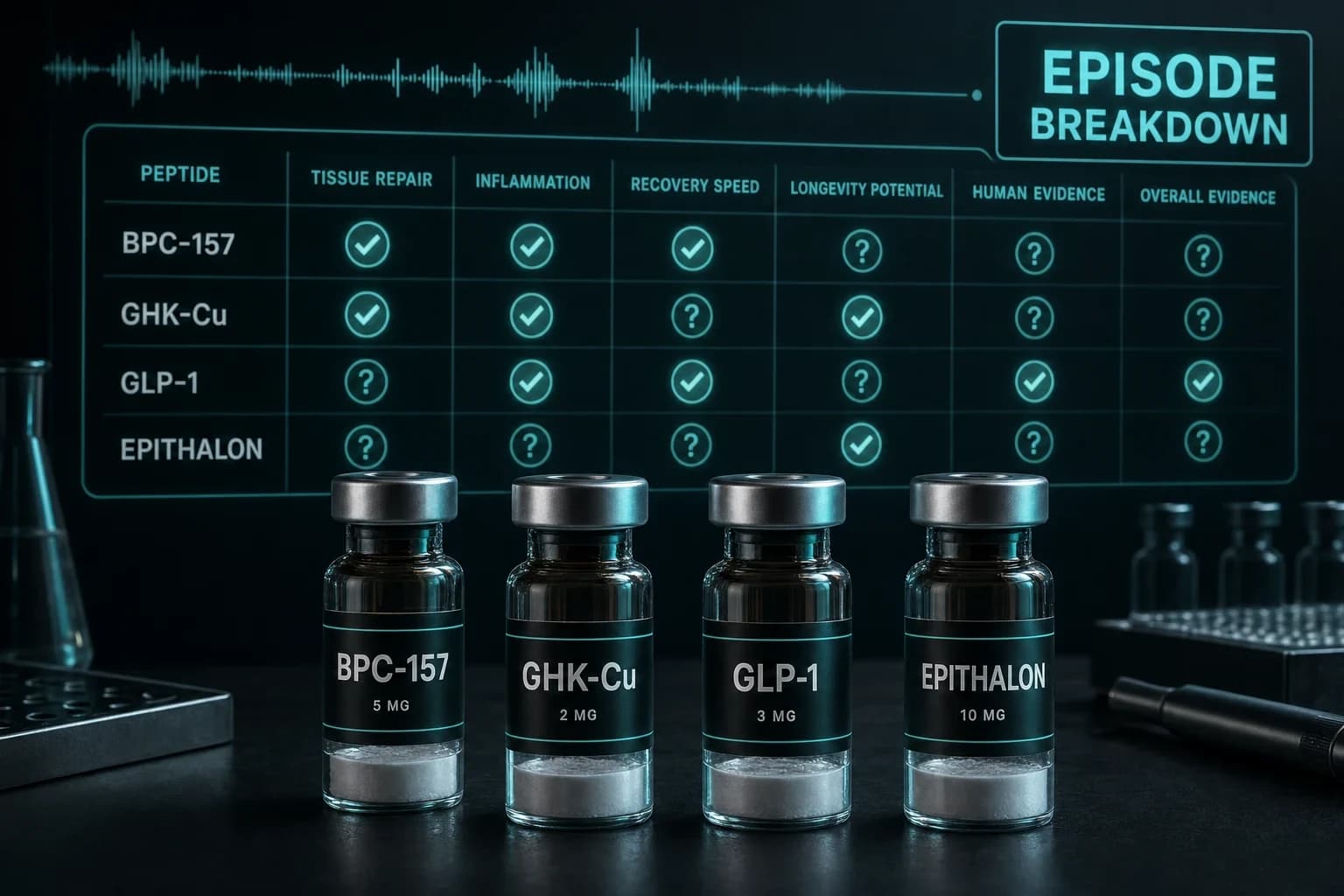
Here is the episode compressed into one decision grid. The pattern is hard to miss: predictability tracks almost perfectly with whether there is a real human trial behind the peptide.
| Peptide | What Bakri argued | What the human evidence shows |
|---|---|---|
| BPC-157 | Pleiotropic healer; upregulates VEGF; popular dose is a website number | Strong animal data (mostly one Croatian group); two unpublished early-phase enema trials; no human dose-response (PMID 20388964) |
| Semaglutide (GLP-1) | Predictable known-receptor drug; supraphysiologic activation; fertility flag | 14.9% weight loss at 68 weeks in STEP-1; ovarian GLP-1 receptors; small first-trimester safety dataset (PMID 33567185, PMID 40487375) |
| GHK-Cu | Builds and breaks down collagen; must be blue; never inject the face | Documented dual collagen synthesis/remodeling; serum drops ~200 to ~80 ng/mL by 60; topical beats retinol in studies (PMID 26236730) |
| Epithalon | Bioregulator that resets gene expression; telomerase activation | Telomerase activity and telomere elongation in human fibroblasts; mortality data is Russian, under-replicated (PMID 12937682) |
| Thymosin alpha-1 | Immune support; he doses it 2x/week when traveling | FDA-approved (Zadaxin); approved in 30+ countries for hep B/C; deep trial record (PMID 33362999) |
| Retatrutide | Triple agonist; "will be a trillion-dollar product" | 24.2% mean weight loss at 48 weeks on 12 mg in Phase 2 (PMID 37366315) |
That last row is worth a beat. Bakri called retatrutide a future trillion-dollar product, and the Phase 2 numbers explain the confidence: 24.2% mean body-weight reduction at 48 weeks on the 12 mg dose (Jastreboff et al., NEJM 2023, PMID 37366315). We cover the molecule in our retatrutide guide and the retatrutide triple-agonist explainer.
The sourcing reality: a $5 to $10 billion gray market with one origin
The most grounding part of the episode had nothing to do with mechanisms. Bakri laid out a sourcing hierarchy, safest to riskiest: standard pharma, then a quality compounding pharmacy, then low-quality compounders, then the gray market (batch-to-batch unpredictable), then the black market (never). He pegged the US gray market for research peptides at roughly $5 to $10 billion a year and growing.
Then the line that reframes the whole supply chain: every active pharmaceutical ingredient comes from Chinese manufacturers. In his words, there are no American-made peptides. The "domestic" label on a vial usually refers to where it was reconstituted or relabeled, not where the API was synthesized. He also pointed at a conflict-of-interest most patients never see: a clinic can buy a peptide at cost from a compounding pharmacy, mark it up, and the patient never learns the spread. His advice was blunt. Ask what your doctor pays the pharmacy. And know that no malpractice insurance covers prescribing non-FDA-approved injectable peptides.
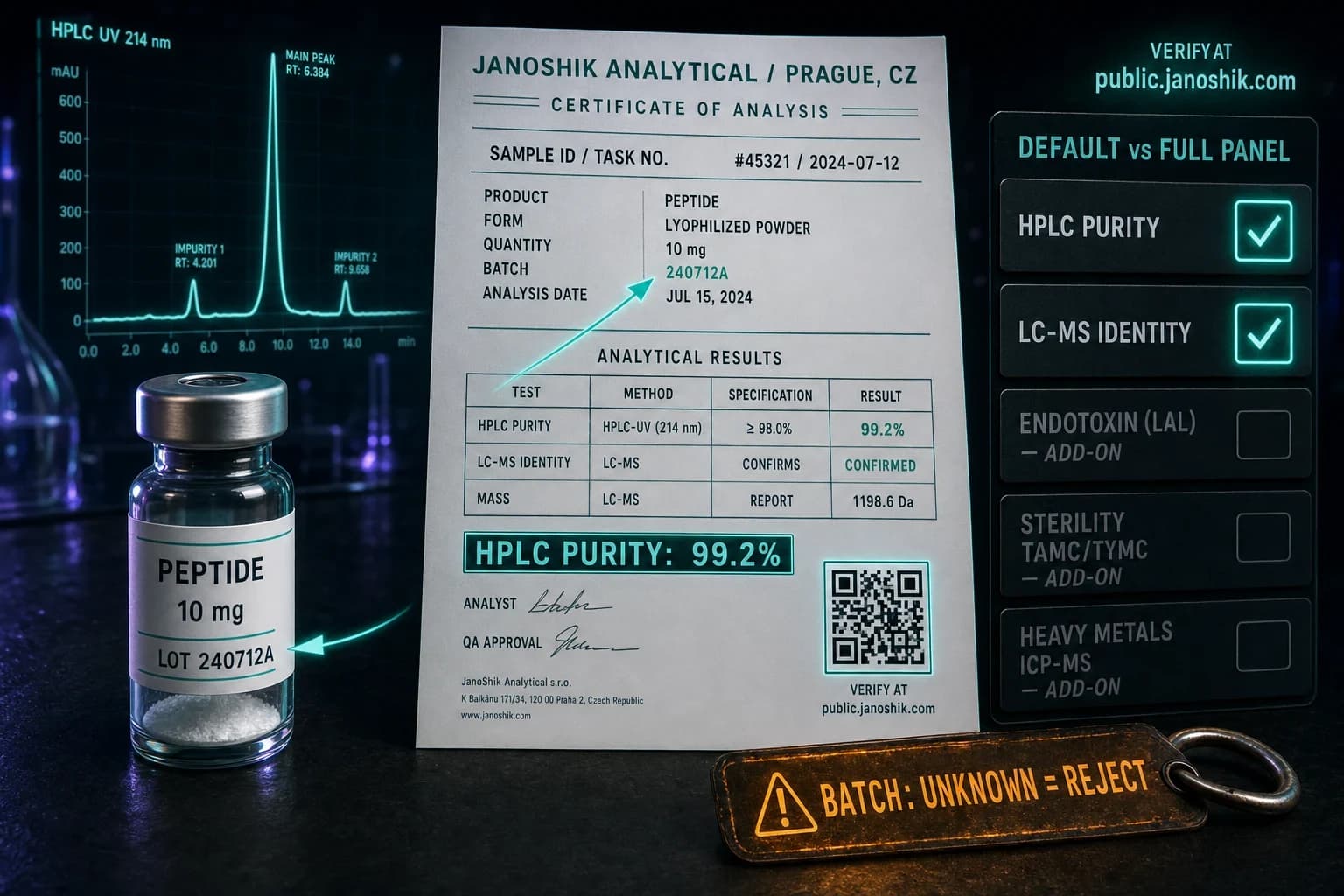
This is exactly why a certificate of analysis is the only thing standing between you and mislabeled product. We built two pieces around this: the peptide gray-market sourcing truth and a vetting guide on where to buy BPC-157 with a COA.
If you do choose to source injectables, work with a partner that publishes third-party testing. Many of the compounds discussed in the episode are available from Ascension Peptides with 50% off using code ENHANCED, which at least puts a COA and a consistent supply chain behind what you are buying.
The unglamorous part: foundation first
Bakri and Huberman kept returning to the least sexy point in the episode, and it is the one most peptide buyers skip. Morning sunlight, sleep, diet, and exercise are the floor. Peptides are additive only, layered on top of a foundation that already works.
This is a filter, not a platitude. If your sleep is broken and your training is inconsistent, a GH secretagogue will not fix your recovery; you are paying for a signal your body cannot use. Get the floor solid first.
Frequently Asked Questions
Is the Huberman peptides episode worth listening to in full?
Yes, if you want the nuance. The episode runs about 2 hours 48 minutes and the value is in the qualifications, not the headlines. Bakri repeatedly separates what is FDA-approved (tesamorelin, thymosin alpha-1) from what lives on animal data (BPC-157) and Soviet-era research (epithalon, pinealon). The "known receptor versus not" framework alone is worth the runtime.
Did Bakri say BPC-157 is safe and effective in humans?
No. He was careful about this. He described strong animal healing data and a plausible mechanism (VEGF upregulation, cell migration), while flagging that the popular 200 to 250 mcg dose comes from peptide websites rather than human dose-finding trials, and that the only human studies were unpublished early-phase enema trials. That is a meaningfully different claim from "safe and effective."
What is the "celebrity trinity" Bakri described?
It is the stack he suggested explains many dramatic online physique transformations: testosterone replacement (TRT) plus a GLP-1 for fat loss plus a growth-hormone secretagogue (such as tesamorelin, sermorelin, or MK-677) for recovery and tissue, all run together. We break down the interactions in our physique trinity guide.
Are there really no American-made peptides?
Per Bakri, the active pharmaceutical ingredients are manufactured in China regardless of the brand on the vial. A "domestic" label generally refers to reconstitution or relabeling, not synthesis of the API. That is why he stresses sourcing, third-party testing, and asking exactly what your provider pays the pharmacy.
Why does Huberman avoid BPC-157 when he is not injured?
Because BPC-157 promotes angiogenesis (new blood-vessel growth), and the same mechanism that heals injured tissue could theoretically supply blood to an undiagnosed tumor. With no injury to heal, he sees little upside and an unquantified downside, so he reserves it for active recovery situations rather than running it continuously.
The honest takeaway
The episode lands because Bakri refuses to flatten the category. Some of these peptides are real medicine with decades of trials (thymosin alpha-1, the GLP-1s, tesamorelin). Some are compelling animal stories that have not earned human claims (BPC-157, the bioregulators). His "known receptor versus not" question is the cleanest filter we have heard for telling them apart.
Use the framework. Verify the source. Build the foundation first. Then decide which specific peptide earns a place in your protocol.
This article is for research purposes only and is not medical advice. Peptides discussed here range from FDA-approved drugs to compounds with no human safety data. Consult a qualified physician before starting any peptide, and never source injectable compounds without a current third-party certificate of analysis.